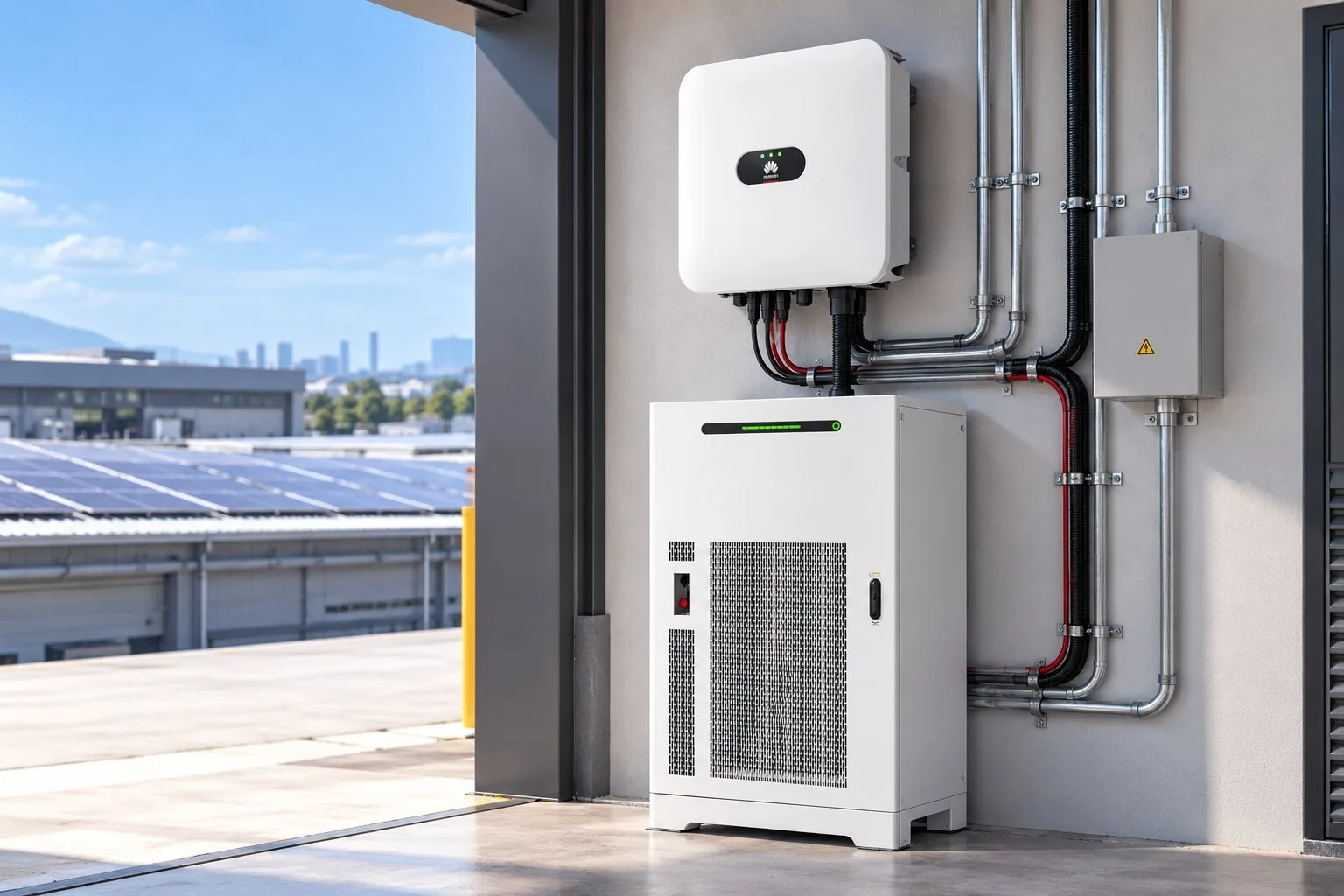
Solar panels only make power while the sun is up. That is fine until you realise most Malaysian homes use the most electricity in the evening — lights, air-conditioning, cooking, TV — long after the panels have gone quiet. Without storage, that surplus midday energy either goes to the grid or goes to waste, and you buy it back from Tenaga Nasional at night. A battery storage system for solar panels closes that gap by banking the daytime surplus for use after dark.
This guide explains what a solar battery storage system is, how it works, the main battery types, how much capacity a home needs, roughly what it costs in Malaysia, and whether it earns its keep. Every ringgit figure here is illustrative market context — your real numbers depend on your usage, roof, and installer quote. First, here is a short video on how home batteries actually work, to set the scene.
Watch: how home batteries work
Source video: SolarQuotes on YouTube — How Home Batteries Work: A Beginner’s Guide
1. What is a battery storage system for solar panels?
Quick Answer: A battery storage system for solar panels is a rechargeable battery, usually lithium-based, that stores the surplus electricity your panels generate during the day. It releases that stored power in the evening, on cloudy days, or during a grid outage, so more of your own solar goes to work instead of being exported or bought back later.
Think of the battery as a reservoir sitting between your solar panels and your home. When the panels make more power than the house is using at that moment, the extra flows into the battery instead of straight to the grid. Later, when the panels stop producing but you still need power, the house draws from the battery first before touching the grid.
A standard grid-tied system without storage sends surplus daytime energy to the grid and pulls it all back at night; a battery lets you keep and reuse that surplus yourself. For the full picture of how storage is designed and installed, our solar battery storage service page walks through the options for Malaysian homes and businesses.
2. How does a solar battery store and release power?
Quick Answer: Solar panels produce direct current (DC), which an inverter converts to the alternating current (AC) your home uses. A battery charges from the surplus, storing it chemically, then discharges it back through the inverter when needed. A control system decides moment by moment whether to power the house, charge the battery, or draw from the grid.
The daily cycle is simple. During the day the panels power your appliances first, any surplus charges the battery, and once the battery is full further surplus is exported to the grid. In the evening the house runs on stored energy until the battery is low, then falls back to the grid.
Two pieces of jargon are worth knowing because they shape everything else:
- Usable capacity (kWh). How much energy the battery can actually deliver — the number that matters, not the headline “total” capacity.
- Depth of discharge (DoD). The share of the battery you can safely use each cycle. A higher DoD means more of the battery is usable without shortening its life.
Most modern home systems use lithium batteries because they offer a high depth of discharge, a long cycle life, and a compact wall-mounted form. The battery, the inverter, and the control software work as one system — which is why matching them properly matters more than any single spec.
Not sure if your solar setup is battery-ready?
The inverter and wiring decide how easily storage can be added. See how solar battery storage is designed →
3. What are the main types of solar batteries?
Quick Answer: Three battery types show up in solar systems: lithium iron phosphate (LFP), lithium nickel manganese cobalt (NMC), and older lead-acid. LFP dominates new Malaysian home installs for its long life and strong safety record, NMC is compact but runs hotter, and lead-acid is cheap upfront but short-lived.
For a tropical climate like Malaysia’s, heat tolerance and safety carry extra weight because batteries sit outdoors or in warm utility areas. The table below compares the three on the specs that drive the buying decision.
| Battery type | Typical lifespan | Usable depth | Heat & safety | Upfront cost |
|---|---|---|---|---|
| Lithium (LFP) | ~10–15 yrs | ~90–100% | Very stable | Higher |
| Lithium (NMC) | ~8–12 yrs | ~85–95% | Runs hotter | Medium–high |
| Lead-acid | ~3–7 yrs | ~50% | Needs ventilation | Lower |
Illustrative market context, Malaysia, 2026. Actual specs vary by brand and model.
The pattern is clear: lead-acid looks cheap until you count how often you replace it, while LFP costs more upfront but usually delivers the lowest cost per usable cycle over its life. For most Malaysian homes, LFP is the sensible default.
4. Do you need a battery with solar in Malaysia?
Quick Answer: No — a battery is not required to go solar in Malaysia. Under net energy metering (NEM), your surplus daytime export already offsets grid use one-for-one, so many homes start with panels only. A battery makes sense when you want to use more of your own solar at night or need backup power during outages.
Malaysia’s net energy metering scheme lets a grid-tied solar home export surplus energy and offset it against what it imports, on a one-to-one basis over the billing period. Because NEM currently applies to solar PV without storage, the panels alone already capture most of the bill savings for a typical daytime-light household. That is why a battery is an upgrade, not a starting requirement. You can read the official rules on the SEDA net energy metering FAQ.
So when is a battery worth adding? Three cases stand out:
- You use most power at night. If your household runs heavy in the evening, storing daytime solar beats exporting it and buying it back.
- You want blackout protection. A battery keeps chosen circuits — lights, fans, fridge, internet — running when the grid trips.
- You are planning ahead. As metering rules evolve, storing and using your own solar hedges against changes to export terms.
For a household that is out all day and home only at night, storage turns solar from a daytime saver into a round-the-clock one.
5. How much battery capacity do you need?
Quick Answer: Size the battery to your evening and overnight usage, not your whole daily consumption. Most Malaysian homes land between 5 kWh and 15 kWh of usable capacity, depending on air-conditioning load and whether an electric vehicle is charged at home. Oversizing wastes money; undersizing leaves you buying grid power anyway.
The right size depends on how much energy you actually draw after the panels stop producing. A good installer estimates your evening load from your bill and appliance mix, then matches usable capacity to it. The chart below shows typical starting points by household profile.
| Household profile | Relative capacity | Usable capacity (kWh) |
|---|---|---|
| Small home, light evening use | 5 | |
| Mid-size home, some aircon | 8 | |
| Large home, heavy aircon | 11 | |
| Large home plus home EV charging | 15 |
Illustrative starting points, Malaysia 2026. Your size depends on evening load and solar array size — get a quote.
These are starting points, not prescriptions. Your battery should also be balanced against your panel array — there is little value storing more than your panels can refill on an average day. Pairing sizing with your battery storage design is where a proper site assessment pays off.
6. What does a solar battery cost in Malaysia?
Quick Answer: Home battery cost scales mainly with usable capacity. On illustrative market figures, a fitted lithium storage system runs from roughly RM 12,000 for a small 5 kWh unit up to around RM 35,000 for a 15 kWh system, including the battery, compatible inverter, and installation. Backup runtime rises with capacity too.
Battery pricing is driven by capacity, chemistry, brand, and whether your existing inverter is hybrid-ready or needs replacing. The figures below give a planning-grade view of installed cost and rough backup runtime for essential circuits. They are illustrative, not a quote.
| Usable capacity | Relative installed cost | Installed cost (RM) | Backup on essentials |
|---|---|---|---|
| 5 kWh | 12,000 | ~5–8 hrs | |
| 8 kWh | 19,000 | ~8–12 hrs | |
| 11 kWh | 26,000 | ~12–16 hrs | |
| 15 kWh | 35,000 | ~16–22 hrs |
Illustrative installed pricing, Malaysia 2026. Backup hours assume essential circuits only. Not a quote — ask for yours.
Because pricing swings with the equipment and your existing setup, the honest answer to “what will it cost me?” is always a site-specific quote. Our guide to the best solar battery storage in Malaysia compares the choices in more detail.
Want a real price for your home, not a range?
We size the battery to your evening load and quote the full installed cost. Get a free quote →
7. Are solar batteries worth it over time?
Quick Answer: A battery’s return comes from using more of your own solar instead of exporting it, plus the value of backup power. On illustrative figures, added self-consumption savings build steadily each year, so a well-sized battery recovers a meaningful share of its cost across its 10-to-15-year life — with the backup benefit on top.
The financial case for storage is subtler than for panels alone. Panels save you the full tariff on power you would otherwise buy; a battery saves you the gap between what exported energy is worth and what you would pay to buy that same energy back at night. The timeline below models cumulative self-consumption savings from an illustrative 10 kWh battery.
| Measure (RM) | Year 1 | Year 3 | Year 6 | Year 9 | Year 12 |
|---|---|---|---|---|---|
| Cumulative savings | 2,000 | 6,300 | 13,200 | 20,700 | 28,800 |
| Est. annual saving | 2,000 | 2,200 | 2,400 | 2,600 | 2,800 |
Illustrative projection; assumes modest annual tariff rises, Malaysia 2026. Your results will differ.
Two honest points. A battery usually pays back more slowly than panels alone, so judge it on total value — savings plus resilience — not payback speed. And rising tariffs or any tightening of export terms both improve the case for storing your own power. For most buyers, the deciding factor is how much they value keeping the lights on during an outage.
8. How to choose the right battery storage system
Quick Answer: Choose on usable capacity matched to your evening load, battery chemistry (LFP for most homes), inverter compatibility, warranty terms, and the installer’s accreditation. The battery brand matters less than whether the whole system is designed and installed correctly for a tropical climate.
A battery is a ten-year-plus commitment, so the selection deserves the same care as the panels. Focus on the things that decide long-term performance rather than the sticker on the box.
- Usable capacity, not headline capacity. Match the kWh you can actually use to your real evening and overnight load.
- Chemistry and warranty. LFP for its life and heat tolerance; check the cycle or year warranty and what it guarantees.
- Inverter compatibility. A hybrid inverter simplifies storage; retrofitting an older system may need extra hardware.
- Accredited installer. Choose a SEDA-registered, Energy Commission-recognised contractor — safety and warranty both depend on it.
Getting these right is what separates a battery that quietly performs for a decade from one that disappoints. When you are ready to compare properly, EDCA Energy designs storage to your usage, and our guide to the best solar panel company in Malaysia explains the accreditation to look for.
9. Conclusion
Quick Answer: A battery storage system for solar panels lets you use your own daytime solar after dark and keeps essentials running during outages. It is an optional upgrade in Malaysia, best suited to homes with heavy evening use or a need for backup. Size it to your evening load, favour LFP, and install with an accredited contractor.
Storage is what turns solar from a daytime saver into an all-hours one. It is not essential for every Malaysian home — net energy metering already makes panels alone worthwhile — but for households that live in the evening or want protection from outages, a battery adds real value. Get the sizing and chemistry right, install it well, and a solar battery quietly earns its place for well over a decade.
Thinking about adding battery storage to your solar?
We’ll assess your evening load, size the right battery, and quote the full installed cost — so you can decide with clear numbers instead of guesswork.
Get a Free Quote →10. Frequently Asked Questions
1. Do I need a battery for my solar panels in Malaysia?
No. Under Malaysia’s net energy metering scheme, your solar panels already offset daytime export against grid use one-for-one, so panels alone are worthwhile for most homes. A battery is an upgrade for households that use most power at night or want backup during outages, not a requirement to go solar.
2. How long does a solar battery last?
A quality lithium battery, especially LFP chemistry, typically lasts around 10 to 15 years, while older lead-acid batteries often need replacing within 3 to 7 years. Lifespan depends on chemistry, how deeply the battery is cycled each day, and how well it is kept cool in Malaysia’s climate.
3. How much does a solar battery cost in Malaysia?
On illustrative market figures, a fitted home lithium battery runs from roughly RM 12,000 for a small 5 kWh unit to around RM 35,000 for a 15 kWh system, including the battery, a compatible inverter, and installation. The exact cost depends on capacity, chemistry, and whether your existing inverter needs replacing, so a site-specific quote is the only accurate figure.
4. Can a solar battery power my whole house during a blackout?
Usually a battery is set up to back up essential circuits — lights, fans, fridge, internet — rather than the entire home, because backing up everything, including air-conditioning, drains capacity quickly. How long it lasts depends on the battery size and how many circuits you protect; a 5 kWh unit might cover essentials for several hours, a larger one for most of a night.
5. What size solar battery do I need?
Size the battery to your evening and overnight usage rather than your whole daily consumption. Most Malaysian homes land between 5 kWh and 15 kWh of usable capacity, depending on air-conditioning load and whether an electric vehicle is charged at home. An installer can estimate your evening load from your bill and match the capacity to it.
See your solar savings in under a minute
Estimate your ideal system size, payback period and monthly bill offset with the EDCA calculator.