Large Scale Solar Farm Installation Malaysia
Ground-mount and utility-scale solar delivered as a full EPCC partner, from bid support through to grid connection, by a SEDA-registered provider with 500+ projects and 10+ MWp installed.
EDCA Energy delivers large scale solar farm installation in Malaysia as a full EPCC partner: engineering, procurement, construction and commissioning of ground-mount and utility-scale solar, from bid support through to grid connection. As a SEDA-registered provider with 500+ projects completed and 10+ MWp installed, we build solar farms for Large Scale Solar (LSS) programme winners, corporate developers and landowners. Pricing is project-specific. Get a free quote for your site.
Malaysia is building solar farms faster than at any point in its history. Under the National Energy Transition Roadmap, the country aims to lift renewable energy to 40% of installed capacity by 2035 and 70% by 2050, and has already reached 31% renewable capacity and set a 32% target for the current year, per The Edge Malaysia. Solar carries most of that load. For landowners, developers and corporates that shift is a real opportunity, but a solar farm is not a rooftop system scaled up: it is a power plant, with grid studies, land preparation, competitive bidding and a long-term revenue contract behind it. EDCA handles it as engineering-led EPCC work, the same discipline across our solar solutions range.
On this page
Why invest in a large scale solar farm in Malaysia now?
Quick answer: Malaysia has locked in aggressive renewable energy targets, 40% of installed capacity by 2035 and 70% by 2050, with solar doing most of the work. Large scale solar farm installation lets developers, landowners and corporates capture long-term, contracted revenue or slash their own energy bills while the programme runway is wide open.
Large-scale solar offers a practical way to generate renewable energy at scale while supporting long-term energy and sustainability goals. With the right site, project structure and grid connection, solar farms can deliver significant clean energy generation and create long-term value for project owners and stakeholders.
01 — Lower energy cost
Generate renewable energy at scale with competitive energy costs.
02 — High-scale generation
Produce significant clean energy from large-scale solar installations.
03 — Long-term value
Create lasting value through well-structured solar projects.
04 — Lower carbon impact
Reduce reliance on conventional energy and support decarbonisation.
Malaysia renewable energy capacity target trajectory (share of installed capacity)
Sources: The Edge Malaysia and Business Today (NETR targets). National context, not EDCA figures.
Key takeaway: The national push to 70% renewables by 2050 means solar farm capacity has to keep growing for decades. Building now positions you early in a long, policy-backed runway.
What is a large scale solar farm and how does it work?
Quick answer: A large scale solar farm is a ground-mounted or floating solar power plant, usually several megawatts to hundreds of megawatts, that feeds electricity into the national grid or a large private load. Panels sit on mounting structures or trackers, feed inverters and step-up transformers, then connect to TNB’s network under a long-term agreement.
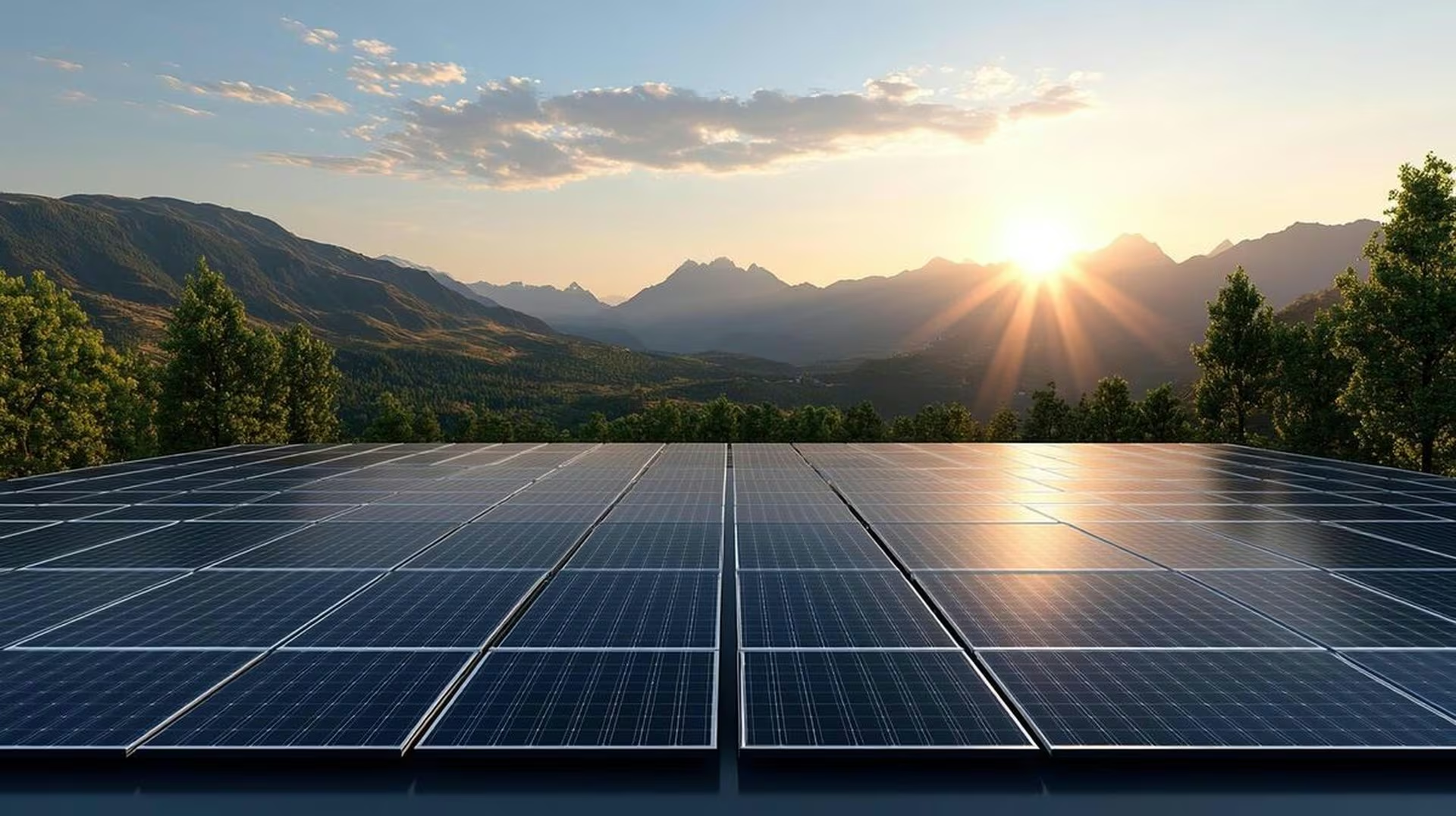
A large-scale solar farm uses rows of solar panels to convert sunlight into electricity. The generated power is converted, monitored and stepped up before being delivered to the grid for use.
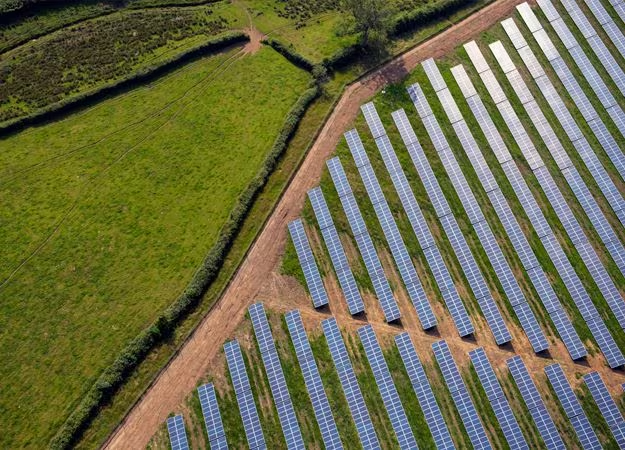
Where a rooftop system powers one building, a solar farm is built to generate at utility scale, spreading thousands of panels across cleared land or a reservoir with output measured in megawatts. Two farm types dominate in Malaysia: ground-mount plants on cleared or agricultural land, and floating solar on reservoirs and disused mining ponds, now a formal LSS category.
Solar generation
Solar panels capture sunlight and generate DC electricity.
Power conversion
Inverters convert DC electricity into AC power suitable for the grid.
Grid connection
Transformers step up the voltage before electricity is exported to the grid.
Monitoring & control
Advanced monitoring systems track performance and optimise plant operation.
Key takeaway: A solar farm is a power plant, not a big rooftop job. Array, inverters, transformers, grid connection and controls all have to be engineered together to deliver reliable megawatt-scale output.
Malaysia's Large Scale Solar (LSS) programme explained
Quick answer: Large Scale Solar (LSS) is Malaysia’s competitive-bid programme, overseen by Suruhanjaya Tenaga (ST), for building grid-connected solar farms. Winning developers sign a long-term power purchase agreement with TNB to sell electricity to the grid. Successive rounds, from LSS1 to LSS5+, have steadily scaled up the quota.
Accelerating Malaysia’s transition to large-scale renewable energy. Malaysia’s Large Scale Solar (LSS) Programme is a key government initiative for increasing utility-scale solar generation through a competitive bidding model. First introduced in 2016, the programme has progressed through multiple bidding cycles, with LSS5 and subsequent programmes continuing to expand Malaysia’s solar capacity.
01 — Competitive bidding
Solar projects are awarded through a competitive tender process.
02 — Utility-scale generation
Develop large-scale solar projects to supply renewable electricity to the grid.
03 — Long-term opportunity
LSS continues to create opportunities for solar developers and project stakeholders.
04 — Supporting energy transition
Help increase renewable energy capacity and diversify Malaysia’s electricity mix.
| Round | Indicative quota | Notable feature |
|---|---|---|
| LSS1–LSS3 | Early rounds | Established the competitive-bid model; drove tariffs down |
| LSS4 | ~1,000 MW | PPA term extended from 21 to 25 years |
| LSS5 | Up to 2,000 MW | New floating-solar category of up to 500 MW |
| LSS5+ | 2,000 MW (1,500 ground + 500 floating) | About 1,975 MW awarded; projects due 2027–2028 |
Sources: SEDA, Enerdata and pv magazine. The LSS5/5+ pipeline is expected to unlock RM15–18 billion in contracts.
Key takeaway: LSS gives solar farm developers a bankable long-term offtake with TNB. Each round has scaled up, and floating solar is now firmly in the mix, widening where a farm can be built.
RM15–18 billion in contracts are moving through Malaysia’s largest-ever LSS pipeline.
How EDCA delivers your solar farm: the EPCC process
Quick answer: EDCA delivers large scale solar farm installation as end-to-end EPCC: engineering, procurement, construction and commissioning. We move a project through five stages: site and feasibility, development and approvals, engineering and design, construction and installation, then testing and commissioning. One accountable team owns the whole build.
From initial assessment to a fully operational solar farm. Developing a large-scale solar project requires careful planning across land, grid, engineering, approvals and construction. EDCA provides end-to-end support to move a project from feasibility through to commissioning.
Site & feasibility
Assess land suitability, solar potential, grid access and project viability.
Development & approvals
Manage project planning, technical studies and required approvals.
Engineering & design
Develop the solar farm layout, electrical design and system specifications.
Construction & installation
Execute procurement, construction, installation and project coordination.
Testing & commissioning
Complete testing, grid integration and commissioning for commercial operation.
Key takeaway: One EPCC partner from feasibility to commercial operation removes the handoff risk that derails solar farms, and structured solar panel maintenance protects the contracted output for decades after.
Shortlisted in an LSS round, or eyeing the next one?
EDCA supports developers from bid through commissioning, and runs the numbers on land or a bid slot before you commit.
LSS, CRESS & CGPP: Your Corporate Solar Options
Quick answer: LSS isn’t the only route to renewable energy. Businesses can explore CRESS, CGPP, or develop ground-mounted solar for self-consumption, depending on their energy needs and sustainability goals.
CRESS enables corporates to access renewable electricity through the grid, while CGPP offers a corporate green-power procurement route. EDCA helps you evaluate the right generation, grid and offtake solution for your business.
| LSS | CRESS | CGPP | |
|---|---|---|---|
| Full name | Large Scale Solar | Corporate Renewable Energy Supply Scheme | Corporate Green Power Programme |
| Main purpose | Develop large-scale solar plants | Let corporates source renewable electricity through the grid | Let corporates procure green power from solar projects |
| Who is it for? | Solar developers / project investors | Corporate electricity consumers + renewable energy developers | Corporate consumers + solar power producers |
| Solar farm needed? | Yes | Usually involves a renewable energy generator | Yes, through participating solar power producers |
| How electricity is accessed | Solar project supplies electricity under the LSS framework | Renewable generator → grid → corporate consumer | Solar producer → utility/grid → corporate consumer |
| Key idea | Build & sell solar power | Access renewable power via open grid | Buy/procure corporate green power |
Self-consumption solar
Ground-mount plants on your own land feeding a nearby factory or facility, cutting reliance on grid tariffs.
Corporate Green Power Programme
A virtual PPA structure letting corporates access solar capacity built by developers (CGPP).
Green certificates
Pairing solar with a renewable energy certificate to document and claim clean-energy use for reporting.
Key takeaway: A solar farm can serve the grid, your own factory, or a corporate sustainability target. Matching the structure, LSS, CGPP, self-consumption or certificates, to your goal is where value is won or lost.
Investment and commercial models for a solar farm
Quick answer: A large-scale solar project can be owned outright, sold under a power purchase agreement, built in partnership with a landowner, or contracted by a corporate buyer. The right model depends on project size, land availability, investment objectives and who buys the power.
Flexible structures for large-scale solar projects. Large-scale solar projects can be structured around different ownership, financing and power-offtake arrangements. The right model depends on the project size, land availability, investment objectives and energy buyer.
Four ways to structure a large-scale solar project
Each model changes who owns the asset, who funds it and who buys the power. Most projects settle on one of these four.
Project investment
Invest in the development and ownership of a solar farm with long-term project value potential.
Power Purchase Agreement (PPA)
Sell generated solar electricity under a structured long-term power purchase arrangement.
Developer / landowner partnership
Landowners can partner with solar developers to unlock the potential of suitable land for solar development.
Corporate renewable energy
Businesses can participate in large-scale solar projects to support renewable energy and long-term sustainability goals.
Key takeaway: Ownership, PPA, landowner partnership and corporate offtake are four different ways to hold the same asset. Picking the structure early shapes the financing, the returns and who carries the risk.
Site, land and grid considerations
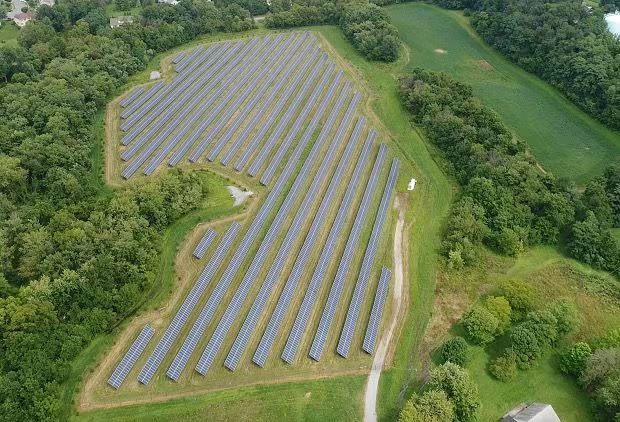
Every successful solar farm starts with the right site. Before development begins, we assess the site’s solar potential, land conditions, grid availability and technical requirements to determine project feasibility and identify potential constraints early.
Site suitability
Assess land size, terrain, access and site conditions.
Solar potential
Evaluate solar resources and expected energy generation.
Grid connection
Assess grid capacity, connection requirements and proximity to the grid.
Technical & financial feasibility
Evaluate project costs, energy yield and overall project viability.
Why choose EDCA Energy for your solar farm
Quick answer: EDCA Energy is a SEDA-registered solar EPCC that delivers large scale solar farm installation as one accountable job: design, permits, procurement, construction and commissioning. With 500+ projects, 10+ MWp installed and a 200 MW+ group development record, we give developers and corporates a build partner banks trust.
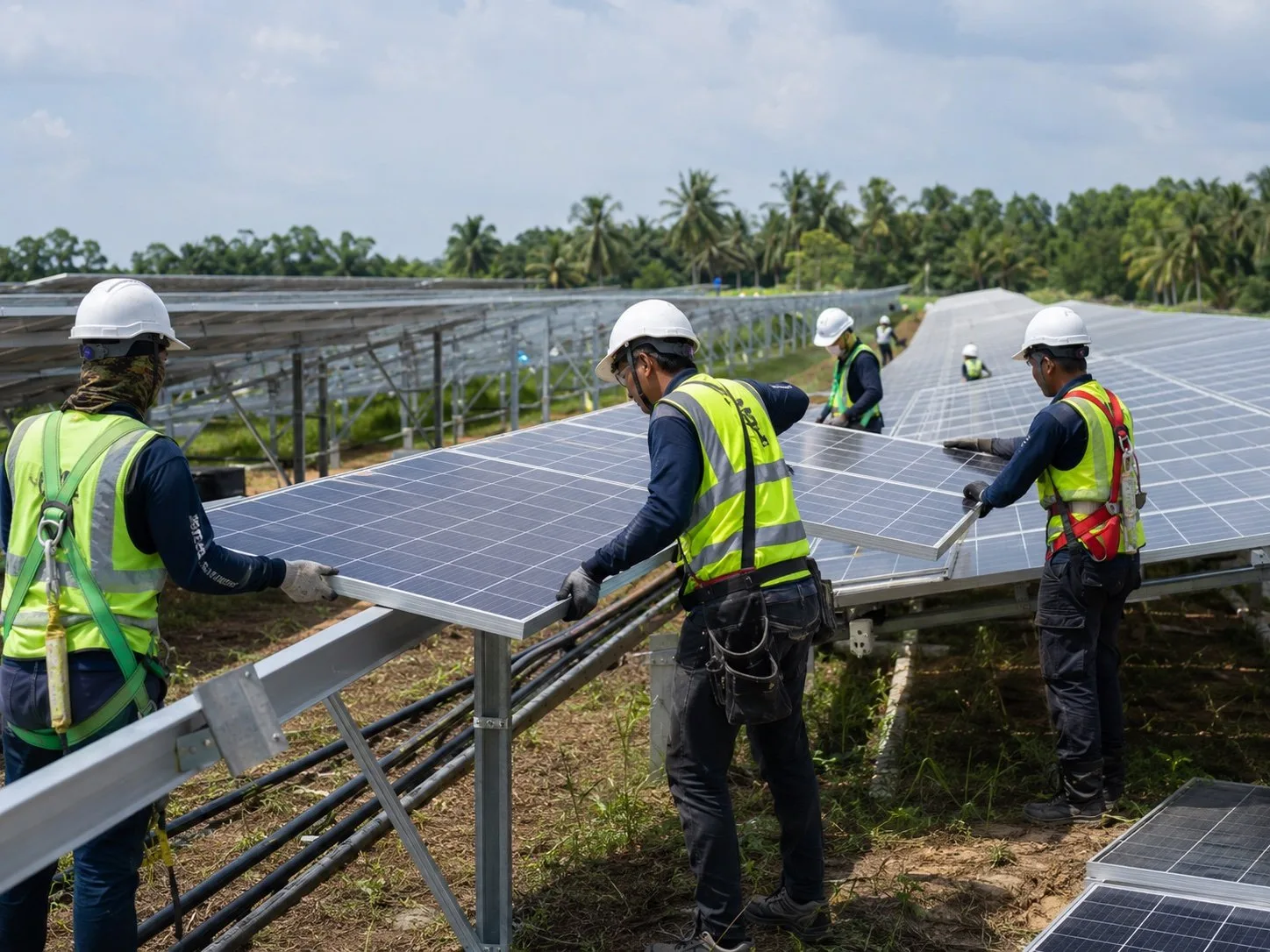
From project development to commercial operation, we support your solar farm journey end to end. With experience across solar development, engineering and project execution, EDCA works closely with project owners and stakeholders to deliver solutions tailored to each site’s requirements.
That single-partner model runs across our whole range, from commercial solar and industrial solar up to utility-scale farms.
01 — End-to-end expertise
From feasibility and development to engineering and commissioning.
02 — Integrated solutions
Solar, energy storage and energy management capabilities under one roof.
03 — Project-focused approach
Solutions designed around your site, grid and project objectives.
04 — Long-term support
Ongoing technical support to help maximise system performance.
Key takeaway: One SEDA-registered EPCC team, a proven delivery record and accreditations financiers recognise, that combination is why developers choose EDCA to build their solar farm.
500+ projects and a 200 MW+ development record behind every utility-scale build.
EXCELLENT Based on 10 reviews
 Posted on Google

 Jamhuri JamaluddinI had a very good experience with EDCA. I managed to install 2 solar units just in time to secure the NEM quota, and now NEM has been replaced with ATAP scheme. The whole process was smooth, and everything was explained clearly from the beginning. The team was professional and helpful throughout. My TNB bill has dropped to almost zero. Most months, I only pay the minimum charge of around RM1 to RM3, depending on my electricity usage. Depends on the kWp that you are taken. Special thanks to Julia Cheah, the sales agent who assisted me. She was excellent, friendly, knowledgeable, and always ready to help. After-sales service very excellent. Highly recommended if you’re considering going solar.Posted on Google
 Geok See OngVery informative, helpful and knowledgeable during and after installation. Many special thanks to Jass for overseeing the whole installation.Posted on Google
 Jaeden WThank you to Jass Lee for making the whole process easy and efficient. It was a pleasant experience and was made even smoother with her explanation and updates throughout the entire process, would highly recommend to anyone considering installing solar panels. - Cheryl ChongPosted on Google
 Jing Chuan安装好大概半年了才放心留言推荐,现在市面上太多太阳能公司了不懂要选哪一家,一开始找了不同人来quote 到最后选edca主要是因为他们不会乱推荐一些不适合我的产品,我看到一些quotation要加这个那个的我都怕之后很多hidden cost,对接我的salesperson - Ms Loo也很nice,很有耐心回答问题,最重要是解释起来我们外行人都可以很容易明白👍 整体来说是一次很放心的体验,如果有朋友想装太阳能,我会推荐他们。Posted on Google
 Alice LeeThe whole process was smooth and easy. The team was friendly, helpful, and quick to get everything done. Highly recommend if you're thinking about going solar
Frequently asked questions
Common questions on large scale solar farm installation in Malaysia, covering what qualifies, the LSS programme, build timelines, corporate routes and cost. A free EDCA assessment answers them for your specific site.
What counts as a large scale solar farm in Malaysia?
A large scale solar farm is a grid-connected or large private solar power plant, typically from a few megawatts up to hundreds of megawatts. Under the LSS programme a single developer can build up to 500 MW. It differs from rooftop solar in scale, land use, grid connection and the long-term power purchase agreement behind it.
How does the LSS programme work?
Large Scale Solar is a competitive-bid programme run under Suruhanjaya Tenaga. The government sets a capacity quota, developers bid a tariff, and winners sign a 21-year power purchase agreement with TNB to sell electricity to the grid. Rounds have scaled from LSS1 to LSS5+, with floating solar now a formal category.
How long does it take to build a solar farm?
Timelines vary with scale, land and grid queue, but an indicative build runs feasibility and design (2 to 4 months), permits and grid application (3 to 6 months), procurement (2 to 4 months), construction (6 to 12 months) and commissioning (1 to 2 months). EDCA gives you a schedule mapped to your specific site.
Does EDCA only build LSS solar farms?
No. EDCA delivers solar farms for LSS winners, corporate self-consumption, the Corporate Green Power Programme and green-certificate strategies. We scope generation, grid and offtake together, and can pair a farm with a renewable energy certificate or fleet charging where it fits your goals.
How much does large scale solar farm installation cost?
Utility-scale solar cost depends on capacity, land, grid works and equipment, so EDCA quotes per project rather than a fixed price. Project cost varies significantly depending on project size, land conditions, equipment, grid connection, civil works, financing and other development requirements. A detailed feasibility and engineering assessment is required to determine the project cost.
How much land is needed for a solar farm in Malaysia?
Land requirements depend on the project capacity, site conditions, terrain, layout, technology and required infrastructure. A proper feasibility study is needed before confirming the suitable land area.
How do I know if my land is suitable for a solar farm?
Key considerations include land size and condition, solar resource, terrain, accessibility, flooding risk, nearby grid infrastructure and planning or land-use requirements.
How does a solar farm connect to the electricity grid?
A solar farm requires assessment of the available grid connection point, network capacity and technical requirements. Malaysia’s Energy Commission provides specific guidelines for connecting large-scale solar PV plants to the electricity network.
What is a Power Purchase Agreement (PPA) for a solar farm?
A PPA is a contractual arrangement that sets out the terms under which electricity generated by a project is sold to an agreed offtaker.
Can landowners develop a solar farm on their own land?
Potentially, subject to land suitability, development requirements, grid access, programme eligibility and the appropriate commercial structure. Landowners may also explore partnerships with experienced solar developers.
Is investing in a solar farm profitable in Malaysia?
Project returns depend on factors such as project cost, electricity price, financing, solar yield, operating costs, grid conditions and the project’s commercial structure. A proper financial and technical feasibility assessment should be completed before investment decisions are made.
What is LSS6 in Malaysia?
LSS6 is the sixth Large Scale Solar bidding cycle. The government announced a 2,500 MW solar quota together with 1,250 MW of Battery Energy Storage System capacity, with full commercial operation targeted by the end of 2029.
Can a solar farm include battery energy storage?
Yes. Battery Energy Storage Systems (BESS) can be integrated with large-scale solar projects for applications such as energy shifting and supporting grid flexibility. The current LSS6 programme specifically includes BESS capacity.
Ready to build your solar farm in Malaysia?
EDCA Energy handles large scale solar farm installation end to end: feasibility, design, permits, grid application, procurement, construction and commissioning. As a SEDA-registered EPCC with 500+ projects and 10+ MWp installed, we give developers and corporates one accountable partner. Pricing is tailored to your site.