Solar Battery Storage Installation Malaysia
Maximise the solar energy you generate under ATAP. A battery can increase self-consumption by storing excess solar energy for use when your home or business needs it, while also providing backup power for essential loads during an outage. With the right system sizing and installation by a SEDA-registered EPCC provider, BESS can help you improve energy efficiency and reduce reliance on grid electricity.
Energy Storage by Every Scale
Solar battery storage installation in Malaysia lets you keep the solar power you generate instead of exporting it cheaply to the grid. Post-NEM 3.0, a battery raises your self-consumption, keeps essential circuits running during a TNB outage, and shifts you toward energy independence. EDCA Energy is a SEDA-registered installer that sizes, supplies, and commissions battery systems for homes and businesses. Pricing is quote-based.
Solar generates clean energy for your home or business, but what happens when there isn’t enough sunlight?
A battery can store excess solar energy for use when solar generation is insufficient, such as during cloudy or rainy weather. With the right backup configuration, it can also keep essential loads running during a power outage, giving you greater energy resilience and better use of the solar energy you generate.
EDCA Energy provides solar battery storage solutions for residential, commercial and industrial customers in Malaysia. From load assessment and battery sizing to inverter matching, installation, testing and commissioning, we handle the complete solar + battery solution.
On this page
What is solar battery storage, and how does it work?
Quick answer: Solar battery storage is a rechargeable system, usually lithium-ion, that captures the surplus power your solar panels make during the day and releases it at night or during an outage. It sits between your panels and your loads as part of a complete solar solutions setup.
During daylight, your panels often produce more than your home or business is using. Without a battery, that surplus flows out to the grid. With a battery, the surplus charges your storage first. When the sun drops and your usage stays high, evening cooking, air-conditioning, lighting, machinery, the battery discharges to cover it.
Battery modules
The cells that store energy, measured in kilowatt-hours (kWh). More kWh means more stored energy.
Inverter / hybrid inverter
Converts between the DC power the battery holds and the AC power your building uses.
Battery management system
Monitors temperature, charge level and safety, and protects the cells (BMS).
Controller & metering
Decides when to charge, when to discharge, and how to prioritise backup circuits.
The batteries EDCA supplies
Residential
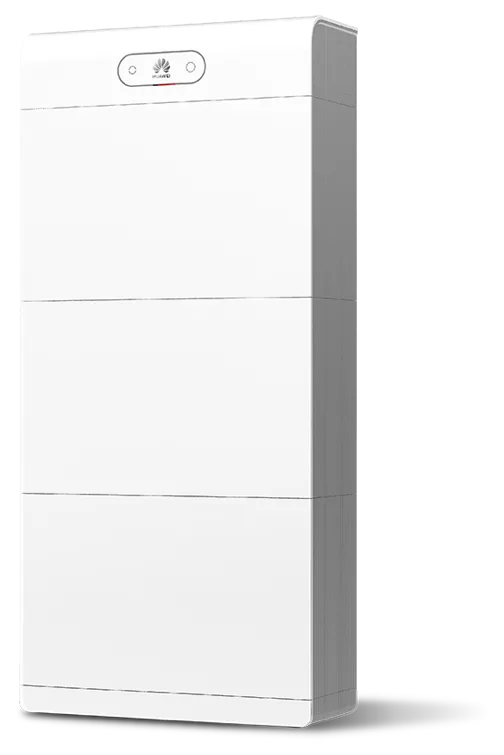
Huawei LUNA2000-7/14/21-S1 · a stacked 7, 14 or 21 kWh unit sized for a home.
Commercial & Industrial
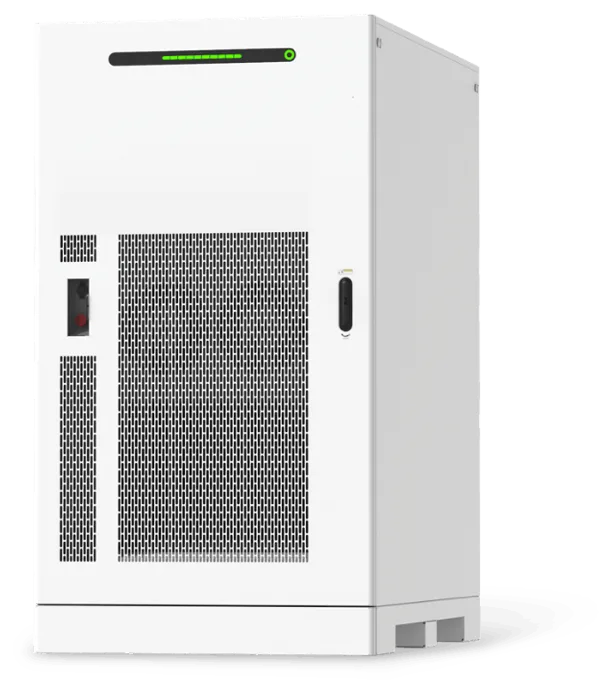
Huawei LUNA2000-215 Series · a floor-standing cabinet for business and factory loads.
Product images: Huawei FusionSolar. Shown to approximate relative scale — the C&I cabinet is a walk-up floor-standing unit, roughly half as tall again as the residential stack.
How solar plus battery works, step by step
Quick answer: Four stages run in a loop every day — your panels generate, the surplus charges the battery, the system decides what to do with it, and the stored power comes back out when you need it.
Solar generation
Solar panels generate electricity during the day. Excess energy is directed to the battery instead of going unused.
Battery storage
The battery stores excess solar energy for later use, such as at night or during periods of high demand.
Energy management
The system intelligently manages when to charge, discharge or draw from the grid based on your energy needs.
Power when needed
Stored energy is supplied to your home, business or facility when solar generation is low, demand is high or backup is required.
Key takeaway: A battery does not make electricity, it moves your solar generation from when you make it to when you actually need it, which is where the value sits after NEM 3.0.
Why battery storage matters after NEM 3.0
Quick answer: Malaysia stopped taking new NEM 3.0 applications on 30 June 2025, so newer solar owners no longer get the old one-to-one export credit. A battery restores the economics by letting you self-consume more of your own power. EDCA Energy sizes storage around your real usage pattern.
Under the earlier net metering rules, exported surplus offset your bill almost unit-for-unit, so many homes skipped batteries. That changed. New applications for NEM 3.0 closed at the end of June 2025, and Malaysia has moved rooftop owners toward self-consumption schemes such as SelCo, as reported by pv magazine. In a self-consumption world, every unit you store and use yourself is worth far more than a unit you export.
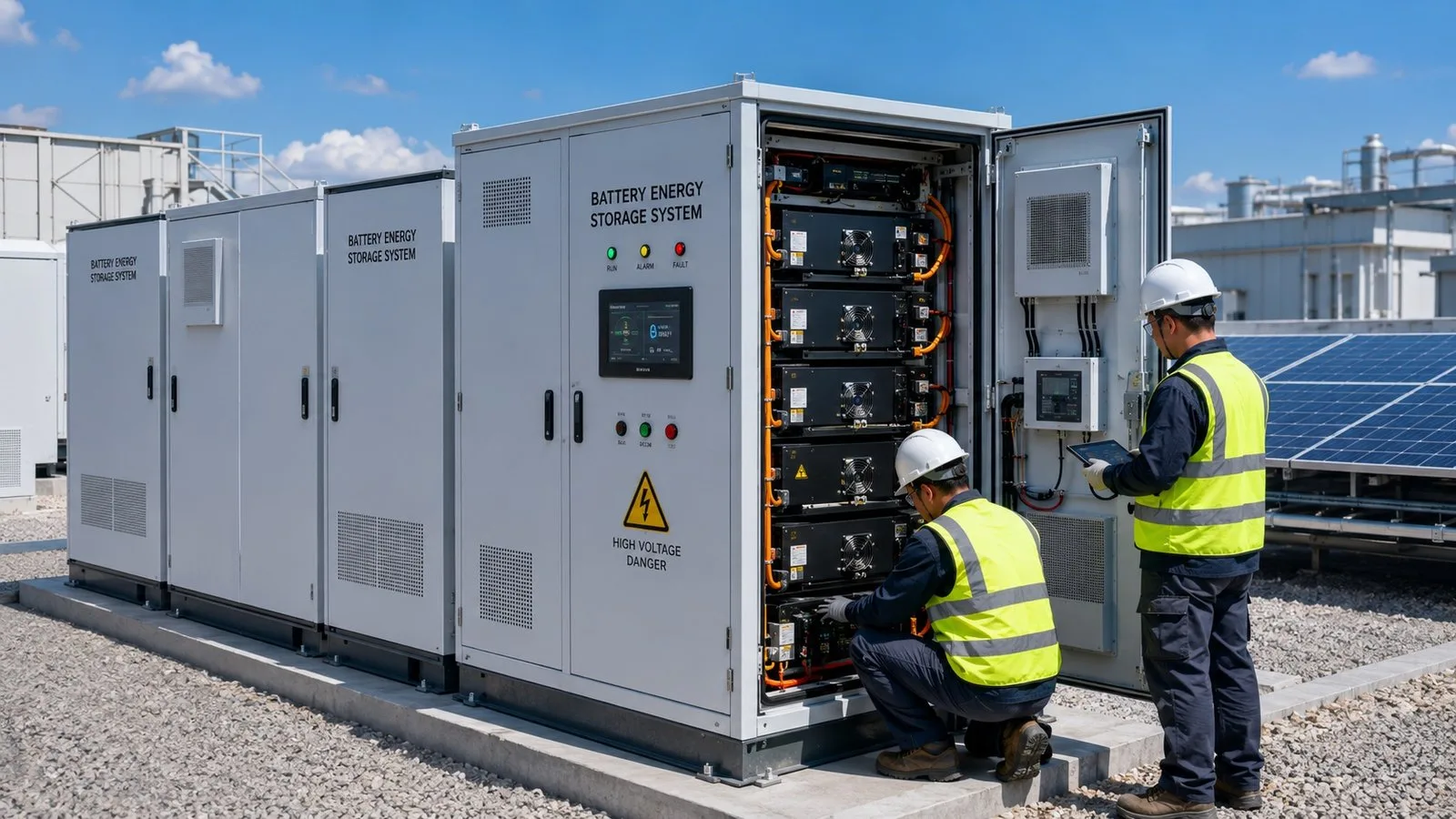
Solar panels generate electricity when the sun is available, but your energy demand may not always match solar production. Excess solar energy can be stored in a Battery Energy Storage System (BESS) and used when solar generation is insufficient, such as during cloudy or rainy periods. For businesses and homes looking for greater energy resilience, a properly configured BESS can also provide backup power for essential loads during a blackout.
Whether you are a homeowner, commercial property owner or industrial facility, EDCA Energy can design a solar + BESS solution around your actual usage, solar generation and backup requirements, and handle the complete process from load assessment and system sizing to installation, testing and commissioning.
Backup during outages
When the grid drops, a solar-only system shuts off for safety. A battery with backup capability keeps your essential circuits alive.
Peak-time cover
Your highest usage is usually in the evening, after the sun has gone. Stored power covers that window instead of pricey grid electricity.
Key takeaway: After NEM 3.0, a battery restores the economics of rooftop solar by turning exported surplus into stored power you use yourself, plus backup the grid cannot give you.
How much battery capacity does your home or business need?
Battery capacity is not one-size-fits-all. We size each system based on your energy consumption, usage patterns, solar generation and desired backup or peak-shaving requirements.
01 — Energy usage
How much do you consume? Your daily and peak electricity usage determines the required battery capacity.
02 — Usage pattern
When do you use energy? Daytime versus evening usage helps determine how much solar energy needs to be stored.
03 — Your goal
What do you want to achieve? Whether it is solar self-consumption, backup or peak shaving, your objective affects the ideal battery size.
Quick answer: Battery sizing depends on the loads you want to cover and for how long. A 7 kWh battery holds evening essentials for a terrace home; 14–21 kWh runs most of a family household overnight; larger banks support SME and industrial loads. EDCA sizes yours from a real load study, not a guess. Treat the tiers below as market-context guides; your exact fit comes from a site survey.
| Capacity (kWh) | Best suited to | Typically covers |
|---|---|---|
| 7 kWh | Terrace / small home | Lights, fans, fridge, Wi-Fi, some evening AC |
| 14 kWh | Family household | Most overnight loads, multiple AC units |
| 21 kWh | Large / double-storey home | Whole-home evening use plus backup circuits |
| 30 kWh+ | Shop / SME premises | Refrigeration, POS, lighting, small machinery |
| 100 kWh+ | Factory / industrial | Peak shaving, process loads, demand management |
Source: EDCA Energy, illustrative market-context guide, 2026. Larger operations often pair storage with our industrial solar installation service, where batteries shave expensive demand peaks.
Key takeaway: Capacity follows your usage, your usage pattern and your goal. The tiers above are context; the number that matters comes out of a load study of your own site.
Battery sizing for homes versus commercial and industrial sites
Quick answer: A home can be sized around a worked example — a 7 kWh battery and the evening loads it carries. A commercial or industrial site cannot: capacity there comes out of an assessment of energy consumption, load profile, peak demand and operating hours.
A 7 kWh battery
For homes, capacity can be sized around daily usage and backup needs. A 7 kWh Huawei battery holds roughly 7,000 Wh of usable energy, which is enough to support the essential household loads below. The table is an easy-to-understand example, not a guarantee: real runtime depends on appliance efficiency, usage habits and ambient temperature.
Huawei LUNA2000-7/14/21-S1
Site-specific sizing
There is no fixed battery size for a business. Capacity is determined through a detailed assessment:
Huawei LUNA2000-215 Series
From smaller commercial systems to large-scale industrial applications, battery capacity is tailored to the site’s energy profile and objectives — professionally assessed and right-sized.
How long can a 7 kWh battery run these appliances?
| Appliance | Typical power draw | Runtime on a full 7 kWh battery |
|---|---|---|
| LED light (10 W) | 0.01 kW | Over 600 hours |
| Wi-Fi router | 10–20 W | 350–700 hours |
| Refrigerator | 100–200 W (average running) | 35–70 hours* |
| Fan | 50–70 W | 100–140 hours |
| Television (55″) | 80–150 W | 45–85 hours |
| Laptop | 60–100 W | 70–115 hours |
| Phone charging | 10–20 W | Several hundred charges |
| Air-conditioner, 1 HP | 700–900 W (while running) | About 7–10 hours |
| Air-conditioner, 1.5 HP | 1.0–1.3 kW | About 5–7 hours |
| Air-conditioner, 2 HP | 1.5–2.0 kW | About 3–5 hours |
*A refrigerator cycles on and off, so actual runtime depends on how often the compressor runs and the temperature setting. Figures are indicative, EDCA Energy, 2026, and vary with appliance efficiency, usage habits and ambient temperature. Pairing the battery with solar, and running appliances sensibly, stretches it further.
Key takeaway: The right battery size is set by the loads you want to carry into the evening, not by a headline number. An oversized battery wastes money; an undersized one leaves you buying grid power.
A battery turns a daytime rooftop into round-the-clock power, sized to your real usage by EDCA.
How much does a battery lift your solar self-consumption?
Quick answer: Solar without a battery usually lets a Malaysian home use only a portion of what it generates, because peak production and peak usage happen at different times. Adding storage typically pushes self-consumption much higher, so more of your generation offsets your own bill instead of being exported. The chart below models a typical household across three setups; it is illustrative, not a guaranteed result.
Self-consumption by setup (illustrative)
Illustrative scenario, EDCA Energy, based on Malaysian usage patterns, 2026. Your figure depends on roof size, load timing and battery capacity.
Key takeaway: A battery’s biggest job in Malaysia is lifting self-consumption, so the power you paid to generate is the power you actually use at night.
Who is solar battery storage for?
Quick answer: Battery solutions are designed for every scale. From homes to commercial buildings and industrial facilities, our battery solutions meet different energy needs — from solar self-consumption and backup to energy optimisation and peak demand management.
ResidentialEnergy storage & backup
Store excess solar energy for use at night, while keeping essential loads powered during outages.
CommercialEnergy cost optimisation
Optimise solar energy usage, reduce grid dependency and improve energy efficiency across your business.
IndustrialPeak demand management
Reduce peak demand and manage high-load operations with battery storage designed for larger energy needs.
Key takeaway: The battery is the same idea at every scale — keep your own solar and use it when it is worth the most. What changes is the goal: backup at home, cost control in a commercial building, demand management in a factory.
Ready to see your numbers?
Send us your latest bill and usage, and we will size a right-fit battery system with clear costs and realistic backup and self-consumption targets. Batteries also pair neatly with a home EV charger.
How long can a battery back up your home during an outage?
Quick answer: Backup runtime depends on battery capacity and how heavy your loads are during the outage. A modest battery running only essentials can last many hours; the same battery running air-conditioning drains far faster. The table below models runtime across battery tiers and load scenarios (assuming the battery is charged when the outage begins).
| Battery | Essentials only (~0.4 kW) | Essentials + 1 AC (~1.2 kW) | Whole home (~3 kW) |
|---|---|---|---|
| 7 kWh | ~15 hrs | ~5 hrs | ~2 hrs |
| 14 kWh | ~31 hrs | ~10 hrs | ~4 hrs |
| 21 kWh | ~46 hrs | ~15 hrs | ~6 hrs |
Illustrative estimates, EDCA Energy, 2026. Runtime assumes a full charge; real runtime is confirmed during your EDCA design.
Key takeaway: Backup runtime is a trade-off between capacity and what you switch on. Sizing a battery for essentials stretches it far longer than running the whole house.
How EDCA installs your solar battery storage system
Quick answer: EDCA runs solar battery storage installation as a managed EPCC project, load study, design, supply, install and commissioning, so you get a system matched to your usage and safely tied into your solar and grid supply.
Load & site study
We review your bill and usage pattern and inspect your roof, meter and electrical setup to confirm what storage suits you.
System design
We size the battery and match it to a compatible hybrid inverter, and mark out which circuits stay live during a backup.
Free quote
You get a clear, itemised quote, with no fixed catalogue price, because every home and business is different.
Installation
Our SEDA-registered team installs the battery, inverter and protection safely and to standard.
Commissioning & handover
We test the system, configure charge and discharge behaviour, and show you how to monitor it.
Key takeaway: A battery is a safety-critical electrical install. Using a SEDA-registered EPCC provider protects your home, your warranty and your grid connection.
Why choose EDCA Energy for battery storage?
Quick answer: EDCA Energy is a SEDA-registered Photovoltaic Service Provider with a track record of 500+ completed projects and 10+ MWp installed across residential, commercial and industrial sites. We cover the full solar solutions range, so storage is designed alongside your panels, not bolted on.
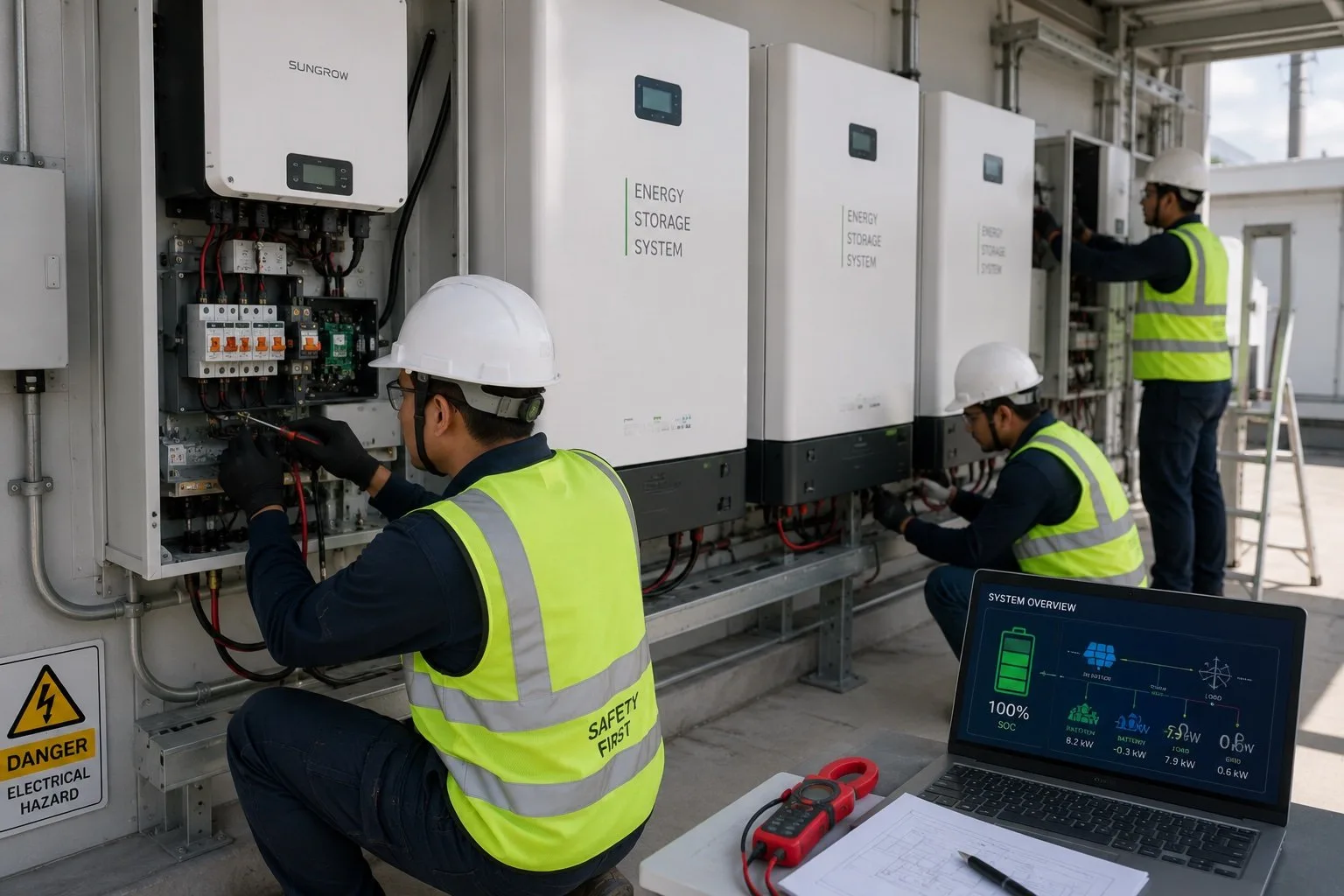
Choosing an accredited EPCC provider with a real installed track record protects both your safety and your long-term return on storage, and keeps a battery, panels and inverter working as one designed system.
Accredited & compliant
SEDA-registered (RPVSP), myHijau listed, CIDB registered, and a TNB partner, so your install meets Malaysian standards.
Proven delivery
EDCA Energy has completed 500+ projects and installed 10+ MWp, with group experience spanning 800+ sites.
Full EPCC in-house
Engineering, procurement, construction and commissioning under one roof means fewer handoffs and clearer accountability.
Right-sized, honest advice
We recommend the storage your usage justifies, and tell you plainly if a battery is not worth it yet.
Accreditation






Key takeaway: Choosing an accredited EPCC provider with a real installed track record protects both your safety and your long-term return on storage.
As Malaysia shifts to self-consumption, storage is the piece that makes solar pay off in the evening.
In short: After NEM 3.0, solar battery storage is what turns a rooftop system into real energy independence, more self-consumption, evening cover and backup during outages. As Malaysia shifts from net metering toward self-consumption, storage is moving from a nice-to-have to the piece that makes solar pay off when your household or business actually uses the most power. Sizing it correctly is the whole game, and that starts with understanding your own usage.
See how solar battery storage works
Quick answer: The two short films below show the battery systems EDCA installs in Malaysia: the Huawei LUNA2000-S1 residential energy storage system for homes, and the LUNA2000-215 Series cabinet used on commercial and industrial sites.
Residential storage
Commercial & industrial storage
Product films published by Huawei Digital Power, the manufacturer of the battery systems EDCA supplies and installs.
Key takeaway: The hardware is the same at both scales, a stacked unit at home and a floor-standing cabinet on site. What EDCA adds is the sizing, the safe installation and the commissioning.
EXCELLENT Based on 10 reviews
 Posted on Google

 Jamhuri JamaluddinI had a very good experience with EDCA. I managed to install 2 solar units just in time to secure the NEM quota, and now NEM has been replaced with ATAP scheme. The whole process was smooth, and everything was explained clearly from the beginning. The team was professional and helpful throughout. My TNB bill has dropped to almost zero. Most months, I only pay the minimum charge of around RM1 to RM3, depending on my electricity usage. Depends on the kWp that you are taken. Special thanks to Julia Cheah, the sales agent who assisted me. She was excellent, friendly, knowledgeable, and always ready to help. After-sales service very excellent. Highly recommended if you’re considering going solar.Posted on Google
 Geok See OngVery informative, helpful and knowledgeable during and after installation. Many special thanks to Jass for overseeing the whole installation.Posted on Google
 Jaeden WThank you to Jass Lee for making the whole process easy and efficient. It was a pleasant experience and was made even smoother with her explanation and updates throughout the entire process, would highly recommend to anyone considering installing solar panels. - Cheryl ChongPosted on Google
 Jing Chuan安装好大概半年了才放心留言推荐,现在市面上太多太阳能公司了不懂要选哪一家,一开始找了不同人来quote 到最后选edca主要是因为他们不会乱推荐一些不适合我的产品,我看到一些quotation要加这个那个的我都怕之后很多hidden cost,对接我的salesperson - Ms Loo也很nice,很有耐心回答问题,最重要是解释起来我们外行人都可以很容易明白👍 整体来说是一次很放心的体验,如果有朋友想装太阳能,我会推荐他们。Posted on Google
 Alice LeeThe whole process was smooth and easy. The team was friendly, helpful, and quick to get everything done. Highly recommend if you're thinking about going solar
Frequently asked questions
Common questions on solar battery storage in Malaysia, covering whether you need one, using a battery without solar, backup, lifespan and retrofitting. A free EDCA load study answers them for your specific site.
Do I need a battery to install solar in Malaysia?
No, you can install solar without a battery. But after new NEM 3.0 applications closed in June 2025, a battery matters more, because it lets you use more of your own generation at night instead of exporting it cheaply. Whether it is worth it depends on your usage.
Can I use a battery without solar panels?
Depending on the system configuration, batteries can also be used for energy management and other applications beyond solar storage.
Can a solar battery power my whole house during a blackout?
It can, for a limited time, if the battery is sized for it. Running only essentials, lights, fridge, fans, Wi-Fi, stretches runtime to many hours. Running air-conditioning and heavy loads drains the battery much faster, so most homes back up essential circuits.
How long do solar batteries last?
Modern lithium batteries are typically rated for many thousands of charge cycles and commonly come with a manufacturer warranty measured in years. Actual lifespan depends on usage, depth of discharge and temperature. EDCA installs batteries with proper management systems to protect that lifespan.
Can I add a battery to my existing solar system?
Often yes. Whether it is straightforward depends on your current inverter and setup, some systems need a hybrid inverter to add storage. EDCA assesses your existing installation during the site study and recommends the cleanest way to retrofit storage.
Ready to store your own solar power?
Get a free quote from EDCA Energy. We review your bill, your roof and your usage, then recommend a right-sized battery system with clear costs and realistic backup and self-consumption targets.