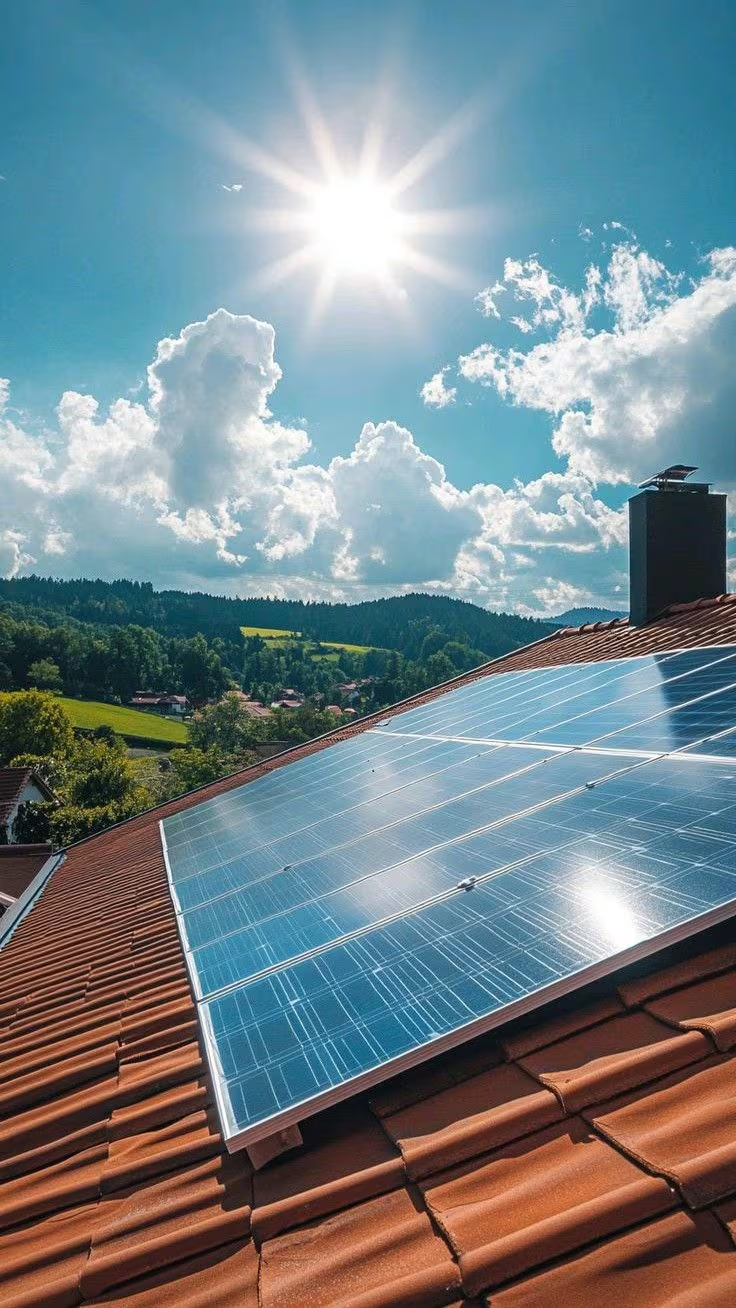
Search “best solar battery” and you get a wall of brand names and spec sheets. That is the wrong place to start. In Malaysia’s climate, with our net energy metering rules and evening-heavy power use, the best solar battery storage for one home can be a poor fit for the house next door. The right question is not “which brand wins?” but “which system fits my usage, lasts the longest, and costs the least per usable unit of power over its life?”
This buyer’s guide answers that. We walk through the criteria that define a genuinely good battery, the warranty and lifespan to expect, how sizing changes the payoff, and where the best long-term value sits. Every ringgit figure is illustrative market context — your real numbers depend on your roof, load, and installer quote. First, a short video on how solar-plus-battery systems work, to frame the decision.
Watch: how solar-plus-battery hybrid systems work
Source video: SolarReviews on YouTube — Solar Plus Battery Storage: How Hybrid Systems Work
1. What makes the best solar battery storage in Malaysia?
Quick Answer: The best solar battery storage is defined by a short list of measurable qualities, not by brand hype: usable capacity matched to your evening load, safe chemistry that tolerates heat, a long cycle life, a warranty that covers real years and throughput, and a low lifetime cost per usable kWh. A battery that scores well on all five is a better buy than a famous name that misses one.
“Best” only means something once you tie it to criteria you can check on a quote. Most buyers fixate on the total kWh number and the brand logo. Neither tells you how much power you can actually use each night, how long the battery will last in a hot Malaysian roof space, or what it truly costs per cycle. The five factors below are what separate a top-tier system from an average one.
| Selection criterion | Weight in decision | Best-in-class marker |
|---|---|---|
| Usable capacity fit | 25% | Sized to evening load, not oversold |
| Chemistry & heat safety | 20% | LFP, stable at tropical temperatures |
| Cycle life & warranty | 20% | 10-year cover, high rated cycles |
| Lifetime cost per kWh | 20% | Lowest cost per usable cycle, not sticker |
| Installer & support | 15% | SEDA-registered, local after-sales |
Illustrative weighting for Malaysian home buyers, 2026. Adjust to your own priorities — backup weight rises if outages are common.
Notice that brand name is not on the list. A well-designed system from a lesser-known LFP maker, sized correctly and installed by an accredited team, beats a famous badge that was oversized on a sales call. If you want the ground-up mechanics behind these terms, our explainer on the battery storage system for solar panels covers how storage actually works.
Want these criteria applied to your own home?
A proper site assessment turns this scorecard into a real recommendation. See how solar battery storage is designed →
2. What warranty and lifespan should the best battery have?
Quick Answer: A top-tier home battery in Malaysia should carry around a 10-year warranty and be rated for several thousand full cycles. Warranty length and rated throughput are the two numbers that separate a premium battery from a cheap one, because a battery that lasts twice as long can cost less per year even at a higher upfront price.
Warranty is where cheap and premium batteries really part ways. Two boxes can show the same kWh figure, yet one is guaranteed for five years and the other for ten — and rated for twice the cycles. In a tropical climate that runs a battery hard, that gap decides whether you replace it once or twice over a solar system’s life. The chart below compares three quality tiers on the throughput that actually drives longevity.
| Quality tier | Relative rated cycles | Rated cycles | Warranty |
|---|---|---|---|
| Entry lithium | ~3,000 | ~5 yrs | |
| Mid-range LFP | ~6,000 | ~10 yrs | |
| Premium LFP | ~9,000 | ~10–12 yrs |
Illustrative market context, Malaysia 2026. Always read the warranty for retained-capacity terms, not just the year count.
One warning: a “10-year warranty” is only as good as its fine print. The best warranties guarantee a retained capacity — often around 70% — at the end of the term, not just that the unit will still switch on. Read that clause before you compare prices.
3. What size gives you the best result?
Quick Answer: The best battery for you is the size that lifts how much of your own solar you actually use, without paying for capacity you can never refill. Self-consumption climbs steeply from panels-only to a mid-size battery, then flattens. Finding that sweet spot — usually 5 to 15 kWh for a home — matters more than chasing the largest unit.
“Best” is a moving target with sizing. A battery too small still leaves you buying grid power at night; one too large sits half-empty because your panels cannot refill it on an average day. The chart below shows how the share of solar you self-consume rises with usable capacity — and where the curve starts to flatten.
| Setup | Relative self-consumption | Solar self-used |
|---|---|---|
| Panels only, no battery | ~30% | |
| 5 kWh battery | ~55% | |
| 10 kWh battery | ~75% | |
| 15 kWh battery | ~85% |
Illustrative, Malaysia 2026, assumes a typical evening-heavy home and a well-matched panel array. Your result depends on load and array size.
The jump from no battery to 5 kWh is large; from 10 kWh to 15 kWh, much smaller. For many homes the best value sits in the middle of that curve. To turn a size into a real number, our guide to the solar battery storage price in Malaysia breaks down installed cost by capacity.
Not sure which size hits your sweet spot?
We read your bill and evening load to find it. Get a free quote →
4. Which battery offers the best value over its life?
Quick Answer: The best-value battery is the one with the lowest cost per usable kWh delivered over its whole life — not the cheapest to buy. A premium LFP unit costs more upfront but spreads that cost over far more cycles, so its cost per usable kWh is often lower than a cheap lithium or lead-acid battery you replace sooner.
Upfront price is a trap. A battery that costs less today but dies in five years can end up dearer than one that costs more and lasts twelve. The fair way to compare is cost per usable kWh cycle: total lifetime cost divided by all the energy the battery will ever deliver. On that measure, the ranking often flips — as the chart shows, lower is better.
| Battery type | Relative cost per kWh (lower is better) | Cost per usable kWh (RM) |
|---|---|---|
| Lead-acid | ~1.20 | |
| Entry lithium | ~0.65 | |
| Premium LFP | ~0.45 |
Illustrative, Malaysia 2026. Cost per usable kWh = lifetime installed cost ÷ total energy delivered over rated life. Your figures depend on price and cycling.
Lead-acid usually looks cheapest on day one and dearest across its life. Premium LFP is the reverse. That is why the best battery is judged on lifetime value, not sticker price — and why a slightly pricier warranty-backed unit is often the smarter buy.
5. What features separate the best battery systems?
Quick Answer: Beyond capacity and warranty, the best systems get the details right: a hybrid inverter that plays nicely with your panels, genuine backup mode that keeps circuits live during an outage, a clear monitoring app, and safety features suited to Malaysia’s heat and humidity. These are the differences you feel over years of use.
Two batteries with identical spec sheets can behave very differently in daily life. The best systems win on the features that only show up once the battery is on your wall. Look for these:
- True backup mode. Not every battery keeps power flowing during a blackout — some only shift energy for savings. If outage protection matters, confirm the system has genuine islanding and a fast switchover.
- Hybrid inverter compatibility. A hybrid-ready design keeps the system simple; a retrofit onto an old inverter may add cost and complexity.
- Clear monitoring. A good app shows charge level, savings, and health at a glance, so you can see the battery earning its keep.
- Heat and ingress protection. A high IP rating and a design tested for tropical heat matter more here than in cooler markets.
None of these appear in a headline kWh number, yet they decide how satisfied you are in year three. A strong installer will walk you through each one rather than quoting a box in isolation.
6. How to choose the best battery storage provider
Quick Answer: The installer matters as much as the battery. The best provider is SEDA-registered, sizes the system to your actual load instead of upselling capacity, explains warranty terms in plain language, and offers local after-sales support. A great battery installed badly will underperform; an average one installed well will not.
You are buying a decade-long relationship, not just a box. The company that designs, installs, and services the system decides whether it performs as promised. Weigh providers on the things that protect you long after the invoice is paid.
- Accreditation. Choose a SEDA-registered contractor recognised by the Energy Commission — safety and warranty both depend on it.
- Honest sizing. The best providers right-size to your evening load; be wary of anyone pushing the largest battery without reading your bill.
- Clear warranty support. Ask who honours the warranty locally and how claims are handled.
- Track record. Look for a real portfolio of installed systems, not just a catalogue of brands.
When you are ready to compare properly, EDCA Energy designs storage around your usage rather than a sales target, and our guide to the best solar panel company in Malaysia explains the accreditation to check before you sign.
7. Conclusion
Quick Answer: The best solar battery in Malaysia is the one matched to your evening load, built on safe LFP chemistry, backed by a genuine 10-year warranty, and installed by an accredited team — the option with the lowest lifetime cost per usable kWh, not the biggest brand or box.
“Best” is personal. It depends on how much power you use at night, whether backup matters to you, and how long you want the system to last. Score your options on capacity fit, chemistry, warranty, lifetime cost per kWh, and installer quality, and the right choice becomes clear — often a well-sized LFP system from an accredited installer rather than the loudest brand. Get those five things right and your battery quietly earns its place for well over a decade.
Ready to find the best battery for your home?
We’ll assess your evening load, match the right LFP system, and quote the full installed cost — so you choose on real numbers, not brand hype.
Get a Free Quote →8. Frequently Asked Questions
1. What is the best solar battery storage for a Malaysian home?
There is no single best battery for every home. The best choice is an LFP lithium system sized to your evening load, carrying around a 10-year warranty, and installed by a SEDA-registered contractor. For most homes that means a 5 to 15 kWh unit chosen for the lowest lifetime cost per usable kWh rather than the biggest brand name.
2. Is LFP or NMC the best battery chemistry for solar?
For Malaysian homes, LFP (lithium iron phosphate) is usually the best chemistry because it is very stable at tropical temperatures, offers a long cycle life, and has a strong safety record. NMC is more compact but runs hotter, which matters when a battery sits in a warm utility area or outdoors in Malaysia’s climate.
3. Does the best battery mean the most expensive one?
No. The best battery is the one with the lowest cost per usable kWh over its whole life, which is not always the priciest to buy. A premium LFP unit costs more upfront but delivers far more cycles, so its lifetime cost per kWh is often lower than a cheap lithium or lead-acid battery you have to replace sooner.
4. What warranty should the best solar battery have?
Look for around a 10-year warranty that guarantees a retained capacity — often about 70% — at the end of the term, not just that the unit still switches on. Pair that with a high rated-cycle figure. Warranty length and rated throughput together are the clearest signals of a top-tier battery.
5. How do I compare solar battery quotes fairly?
Compare on five things: usable capacity matched to your evening load, LFP chemistry, warranty years and retained-capacity terms, lifetime cost per usable kWh, and the installer’s accreditation and support. Judging quotes on the headline kWh number or the brand alone is how buyers overpay or oversize, so use the full scorecard instead.
See your solar savings in under a minute
Estimate your ideal system size, payback period and monthly bill offset with the EDCA calculator.