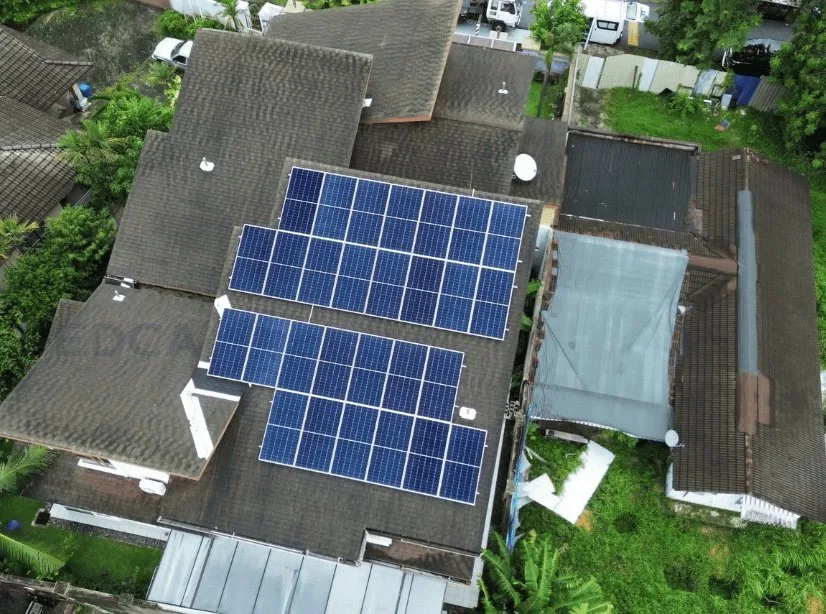
1. Why a home solar panel makes sense in Kuala Lumpur
Kuala Lumpur sits close to the equator, so rooftops across the Klang Valley get strong, steady daylight almost every day of the year. That is exactly the free fuel a home solar panel needs. For most KL families, the pull is simple: electricity tariffs keep rising, and a rooftop system lets you make your own power in the daytime instead of buying every unit from the grid.
KL homes also have a helpful mix of roof types. Terrace houses in Cheras, semi-Ds in Kepong, and bungalows in Bangsar all have usable roof space that faces the sun for most of the day. A scheme makes it work harder too: under Net Energy Metering (NEM), administered by SEDA, the extra energy your panels make at midday is exported to the grid and credited against what you draw at night.
This guide is the plain-English version for KL homeowners: how to size a system, what affects output on Klang Valley rooftops, which home types fit best, and what the install looks like. When you are ready, EDCA Energy handles the full home solar panel installation from design to switch-on. First, let’s see how the pieces fit together.
Watch: how solar panels turn sunlight into electricity
A quick 5-minute explainer of the photovoltaic effect behind every rooftop system.
Source: “How do solar panels work?” — Richard Komp, TED-Ed (YouTube)
2. Is a home solar panel worth it for a Kuala Lumpur home?
Quick Answer: For most KL landed homes, yes. If you own the property, have a decent unshaded roof, and pay a meaningful monthly TNB bill, a home solar panel in Kuala Lumpur usually pays back well within its 25-year life. The strong Klang Valley sun and NEM credits do most of the heavy lifting.
The honest test is your bill and your roof, not a rule of thumb. Homes in KL that pay RM250 a month and above tend to see the clearest case, because there is enough daytime usage — aircon, water heaters, home offices — for the panels to offset. The bigger the bill, the faster the maths tends to work.
Three things line up in KL’s favour:
- Consistent sun. The Klang Valley gets usable daylight year-round, so seasonal dips are mild compared with countries that have real winters.
- Rising tariffs. Grid electricity has trended up, so every unit you self-generate is worth more over time.
- NEM credits. Surplus midday energy is not wasted — it offsets your night-time draw.
If you are still deciding between installers, it helps to know what separates a solid one from a cheap quote — our guide to the best solar panel company in Malaysia walks through the checks that matter most.
A quick site check settles orientation, shading, and system size in one visit. See how home solar installation works →
3. What size home solar panel system does a KL home need?
Quick Answer: Size the system to your monthly TNB bill, not your roof. Most Kuala Lumpur landed homes land between 4 kWp and 12 kWp. A good installer works backwards from your last 6–12 months of bills, then checks the roof fits the panel count.
Your bill is the best sizing input because it shows how much energy you actually use. The table below is an illustrative starting point for KL homes — real sizing depends on your roof, shading, and how much of your usage happens in daylight.
| Monthly TNB bill | Suggested size | Approx. panels | Rough roof area |
|---|---|---|---|
| RM250–400 | 4–5 kWp | 9–11 | ~22–28 m² |
| RM400–600 | 5–7 kWp | 11–16 | ~28–40 m² |
| RM600–900 | 7–10 kWp | 16–22 | ~40–55 m² |
| RM900 and above | 10–12 kWp | 22–27 | ~55–66 m² |
Illustrative sizing guide — EDCA Energy estimate for typical Kuala Lumpur landed homes. Your exact size is set from your TNB bills and a roof assessment, then routed to a free quote.
Notice the pattern: a home paying RM300 rarely needs the same system as one paying RM950. Oversizing wastes money on capacity you cannot use; undersizing leaves savings on the table. In many KL terrace homes the limit is usable roof area rather than the bill, which is why a proper installer measures the roof before confirming the size.
4. What affects solar output on Kuala Lumpur rooftops?
Quick Answer: Two KL homes with the same size system can produce very different amounts. Roof orientation and tilt, shading from trees and neighbouring high-rises, equipment quality, occasional haze, and dust build-up are the biggest levers on real output in the Klang Valley climate.
When people compare quotes purely on price, they miss that output depends heavily on design. The chart below ranks the main factors by how strongly they swing real-world generation on KL rooftops — an illustrative view of how these levers behave in the Klang Valley.
| Roof orientation & tilt | Very high | |
| Shading (high-rises, trees) | High | |
| Panel & inverter quality | High | |
| Haze periods | Medium | |
| Dust & cleaning | Medium |
Illustrative market context — EDCA Energy estimate of relative influence on Kuala Lumpur rooftops. Bars show relative weighting, not guaranteed output.
The good news is that most of these are fixed at the design stage. Shading is the one that catches KL homeowners out — a new condo tower or a tall neighbouring tree can throw afternoon shadow across a roof that looked clear at noon. A careful installer studies the sun path across the whole day, not just a single snapshot, then points the panels for the best year-round yield.
5. Which Kuala Lumpur home types suit solar best?
Quick Answer: Landed homes — terrace, semi-D, and bungalow — are the easiest fit for a home solar panel in Kuala Lumpur because you own the roof outright. Strata properties like condos and some townhouses need management or JMB approval for shared roof access, so they are possible but more involved.
KL housing is varied, and roof ownership is the first thing that decides how simple your project is. The table below groups the common KL home types by how straightforward solar tends to be.
| Home type | Roof ownership | Usable roof | Install complexity |
|---|---|---|---|
| Terrace / link house | Owner | Moderate | Low |
| Semi-detached | Owner | Good | Low |
| Bungalow | Owner | Large | Low–moderate |
| Townhouse (strata) | Shared / JMB | Varies | Moderate |
| Condominium (strata) | Shared / management | Limited | Higher |
Illustrative guide — EDCA Energy estimate for common Kuala Lumpur property types. Individual roofs vary; a site assessment confirms suitability.
If you live in a landed home, you are in the easiest group — the roof is yours and the NEM application is straightforward. For strata living, the roof is shared property, so you would need approval from the management body first. The same broad picture applies just across the state line, which is why our companion guide on home solar panels in Johor covers landed-home solar in a similar market.
Send us your address and recent TNB bills and we’ll assess suitability before you commit. Get a Free Quote →
6. How much can a Kuala Lumpur home save with solar?
Quick Answer: Savings scale with system size and how much daytime energy you self-consume. Larger KL systems offset a bigger share of the bill and generally pay back sooner per ringgit. The figures below are illustrative — your real numbers come from a proper quote based on your bills.
Because EDCA prices are quote-based, treat the table below as a modelled illustration of how the numbers tend to move for a KL home, not a price list. It shows why bigger bills usually justify bigger systems.
| System size | Est. monthly generation | Typical bill offset | Indicative payback |
|---|---|---|---|
| 4–5 kWp | ~480–600 kWh | 45–65% | Longer |
| 5–7 kWp | ~600–840 kWh | 55–78% | Moderate |
| 7–10 kWp | ~840–1,200 kWh | 68–88% | Shorter |
| 10–12 kWp | ~1,200–1,440 kWh | 78–92%+ | Shortest per kWp |
Modelled illustration based on typical Klang Valley irradiance and self-consumption — EDCA Energy estimate. Actual savings depend on usage, tariff, and NEM credits. Get a free quote for real figures.
The lever most KL homeowners underestimate is self-consumption. Running the aircon, pool pump, or washing during daylight lifts the value of every unit you make. Batteries can stretch this further by storing daytime surplus for evening use, worth exploring once your daytime offset is already strong.
7. NEM, approvals and the KL installation process
Quick Answer: A KL home solar install runs in five clear stages, from bill review to switch-on. A registered installer handles the NEM paperwork with SEDA and coordinates with TNB, so most of the process happens behind the scenes for you.
Knowing the steps helps you spot a well-run project from a rushed one. Here is the typical path for a Kuala Lumpur home:
- Bill review and sizing. The installer studies your recent TNB bills and roof to recommend the right kWp and layout.
- Site assessment and design. An on-site check of roof condition, orientation, shading, and your distribution board turns into a firm design and quote.
- NEM application and approvals. Your installer submits the paperwork to SEDA and coordinates with TNB — a key reason to use a registered company.
- Installation. Mounting, panels, inverter, and wiring go in, usually within a day or two for a typical KL landed home.
- Testing and commissioning. The system is tested, the meter is set up, and you get a walkthrough of monitoring so you can watch your generation.
The single most important choice is who you hand this process to — accreditation and track record matter far more than the cheapest line on a quote. A SEDA-registered installer keeps the NEM and TNB steps clean, which protects both your warranty and your grid connection.
8. Conclusion: is home solar right for your KL home?
Quick Answer: If you own a KL landed home with a decent unshaded roof and a meaningful monthly bill, a home solar panel in Kuala Lumpur is very likely worth it. The next step is a proper assessment sized to your real usage.
Home solar in KL is no longer exotic. It is a practical way to cut a rising bill using the sun that hits your roof every day. The formula is simple: size it to your bill, design it for good sun and low shading, use more of your power during daylight, and pick a registered installer with a real track record. Do those four things and the maths tends to work in your favour.
The honest way to know your own numbers is a real quote based on your bills and roof, not a generic estimate. When you are ready, EDCA Energy can assess your Kuala Lumpur home and design a system that fits.
Ready to see what solar can do for your KL home?
Share your recent TNB bills and our team will model your savings and design a right-sized system for your Kuala Lumpur roof — no obligation.
Get a Free Quote9. Frequently asked questions
How many solar panels does a typical KL home need?
Most Kuala Lumpur landed homes use between 9 and 27 panels, depending on the bill. A home paying around RM300 a month often suits 9–11 panels, while a RM900-plus bill may need 22 or more. The panel count follows the system size, which is set from your actual TNB usage.
Do I need approval to install a home solar panel in Kuala Lumpur?
For a landed home you own, your registered installer handles the Net Energy Metering application with SEDA and coordinates with TNB — you do not apply yourself. For a strata property like a condo, you also need approval from the building’s management or JMB before installing on the shared roof.
Does haze in the Klang Valley affect solar output much?
Haze reduces output during the affected days because less direct sunlight reaches the panels, but these periods are usually short and seasonal. Systems are sized around the full year, so occasional haze is already factored into realistic yield estimates rather than being a dealbreaker.
Can I install solar on a KL terrace house with limited roof space?
Yes. Terrace roofs are smaller than bungalows, so the usable area may cap the system size, but many KL terrace homes still fit a 4–7 kWp system comfortably. A site assessment confirms how many panels your specific roof orientation and area can take.
Is it better to buy a bigger system now or add panels later?
Designing the right size upfront is usually more cost-effective than expanding piecemeal, because a single install shares mounting, inverter, and labour across all panels. A good installer sizes for your current and near-future KL usage in one go.
See your solar savings in under a minute
Estimate your ideal system size, payback period and monthly bill offset with the EDCA calculator.