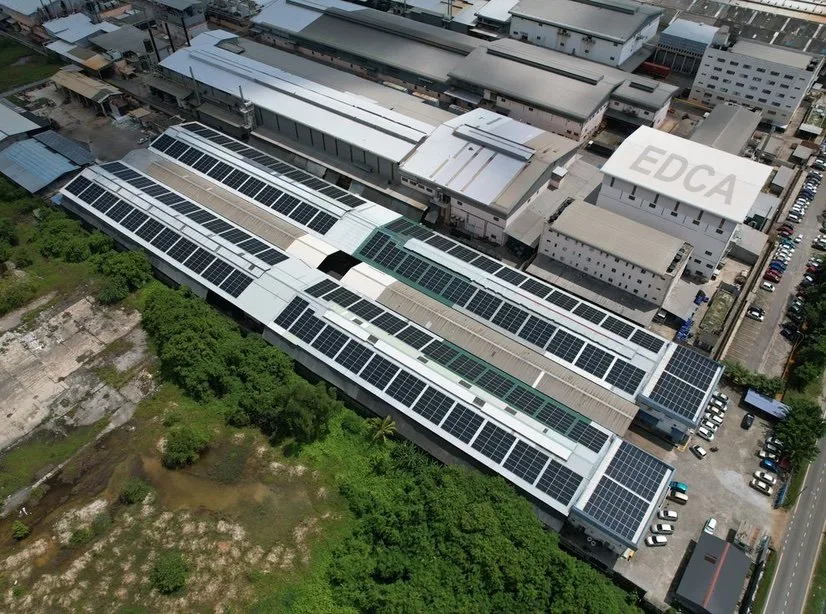
TL;DR: Choosing between commercial solar panel companies in Malaysia is less about who has the flashiest brochure and more about who is properly registered, who owns the whole job end to end, and who will still be around to honour a 25-year warranty. This guide gives you a due-diligence framework: the provider types you will meet, the accreditations that prove legitimacy, a weighted way to score competing quotes, and the warranty and service cover to insist on before you sign.
Once a Malaysian business decides solar makes sense, the next question is harder than the first: who should actually build it? Search around and you will find dozens of commercial solar panel companies, from national EPCC firms to one-van outfits, all promising the lowest price and the fastest payback. On a system that sits on your roof for a quarter of a century, picking wrong is expensive.
This guide is for the people who carry that risk: factory owners, facility managers, retail and warehouse operators, and finance leads signing off the capex. Instead of ranking brands, it hands you a repeatable way to vet any provider — how to tell an accredited installer from a broker, how to score quotes fairly, and what a trustworthy warranty looks like. If you want the wider business case first, our guide to commercial solar power in Malaysia covers the returns; here, we focus on choosing the company. First, a short look at what one of these projects involves.
Watch: a commercial rooftop solar project in practice
A walkthrough of a 50 kW on-grid commercial rooftop system with net metering, showing the scope a full-service installer takes on.
Source: Commercial solar rooftop system project | Unique solar + Storage project (YouTube, February 2024).
2. What commercial solar companies actually do — and the four types you will meet
Quick Answer: Commercial solar panel companies range from full EPCC providers that design, build and maintain the system in-house, to brokers who resell your job to a subcontractor. The label “solar company” is not regulated, so two firms quoting you can carry very different responsibility. Knowing which type you are dealing with tells you who is actually accountable when something goes wrong.
EPCC stands for Engineering, Procurement, Construction and Commissioning — the full chain from first site survey to switching the system on. A true EPCC provider carries that whole chain under one roof and one contract. Others cover only a slice of it and lean on partners for the rest, which is not wrong in itself, but it changes who you chase when a fault appears in year three.
| Provider type | What they own | Who is accountable after handover |
|---|---|---|
| Full EPCC provider | Design, supply, build, commission, service | The same company, one contract |
| Solar-lease / PPA operator | Owns the system; you buy the power | The operator, for the lease term |
| Broker / reseller | Sales only; job passed on | Unclear — split across parties |
| General electrical contractor | Installs, but solar is a sideline | Limited solar-specific cover |
Illustrative comparison based on how commercial solar is typically delivered in the Malaysian market. Scope varies by contract — always confirm in writing.
For a business, the EPCC and PPA models put accountability in one place, which is exactly what you want on a long-life asset. EDCA Energy runs its commercial solar installation service as a single-contract EPCC, and the broader EDCA Energy group covers residential through utility scale.
Key takeaway: “Solar company” is an unregulated label. Work out whether the firm quoting you is a full EPCC provider, a lease operator, a broker or a general contractor — because that decides who is actually on the hook for your system years from now.
Want single-contract accountability from day one?
See how a full-service EPCC handles the whole job. Explore EDCA’s commercial solar installation service →
3. The accreditations that separate a real EPCC from a broker
Quick Answer: The fastest way to filter commercial solar companies in Malaysia is to check their registrations. A legitimate provider is a SEDA-registered PV Service Provider, holds the right Suruhanjaya Tenaga (ST) electrical licensing, and is CIDB-registered for construction work. If a company cannot show these, it cannot lawfully connect a grid-tied commercial system — no matter how good the price looks.
Malaysian rooftop solar is a regulated activity. A grid-tied commercial system has to pass through SEDA’s registration regime and ST’s electrical safety rules, and the physical build falls under CIDB. These are not nice-to-haves; they are the paperwork that lets your system be legally energised and insured. Treat any missing item as a hard stop, not a discount to negotiate.
| Credential | Issued by | What it proves |
|---|---|---|
| RPVSP registration | SEDA | Approved to design and install grid-tied PV |
| Electrical licensing | Suruhanjaya Tenaga (ST) | Competent persons for safe electrical work |
| CIDB registration | CIDB Malaysia | Licensed to carry out construction works |
| myHijau listing | MGTC | Products/services meet green standards |
Sources: SEDA Registered PV Service Provider Directory; Suruhanjaya Tenaga — electrical installation.
You can verify the first one yourself in minutes: SEDA publishes a public directory of registered PV service providers, so ask for a company’s registration and cross-check it. EDCA Energy is a SEDA-registered RPVSP, myHijau-listed, ST- and CIDB-compliant, and a TNB partner — the full set. If you are weighing this against residential-scale providers too, our guide to the best solar panel company in Malaysia walks through the same checks.
Key takeaway: Registration is your first filter. SEDA RPVSP status, ST electrical licensing and CIDB registration are the minimum for a lawful commercial install — verify them against the public SEDA directory before a quote goes any further.
4. How to score and compare shortlisted quotes
Quick Answer: Price alone is a poor way to compare commercial solar providers, because the cheapest quote often trims the things that protect your return — warranty length, tier-one equipment, and real after-sales service. A simple weighted scorecard fixes this: give more points to track record, warranty and service, and less to headline price, then rank your shortlist on total score.
Once two or three registered providers are on your shortlist, judge them on the same criteria with the same weights. The illustrative scorecard below shows a sensible weighting for a long-life asset — price still matters, but it does not dominate. Score each company out of the weight shown, add it up, and the ranking gets a lot clearer.
| Evaluation criterion | Weight | Relative importance |
|---|---|---|
| Track record & references | 25% | |
| Warranty & O&M cover | 25% | |
| Equipment tier & design | 20% | |
| Price & financing terms | 20% | |
| Accreditation & compliance | 10% |
Illustrative weighting for orientation only — adjust to your own priorities. Pricing is quote-based; there is no single market price for a commercial system.
The point of the scorecard is discipline: it stops a low number in one column from winning the whole decision. Two of the highest-weighted lines — warranty and track record — are exactly where cheap providers cut corners. For how the physical rooftop side affects design scoring, our piece on commercial rooftop solar in Malaysia is a useful companion.
Key takeaway: Score your shortlist on the same weighted criteria instead of chasing the lowest quote. Weighting track record, warranty and service above headline price protects the returns over the system’s full life.
Not sure how your quotes stack up?
Get a like-for-like proposal you can score against the rest. Get a free quote →
5. Warranties and O&M: what good coverage looks like
Quick Answer: Warranty is where good and bad commercial solar companies separate most clearly. A serious provider passes on the panel and inverter manufacturer warranties in full, adds its own workmanship warranty, and offers an operations-and-maintenance plan. Thin or vague warranty terms are the single biggest red flag on an asset meant to run for 25 years.
A commercial system has several warranty layers, and each covers a different failure. Ask every shortlisted company to state all of them in writing — the market-standard bands below are what strong providers typically match or beat. Anything materially shorter should make you ask why.
| Warranty layer | Typical band | Relative length |
|---|---|---|
| Panel performance | 25–30 years | |
| Panel product defect | 12–15 years | |
| Inverter | 5–10 years | |
| Workmanship (installer) | 2–5 years |
Illustrative market-context bands for commercial-grade equipment in Malaysia; actual terms vary by brand and contract. Confirm exact durations in your quote.
Just as important as the numbers is who honours them. A manufacturer warranty is only useful if an accredited installer is still around to file and fit the claim — which loops straight back to picking an established commercial solar provider rather than the cheapest bid. A proper O&M plan with monitoring keeps small faults from quietly eating your yield.
Key takeaway: Insist on every warranty layer in writing — panel performance, product defect, inverter and workmanship — plus an O&M plan. Long, clearly-stated warranties backed by an established installer are what protect 25 years of output.
6. Red flags when vetting commercial solar companies
Quick Answer: Most bad outcomes with commercial solar providers are avoidable, because the warning signs show up during the sales process. Pressure to sign fast, no site survey, missing registrations, and a quote with no equipment brands named are the classic ones. If you see two or more together, walk away — the risk is not worth the saving.
You do not need to be a solar engineer to spot a weak provider. The signals are practical, and they appear before you have paid a cent:
- No proper site survey. A serious company inspects your roof, load profile and switchboard before quoting. A price given from a satellite photo alone is a guess.
- Registrations they will not show. Any hesitation to share SEDA RPVSP, ST or CIDB details is a decisive red flag.
- Equipment left unnamed. “Tier-one panels” with no brand or model means you cannot check the actual warranty.
- High-pressure closing. “This price is only good today” has no place on a 25-year asset.
- No after-sales plan. If nobody can explain how faults get fixed after handover, assume they will not be.
Any one of these is worth a hard question; two or more together is your cue to move on. A trustworthy commercial solar installation partner welcomes the scrutiny, because passing it is how they win serious commercial work in the first place.
Key takeaway: Vet on process, not promises. No site survey, hidden registrations, unnamed equipment, pressure tactics and no after-sales plan are the five red flags — spotting them early saves you from a bad 25-year commitment.
7. How the engagement works, step by step
Quick Answer: A good commercial solar engagement follows a clear sequence, and a full EPCC provider handles the regulatory legwork for you. Knowing the steps helps you judge whether a company is thorough or rushing — the firm that walks you through each stage is usually the one worth hiring.
From first call to switch-on, a well-run commercial solar project moves through five stages:
- Site survey and energy audit. The provider studies your bills and load, then inspects the roof, structure and electrical setup.
- System design and proposal. You receive a sized system, a production estimate and an illustrative payback for your building.
- Scheme and utility applications. The provider lodges the NEM/NOVA application with SEDA and coordinates the TNB connection approval.
- Installation. Mounting, panels, inverters and wiring go in to the approved design, with safety and structural sign-offs.
- Testing, commissioning and handover. The system is inspected, energised and monitored, and you get the full documentation pack.
Commercial and industrial users connect through the NOVA arm of NEM 3.0, and a registered EPCC running your commercial solar project manages that application on your behalf — see SEDA’s NOVA programme for the scheme detail. Businesses investing in the asset may also qualify for the Green Investment Tax Allowance, per MIDA’s green technology incentive.
Key takeaway: A trustworthy provider runs a clear five-stage process and handles the SEDA and TNB paperwork for you. If a company cannot explain these steps plainly, that itself tells you something.
8. Conclusion: choosing with confidence
Quick Answer: Choosing between commercial solar panel companies in Malaysia comes down to four checks: confirm the provider type and accountability, verify the accreditations, score quotes on weighted criteria rather than price, and demand full warranty and service terms. Do those four and the decision stops being a gamble.
The Malaysian commercial solar market has plenty of capable providers and a fair number that are not. The difference is rarely visible in the headline price — it shows up in registration, warranty and who answers the phone in year five. A little due diligence upfront protects a decision you will live with for decades.
The practical next step is to shortlist two or three registered providers, get comparable proposals, and score them the same way. Once the numbers and the warranties are on the table together, the right choice usually makes itself.
9. Frequently asked questions
How do I check if a commercial solar company is legitimate in Malaysia?
Ask for its SEDA Registered PV Service Provider (RPVSP) status and cross-check it against SEDA’s public directory, then confirm Suruhanjaya Tenaga electrical licensing and CIDB registration. A grid-tied commercial system cannot be legally energised without these, so any company that cannot produce them should be ruled out.
Should I always pick the cheapest commercial solar quote?
No. The lowest quote often trims warranty length, equipment quality or after-sales service — the parts that protect your return over 25 years. Score shortlisted providers on weighted criteria, giving track record, warranty and service more weight than headline price.
What warranties should a commercial solar system come with?
Expect a panel performance warranty of around 25–30 years, a panel product-defect warranty of 12–15 years, an inverter warranty of 5–10 years, and an installer workmanship warranty. Ask for every layer in writing, plus an operations-and-maintenance plan with monitoring.
What is the difference between an EPCC provider and a solar broker?
An EPCC provider designs, supplies, builds, commissions and services the system under one contract, so accountability sits in one place. A broker mainly sells and passes the job to a subcontractor, which can leave responsibility split and unclear when a fault appears later.
How much does a commercial solar system cost in Malaysia?
There is no single price — it depends on system size, roof type, equipment and financing, so reputable providers quote per site rather than list a fixed figure. A proper proposal models your bill and roof and shows the expected payback, and good providers give this assessment free.
Ready to compare commercial solar panel companies the smart way?
EDCA Energy is a SEDA-registered RPVSP and TNB partner with 150+ projects and 80+ MWp installed across Malaysia. Get a like-for-like commercial proposal — system, incentives and payback — that you can score against any other quote, at no cost.
Get a Free QuoteSee your solar savings in under a minute
Estimate your ideal system size, payback period and monthly bill offset with the EDCA calculator.