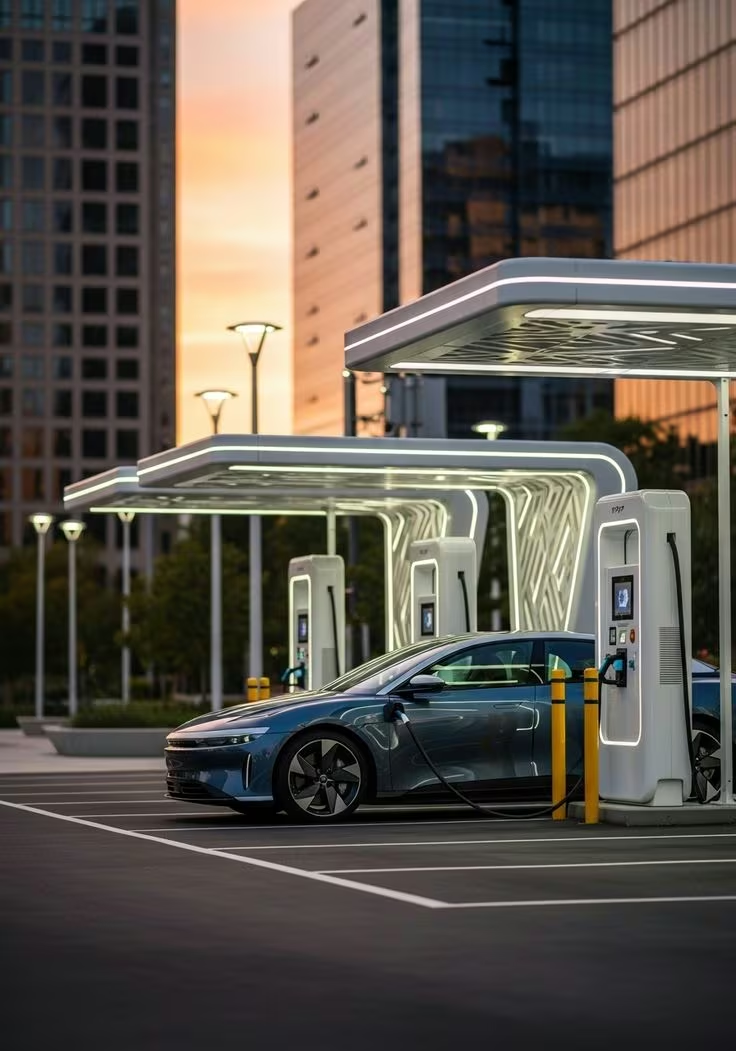
TL;DR: The EV charger installation cost in Malaysia is not one fixed number — it is the charger hardware plus the electrical work needed to feed it safely. For a home, the charger unit is usually the smaller part; cabling distance, a possible distribution board upgrade, and whether you need a three-phase supply are what move the total. A simple single-phase 7kW install sits at the low end, while long cable runs, three-phase upgrades, or commercial and DC systems climb well above that. Because every site differs, EDCA Energy quotes to your actual home or premises rather than a price list — and a personal income tax relief for EV charging can lower your net cost.
Buying an electric vehicle is the easy decision. Working out what it costs to charge it at home is where most Malaysian owners get stuck. Search around and you will see figures from a few hundred ringgit to five figures, which is confusing rather than helpful. The truth is that the EV charger installation cost depends far more on your wiring, your parking spot, and your electrical supply than on the charger brand on the box.
This guide breaks the cost down into its real parts so you can read any quotation with confidence. We will cover what actually goes into the price, how AC and DC chargers differ, the site factors that push your bill up or down, illustrative market ranges, and the incentives that reduce your net spend. It complements EDCA Energy’s EV charger installation service rather than repeating it — think of this as the briefing you read before you ask anyone for a number.
Before the cost breakdown, here is a short, plain-English explainer on the charging levels — Level 1, Level 2 (AC) and DC fast charging — because the level you pick is the first thing that sets your installation cost.
EV charging levels explained: Level 1, Level 2 and DC fast charging
A quick walkthrough of the three charging levels and why the one you choose shapes both charging speed and installation cost.
Video: “Level 1 vs. Level 2 vs. DC Fast Charging Explained For EVs”. Watch on YouTube.
1. What makes up an EV charger installation cost?
Quick Answer: An EV charger installation cost has two halves: the charger hardware and the electrical work to power it. The hardware is a fixed catalogue item, but the electrical work — cabling, protection devices, and any board or supply upgrade — is site-specific. That second half is why two homes on the same street can get very different quotes for the same charger.
Most people assume the charger is the expensive bit. Often it is not. The unit itself is a known price, but getting safe, dedicated power to it is the variable that decides your final figure. A charger mounted a metre from your main board costs far less to wire than one at the far end of a long driveway.
Here is what a proper installation quotation is actually paying for:
| Cost component | What it covers | Fixed or variable? |
|---|---|---|
| Charger unit | The wallbox itself — power rating, smart features, cable type | Mostly fixed (by model) |
| Cabling & conduit | Cable run from the board to the charger, plus trunking or trenching | Variable (by distance) |
| Protection & isolation | Dedicated MCB/RCBO, surge and earth-leakage protection | Semi-fixed |
| Board / supply upgrade | Distribution board space, or a single- to three-phase supply change | Variable (site-dependent) |
| Labour & certification | Installation by a competent, registered electrical team and testing | Semi-fixed |
Source: EDCA Energy EV charger installation experience, Malaysia. Component weighting varies by site.
Once you see the cost this way, the quotations stop looking random. A high number usually means real electrical work — a long run, a board upgrade, a supply change — not a padded margin. If you are still choosing a charger, EDCA’s EV car charger buyer’s guide for Malaysia walks through the unit itself before you commit to a spec.
Key takeaway: The charger is the predictable part of the cost. The electrical work to feed it safely is the variable — and it is what makes one quote higher than another for the same unit.
2. AC vs DC: how the charger type drives the cost
Quick Answer: Home charging in Malaysia is almost always AC — a 7.4kW single-phase or up to 22kW three-phase wallbox. These are affordable to install and charge a car overnight. DC fast chargers cost many times more and need heavy power infrastructure, so they belong at commercial sites and highways, not the average home. Picking the right type for the job is the single biggest lever on your EV charger installation cost.
The choice between AC and DC sounds technical, but for cost it comes down to one thing: how much power the charger pulls and what infrastructure that power needs. AC chargers use your existing supply. DC chargers convert power on-site at high load, which means bigger equipment and often a dedicated supply.
| Charger type | Typical power | Best for | Relative install cost |
|---|---|---|---|
| AC single-phase | 3.7–7.4 kW | Most homes; overnight charging | Lowest |
| AC three-phase | 11–22 kW | Homes with three-phase supply; faster top-ups | Moderate |
| DC fast charger | 25 kW and above | Commercial sites, fleets, public charging | Highest |
Source: EDCA Energy, Malaysia. Illustrative categories; exact specification depends on the vehicle and site.
For nearly every home owner, a 7.4kW single-phase wallbox is the sensible answer. It refills a typical EV overnight and keeps the installation straightforward. Stepping up to 22kW only pays off if you already have a three-phase supply and genuinely need faster charging — otherwise you are paying for capacity you will rarely use. A capable EV charger installation team will tell you which one fits before quoting.
Key takeaway: AC is the home answer and the affordable one; DC is a commercial-grade tool. Matching charger type to real need is the biggest single saving on your installation cost.
Not sure which charger your home can take?
The right spec starts with your electrical supply. Explore EDCA’s EV charger installation options and match a unit to your actual setup.
3. The site factors that move your cost up or down
Quick Answer: Five site factors decide whether your EV charger installation cost lands at the low end or climbs: the cable distance from your board to the parking bay, whether your distribution board has spare capacity, whether you need a three-phase supply, whether cables must be trenched or surface-run, and whether load management is required to avoid tripping your main. None of these show up on a charger’s spec sheet — but they set your bill.
This is where a real site assessment earns its keep. The same charger can be cheap or costly to install depending entirely on the conditions below:
- Cable run distance. A charger near the main board needs little cable. One across a long driveway or on a far wall needs more cable, conduit, and labour — the most common reason quotes differ.
- Distribution board capacity. If your board has a free way and enough headroom, adding a charger is simple. A full or ageing board may need upgrading first.
- Single vs three-phase supply. Most Malaysian homes are single-phase. Wanting a 22kW charger may mean applying to upgrade the supply, which adds cost and lead time.
- Trenching vs surface routing. Running cable under a driveway or garden costs more than clipping it along an existing wall. Landed homes with detached car porches often need this.
- Load management. A device that balances the charger against your home’s other loads prevents nuisance tripping. It adds a little cost but avoids a supply upgrade in many cases.
Because these are physical realities of your property, no honest installer can price them from a photo alone. A short site visit turns a rough estimate into a firm figure. The same discipline you would use to choose the best solar panel company in Malaysia — checking credentials and insisting on a proper assessment — applies just as much to an EV charger install.
Key takeaway: Your property, not the charger, sets most of the price. Cable distance, board capacity, supply phase, routing, and load management are the five levers — and they only reveal themselves in a site assessment.
Want a firm number instead of a rough guess?
A quick site assessment prices your exact cable run and board. Get a free quote and EDCA will assess your home.
4. Illustrative EV charger installation cost ranges
Quick Answer: As a market guide only, a straightforward single-phase home wallbox install is the most affordable scenario, a three-phase or long-cable-run home install sits higher, and a commercial or DC setup is in a different league entirely. These are illustrative bands, not EDCA prices — your real figure comes from a site-specific quote, because the electrical work varies so much.
The scenarios below are illustrative market context to help you sense-check quotations. They are ranges you might encounter, not a price list — EDCA’s own figure is always quoted to your site.
| Scenario | Main cost drivers | Relative band |
|---|---|---|
| Simple home, 7kW AC | Short cable run, existing single-phase capacity, wall-mounted near board | Entry level |
| Home with extra works | Long cable run, trenching, board upgrade, or load-management device | Mid |
| Three-phase 22kW home | Supply upgrade to three-phase, heavier cabling and protection | Higher |
| Commercial / DC | High-power supply, civil works, multiple bays, network features | Highest |
Source: Illustrative market context, EDCA Energy. Not a price list — every install is quoted to the individual site.
The pattern is clear: a home charger is an accessible upgrade for most owners, and the cost only climbs when real infrastructure — trenching, a board upgrade, a supply change, or commercial-grade equipment — is genuinely needed. That is why a fixed online price is misleading; the honest answer is always “it depends on your site”. For premises rather than homes, a commercial EV charger installation is scoped differently again.
Key takeaway: Treat online figures as bands, not quotes. A simple home install is affordable; costs rise only when trenching, upgrades, or commercial equipment are actually required.
Ready to swap the range for a real number?
EDCA prices your charger, cabling and any upgrade in one clear quotation. Get a free quote for your home or premises.
5. Incentives that lower your net cost
Quick Answer: Your headline EV charger installation cost is not your net cost. Malaysia offers a personal income tax relief of up to RM2,500 for EV charging facilities — covering the purchase, installation, rental, or subscription of home charging equipment — available through the 2027 assessment year, per LHDN. Claiming it can meaningfully cut what you actually pay, so keep every receipt.
Owners often forget that support exists to soften the upfront spend. The main one is straightforward and directly relevant to a home charger install:
- EV charging tax relief. Individuals can claim up to RM2,500 in personal income tax relief for expenses on EV charging facilities — including buying and installing a home charger — available through the 2027 assessment year, per LHDN. Keep your invoices and installation receipts to claim it.
- Wider EV push. National policy under the Low Carbon Mobility Blueprint continues to expand charging access across Malaysia, and reliable home charging remains the most convenient way to keep an EV topped up between public sessions.
Because tax rules change, always confirm the current relief and eligibility with LHDN or a tax adviser before you file. What matters for budgeting is that your net EV charger installation cost can be lower than the quotation once the relief is applied. To understand the equipment side of that spend, EDCA’s EV car charger guide covers what you are actually buying.
Key takeaway: The number on the quote is not the number you keep. A personal tax relief of up to RM2,500 for EV charging facilities can lower your net cost — keep receipts and confirm eligibility with LHDN.
6. How to get an accurate quote and avoid hidden costs
Quick Answer: To avoid surprises, insist on a site assessment, ask what is and is not included, confirm the installer is a competent, registered electrical team, and check that protection, testing, and certification are in the price. A quote that skips the site visit or leaves out the electrical works is not a real quote — it is a starting number that grows later.
An accurate quotation protects you from the two classic traps: a low headline that balloons on install day, and a vague scope that omits essential safety work. Ask these questions before you commit:
- Is a site assessment included? A real figure needs someone to see your board and parking spot. Prices given sight-unseen almost always change.
- What exactly is included? The cable run, protection devices, mounting, testing, and certification should all be listed — not added later as extras.
- Who is doing the work? EV charger wiring is safety-critical. Insist on a competent, properly registered electrical team, not a general handyman.
- Is load management considered? Ask whether it can avoid a costly supply upgrade — it often can.
- What warranty and support follow? Confirm the charger warranty and who you call if something faults after install.
A serious provider welcomes these questions because a clear scope protects both sides. EDCA Energy works this way as a single accountable team, the same standard it applies across its solar and clean-energy work at EDCA Energy. Getting the scope right upfront is how you keep the final EV charger installation cost equal to the number you were quoted.
Key takeaway: A trustworthy quote is built on a site visit and a fully itemised scope. If either is missing, expect the price to move — insist on both before you sign.
7. Conclusion
The EV charger installation cost in Malaysia is really a story about your property, not the charger box. The unit is a known price; the cabling, board capacity, supply phase, and any civil works are what decide your final figure. Choose the right charger type for how you actually drive — a 7.4kW single-phase wallbox suits most homes — and the biggest cost lever is already in your favour.
From there, an accurate quote depends on a proper site assessment and an itemised scope, and your net cost can drop once you claim the EV charging tax relief. Treat online numbers as bands, ask the right questions, and you will know exactly what you are paying for before any cable is run.
Ready for a real EV charger installation cost, not a guess?
EDCA Energy is a SEDA-registered clean-energy provider installing home and commercial EV chargers across Malaysia. Get your charger, cabling and any upgrade priced in one clear quotation — sized to your site, with no fixed price list.
Get a Free Quote8. Frequently asked questions
How much does EV charger installation cost in Malaysia?
There is no single fixed price. The charger unit is a known cost, but the installation depends on your cable run, distribution board, supply phase, and any civil works. A simple single-phase home install is the most affordable scenario, while three-phase upgrades or commercial and DC systems cost considerably more. The only accurate figure comes from a site-specific quote.
Is the charger or the installation the bigger cost?
It varies by site. For a straightforward home with a short cable run and spare board capacity, the charger unit can be the larger share. For homes needing trenching, a board upgrade, or a three-phase supply, the electrical work becomes the bigger cost. This is exactly why a site assessment matters before any number is given.
Do I need a three-phase supply for a home EV charger?
Usually not. Most Malaysian homes run on single-phase, and a 7.4kW single-phase wallbox charges a typical EV overnight. You only need three-phase for an 11–22kW charger, which pays off in limited cases. Upgrading the supply adds cost and lead time, so most owners are better served by a single-phase unit.
Can I reduce my EV charger installation cost?
Yes. Choosing a single-phase charger where it suits you, siting the charger near your board to shorten the cable run, and using load management to avoid a supply upgrade all help. On top of that, a personal income tax relief of up to RM2,500 for EV charging facilities can lower your net cost — keep your receipts and confirm eligibility with LHDN.
Who should install an EV charger in Malaysia?
Always a competent, properly registered electrical team, never a general handyman. EV charger wiring is safety-critical and must include correct protection, testing, and certification. A reputable installer includes a site assessment, an itemised scope, and after-install support, so the final cost matches the quotation and the system is safe to use for years.
See your solar savings in under a minute
Estimate your ideal system size, payback period and monthly bill offset with the EDCA calculator.