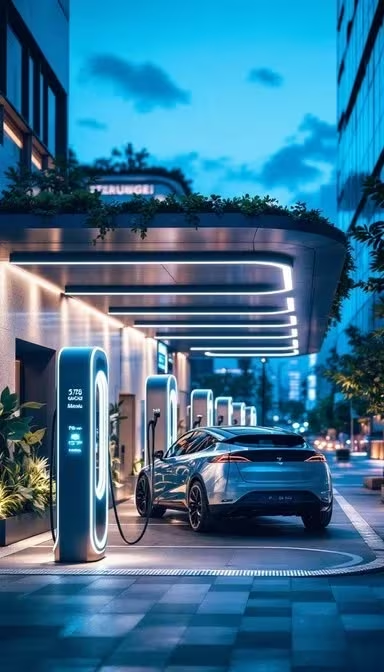
Kuala Lumpur has more EVs on its roads than anywhere else in Malaysia, and most owners learn the same thing fast: the real convenience is waking up to a full battery in your own porch. The catch is that a wallbox is not plug-and-play — it draws serious current, and installing it safely and legally in KL takes a proper electrical assessment.
This guide covers what EV charger installation in Kuala Lumpur really involves: the charger types that suit a KL home, the wiring and approvals, realistic costs, the savings versus petrol, and the incentives worth claiming. Whether you are in a landed terrace or a KLCC high-rise, it will help you plan it right the first time. Here is a short overview first.
Watch: ten things to know before installing an EV charging point
Source video: Artisan Electrics on YouTube — 10 Things You Need To Know Before Getting an EV Charging Point Installed
1. Why EV Charger Installation in KL Needs a Proper Installer
Quick Answer: A home EV charger draws 16A to 32A continuously for hours — far more than a normal appliance. In Kuala Lumpur, that work must be done by a Suruhanjaya Tenaga licensed wireman, with the right cable, breaker and earthing. A rushed or DIY job risks fire, tripping, and a voided home insurance policy.
An EV charger is one of the heaviest loads you will add to a house. A 7kW wallbox pulls 32 amps steadily overnight, so the wiring, breaker and earth must all be rated for that continuous draw. Get it wrong and you risk nuisance tripping at best, and overheated cables at worst.
That is why every fixed installation in Malaysia has to be wired by an electrician licensed by Suruhanjaya Tenaga (the Energy Commission), who then issues the completion paperwork. A qualified installer also checks that your incoming supply can take the extra load before drilling a single hole — the step most people skip. This is exactly the kind of job covered by our EV charger installation service, and it is a natural companion to the solar and battery work EDCA does across the Klang Valley from our clean-energy base in Subang Jaya.
Not sure what your home supply can handle?
A quick load check tells you which charger fits before you buy. See our EV charger installation options →
2. What EV Charger Types Suit a Kuala Lumpur Home?
Quick Answer: Most KL landed homes run single-phase supply, which suits a 7.4kW AC wallbox — the popular sweet spot that adds roughly 35 to 45km of range per hour. Homes with three-phase supply can go for 11kW or 22kW for faster charging. DC fast chargers are for public stations, not houses.
Home charging in Malaysia is almost always AC charging, and the right size depends on your electrical supply and how far you drive. A single-phase 7.4kW unit fully charges most EVs overnight and fits the majority of KL terraces and semi-Ds. If your home already has three-phase wiring — common in newer bungalows — an 11kW or 22kW charger cuts charging time further.
The table below compares the common home charger tiers, their supply needs and how much range they add per hour.
| Charger | Supply | Range/hour | Best for |
|---|---|---|---|
| 3.6kW (16A) | Single-phase | ~15–20 km | Low-mileage, older wiring |
| 7.4kW (32A) | Single-phase | ~35–45 km | Most KL landed homes |
| 11kW (16A) | Three-phase | ~55–65 km | Three-phase homes |
| 22kW (32A) | Three-phase | ~110–120 km | High-mileage, larger homes |
Source: aggregated from TNB and Suruhanjaya Tenaga home-charging guidance and EV maker specs, 2025–2026.
One practical note: a bigger charger only helps if your car and supply can use it. Many EVs cap AC charging at 7kW or 11kW, so a 22kW unit on a single-phase house adds cost without adding speed.
3. What Does EV Charger Installation in KL Actually Involve?
Quick Answer: A proper KL installation follows five stages: a load assessment, charger and location choice, running a dedicated cable and breaker from your distribution board, mounting and commissioning the wallbox, then handing over the compliance paperwork. A straightforward landed-home job is often done in a single day.
Good installers do not start by mounting the box — they start by looking at your distribution board (DB) and incoming supply. Here is the typical order of work for a landed home in Kuala Lumpur.
- Load assessment. A licensed electrician checks your main fuse rating (usually 60A or 100A) and existing DB to confirm there is spare capacity for a 32A EV circuit.
- Choose charger and location. You pick the charger size and the mounting spot — usually the porch wall nearest the DB, to keep the cable run short.
- Run a dedicated circuit. A new copper cable (commonly 6mm² or 10mm²) and its own breaker with RCD protection run from the DB to the charger, routed neatly in conduit.
- Mount and commission. The wallbox is fixed, wired, earthed and tested, then configured to your home Wi-Fi or app if it is a smart unit.
- Compliance handover. The licensed electrician issues the completion documentation for the electrical work — keep it for insurance and future reference.
A simple landed-home job is usually done in a day; longer runs, older wiring or a three-phase upgrade add time — which is why the site check matters so much.
4. How Much Does It Cost to Install an EV Charger in KL?
Quick Answer: Installed cost in Kuala Lumpur depends far more on the wiring than the wallbox itself. A simple 7kW landed job sits at the lower end of the market range, while long cable runs, three-phase upgrades or condo sub-metering push it higher. EDCA prices are quote-based after a site check — no two homes are identical.
The charger is only part of the bill. The bigger variables are cable length, whether your DB needs upgrading, and landed versus strata. The illustrative ranges below show how the total shifts by scenario — market context, not a fixed EDCA price.
| Scenario | Relative cost | Indicative (RM) |
|---|---|---|
| 7kW landed, short run | 2,500–3,500 | |
| 7kW landed, long run | 3,500–4,800 | |
| Condo / strata unit | 4,000–6,500 | |
| Three-phase upgrade | 6,000–9,000+ |
Illustrative market ranges for KL, 2026 — not an EDCA quote. Final price follows a site assessment.
The pattern is clear: the wallbox barely changes across rows, but wiring and building type move the total by thousands. That is why a fixed online price misleads — a real quote comes after someone sees your DB and cable route.
Want a real number for your home?
Skip the guesswork — a site check gives you an exact figure. Get a free quote for KL EV charger installation →
5. Landed Home vs Condo Charging in Kuala Lumpur
Quick Answer: Landed homes in KL are straightforward — you own the DB and the parking, so it is mostly an electrical job. Condos and strata properties add a layer: you need JMB or management approval, a way to meter and bill your usage, and cable routing through common areas. Start the approval early.
For a landed terrace or bungalow, installation is a private matter between you and your installer. The complications in KL are almost always high-rise ones — your parking bay and the supply sit in shared, managed space.
- Approval comes first. The Joint Management Body or management office must approve the installation and the cable route through common property.
- Metering matters. Power is usually drawn from the building supply, so a sub-meter or CPO billing arrangement is needed so you pay for your own charging.
- Bay ownership. Charging is simplest at an owned, accessory-parcel bay rather than a randomly allocated one.
Because the rules vary building to building, condo jobs take longer to arrange even when the wiring itself is simple. If you are outside the Klang Valley, the same logic applies down south — see our guide to EV charger installation in Johor for the state-specific version.
6. How Much Can You Save Charging at Home vs Public or Petrol?
Quick Answer: Home charging on a domestic TNB tariff is by far the cheapest way to run an EV in Kuala Lumpur — a fraction of public DC fast-charging and well below petrol. That running-cost gap is what pays back the installation over time, especially for high-mileage KL commuters.
Charging where you sleep beats charging on the go, on price. Public DC is priced for convenience and petrol tracks global oil, but a home wallbox draws power at the domestic rate. The illustrative comparison below models a typical EV at ~16kWh/100km against a petrol car at 8 litres/100km.
| Method | Cost / 100km (RM) | Cost / year* (RM) |
|---|---|---|
| Home charging (TNB domestic) | ~5.50 | ~825 |
| Petrol car (RON95) | ~16.40 | ~2,460 |
| Public AC charging | ~20.80 | ~3,120 |
| Public DC fast charging | ~25.60 | ~3,840 |
*Illustrative, 15,000km/year, based on typical EV efficiency and TNB domestic tariff. Not a guarantee.
The message is simple: home charging is where the real savings live, and it is why pairing an EV with rooftop solar is so popular in the Klang Valley — see our take on home solar panels in Kuala Lumpur for how the two work together.
7. Incentives: Tax Relief and Lower EV Road Tax
Quick Answer: Kuala Lumpur EV owners can claim up to RM2,500 in personal income tax relief for buying, renting, installing or subscribing to EV charging equipment, valid through the 2027 assessment year. From 2026, EVs also pay a power-based road tax that the government says is about 85% lower than an equivalent petrol car.
Two national incentives make home charging cheaper to own, and both apply to KL residents. First, there is a personal income tax relief of up to RM2,500 a year for EV charging equipment and installation, offered through 2027 by the government. Keep your installer’s invoice — that is what you claim against.
Second, the long-running EV road tax exemption has moved to a new structure. From 2026, EVs are taxed on power output at a rate the Transport Ministry describes as roughly 85% lower than a comparable petrol vehicle. Together with cheaper home charging, the running-cost case for going electric in KL is strong.
8. Where Is Malaysia’s EV Charging Headed?
Quick Answer: EV adoption in Malaysia is climbing fast, while the public charger network is expanding but still behind the government’s rollout targets. That gap makes a reliable home charger in Kuala Lumpur more valuable, not less, because you are not competing for scarce public bays.
The direction of travel is clear. EV registrations have surged year on year, and the government is aiming for EVs to make up 15% of all vehicles sold by 2030. Public charging is expanding too, though it has lagged the government’s rollout targets. The table below tracks the trend.
| Metric | 2023 | 2024 | 2025 | 2027* |
|---|---|---|---|---|
| EV registrations | ~10,200 | 21,789 | 44,813 | ~80,000 |
| Public chargers (cumulative) | ~2,000 | ~4,000 | ~5,620 | ~12,000 |
Source: aggregated from JPJ registrations and Suruhanjaya Tenaga charger licensing, 2023–2025. *Projection.
Cars are being added faster than public chargers, so queues at popular Klang Valley stations are real. A home charger sidesteps that — your bay is always free.
Ready to stop queueing for public chargers?
Get your own bay charged and ready at home. Explore EDCA EV charger installation →
9. How to Choose an EV Charger Installer in Kuala Lumpur
Quick Answer: Pick an installer who does a proper load assessment, uses Suruhanjaya Tenaga licensed wiremen, quotes only after a site visit, and hands over the completion paperwork. An established clean-energy contractor that also does solar and battery work brings deeper electrical experience to the job.
The wallbox brand matters less than who installs it. Use this checklist when comparing quotes in KL.
- Licensed wiremen. Confirm the electrical work is done by an ST-licensed wireman and that you receive completion documentation.
- Site assessment first. A trustworthy installer checks your DB and supply before quoting — be wary of a fixed price given over the phone.
- Track record. Look for a contractor with real installations behind them, not a one-charger side business.
- After-sales support. Warranty, servicing and someone to call if the unit faults.
EDCA brings full EPCC experience to every job — the same team behind our residential, commercial and industrial solar in Johor work wires your home charger. Weighing up providers? Our guide to the best solar panel company in Malaysia covers the same due-diligence questions for any clean-energy contractor, and full details sit on our EV charger installation page.
10. Conclusion
Quick Answer: EV charger installation in Kuala Lumpur is straightforward when you start with a load assessment, choose the right charger for your supply, and use a licensed installer. Home charging is cheaper and more convenient than public charging, and incentives make it more affordable still.
A home EV charger is one of the best upgrades a KL EV owner can make — cheaper running, no queues, a full battery every morning. The key is doing it properly: a real site check, the right charger for your supply, licensed wiring, and the paperwork in hand. Claim the RM2,500 relief while it lasts, and if you have or plan rooftop solar, the two pair perfectly. EDCA can assess your home whenever you are ready.
11. Frequently Asked Questions
1. Do I need approval to install an EV charger at my KL landed home?
For a landed home you own, no external approval is needed for the charger itself, but the electrical work must be carried out by a Suruhanjaya Tenaga licensed wireman who issues completion documentation. Condos and strata properties are different — you need JMB or management approval before installing.
2. What size EV charger is best for a Kuala Lumpur house?
A 7.4kW single-phase AC charger suits most KL landed homes and fully charges an EV overnight. If your home has three-phase supply and you drive a lot, 11kW or 22kW charges faster — but only if your car supports that AC rate. A licensed installer confirms the right size after checking your supply.
3. How long does EV charger installation take in KL?
A straightforward 7kW landed-home installation with a short cable run is often completed in a single day. Longer cable routes, older wiring, three-phase upgrades, or condo approvals add time. The load assessment upfront is what keeps installation day quick and predictable.
4. Can I claim tax relief for installing a home EV charger?
Yes. Individuals can claim up to RM2,500 in personal income tax relief for buying, renting, installing, or subscribing to EV charging equipment, valid through the 2027 assessment year. Keep your installer’s invoice as proof for your LHDN claim.
5. Is home charging really cheaper than public charging in Malaysia?
Considerably. Charging at home on a domestic TNB tariff costs a fraction of public DC fast-charging and well below petrol per kilometre. For daily KL commuters, that running-cost gap is the main reason a home charger pays for itself over time.
Ready to charge your EV at home in KL?
EDCA’s licensed team will assess your home’s supply, recommend the right charger, and give you a clear, no-obligation quote — with tidy wiring and full compliance paperwork included.
Get a Free Quote →See your solar savings in under a minute
Estimate your ideal system size, payback period and monthly bill offset with the EDCA calculator.