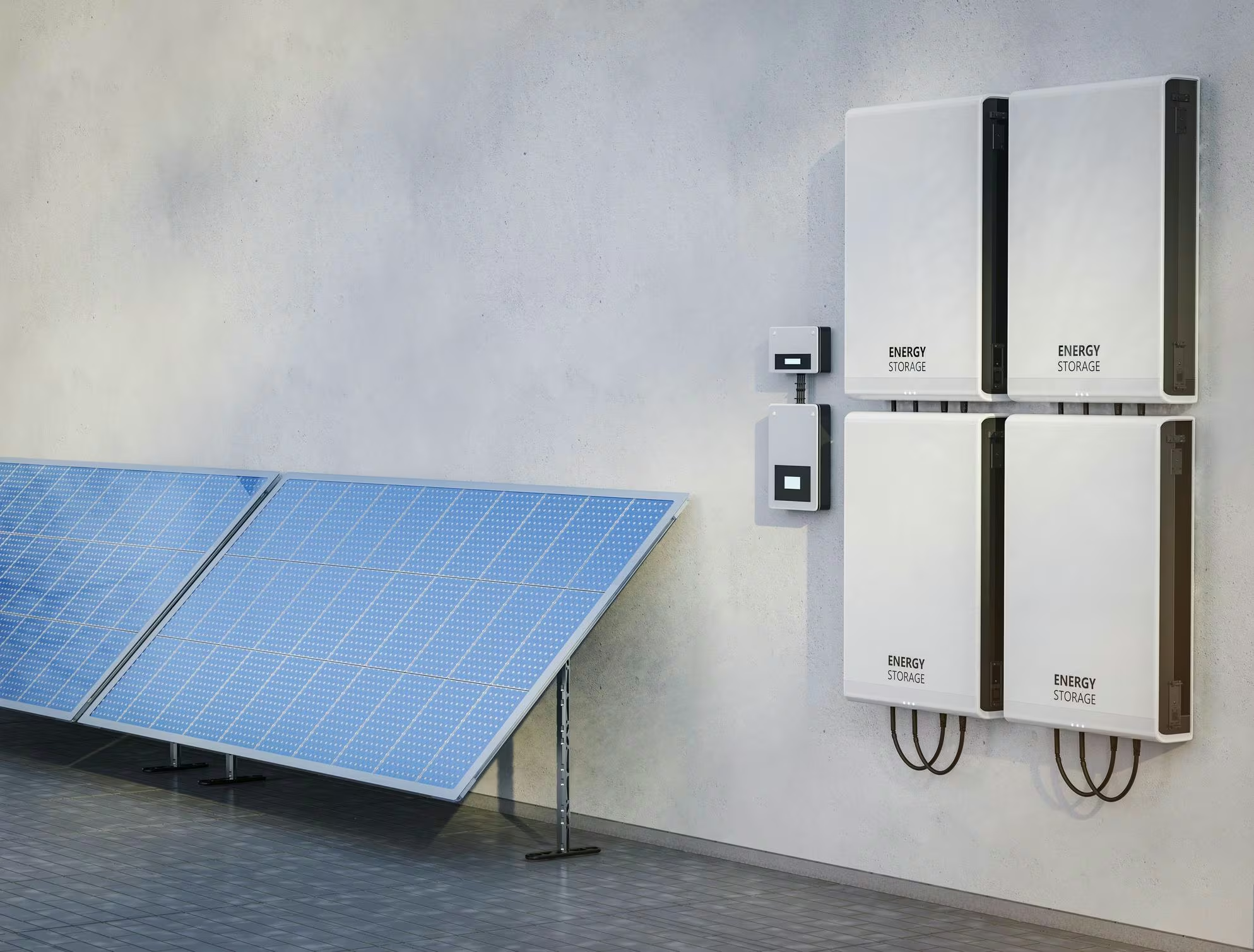
A home battery is a ten-year commitment bolted to your house, so the company you pick matters as much as the battery itself. The wrong installer oversizes the system, skips backup wiring, or vanishes when a fault appears in year three. The right one reads your bill, matches capacity to your real evening use, and supports the system for its whole life.
This guide answers the question most Malaysian homeowners actually have — not “which battery?” but “which home solar battery storage company can I trust?” We cover what a good company does, the green and red flags to watch, the warranties to expect, and how to compare quotes without getting lost in kWh numbers. First, a short video on sizing a home battery correctly, to set the scene.
Watch: choosing the right home battery size
Source video: Gary Does Solar on YouTube — Choosing the Right Home Battery Size
1. What does a home solar battery storage company do?
Quick Answer: A home solar battery storage company designs, supplies, installs, and supports a battery system that stores your daytime solar for use after dark or during outages. A good one does far more than sell a box — it sizes the battery to your evening load, wires the backup you want, handles TNB and SEDA paperwork, and services the system for its full ten-year life.
Selling a battery is the easy part. The value a proper company adds sits around the hardware — in the design, the compliance work, and the years of support afterwards. Before you compare prices, it helps to know what the job actually involves:
- Load and bill assessment. They read your electricity bill and daily usage pattern to work out how much storage your evenings really need.
- System design. They match battery capacity, inverter, and backup wiring to your home — not to whatever unit is in stock.
- Compliance and paperwork. They handle SEDA registration and TNB interconnection so the install is legal and safe.
- Installation and commissioning. Licensed wiremen fit and test the system to Malaysian electrical standards.
- After-sales support. They monitor performance, honour the warranty, and are reachable when something goes wrong.
If you are still deciding whether storage suits your home at all, our explainer on the battery storage system for solar panels covers how capacity turns into real overnight power. This guide picks up from there: how to judge the company doing the work.
Not sure a battery fits your home yet?
A quick chat about your bill and usage tells you fast. See how EDCA designs solar battery storage →
2. What should you look for in a home battery company?
Quick Answer: Weight five things when choosing a home solar battery storage company: accreditation and safety, system design quality, warranty and product grade, after-sales support, and price — roughly in that order. Price is real but it is the smallest slice of a good decision. A cheap install that is undersized or poorly supported costs far more across ten years than getting the first four right.
Most homeowners lead with price because it is the easiest number to compare. But a battery lives on your wall for a decade, so the factors that decide whether it performs and lasts deserve more weight. The chart below shows an illustrative way to weight your decision — a starting frame, not a fixed rule.
| Selection factor | Suggested weight | Weight |
|---|---|---|
| Accreditation & safety | ~25% | |
| System design quality | ~25% | |
| Warranty & product grade | ~20% | |
| After-sales & monitoring | ~20% | |
| Upfront price | ~10% |
Illustrative decision frame, EDCA Energy view, Malaysia 2026 — adjust the weights to your own priorities. Not a scoring standard.
The point is not the exact percentages — it is the ranking. Accreditation and design sit at the top because they decide whether the system is safe and whether it actually cuts your bill. Price sits at the bottom because it is easy to check and easy to be misled by. A company that scores well on the first four is worth a modest premium.
3. Green flags vs red flags when comparing companies
Quick Answer: A trustworthy home battery company asks for your bill before quoting, sizes to your evening load, itemises the quote, and shows real accreditation. Warning signs are a price given before any site check, a “one size fits all” recommendation, a lump-sum quote with no breakdown, and vague answers on warranty or backup wiring. The table below turns these into a quick side-by-side check.
You can spot a good installer within the first conversation, long before you sign anything. Use this comparison to read the company’s behaviour across the moments that matter most:
| What to check | Green flag | Red flag |
|---|---|---|
| Accreditation | Named SEDA-registered service provider, licensed wiremen | Can’t name their registration or dodges the question |
| Sizing | Asks for your bill and evening usage first | Quotes a fixed “package” before any site check |
| Quote clarity | Itemised: battery, inverter, install, backup wiring | One lump sum with no breakdown |
| Backup | Explains which circuits stay live in an outage | Promises “backup” without wiring detail |
| After-sales | Local team, written warranty, monitoring app | No local support or unclear warranty terms |
Illustrative buyer checklist, EDCA Energy view, Malaysia 2026. Use it as a conversation guide, not a pass/fail test.
One red flag is not always a deal-breaker, but a pattern of them is. The clearest tell is a firm price quoted before anyone has seen your bill or roof — it means the battery is being sold to you, not designed for you. For a deeper look at vetting the people who do the work, see our guide to choosing a residential solar battery storage installer.
4. What warranties should a good company offer?
Quick Answer: A proper home battery company backs each part of the system separately: the battery cells, the hybrid inverter, the installation workmanship, and the battery’s retained capacity over time. Because a home battery is a ten-year purchase, the warranty is not fine print — it is the promise that decides whether year eight is your problem or theirs. Read all four terms before you sign.
A single “warranty” line hides more than it tells. Good companies spell out cover for each component, because each fails in a different way and on a different clock. The table below shows the terms a serious Malaysian installer should be willing to put in writing.
| Component | Typical term to expect | Why it matters |
|---|---|---|
| Battery cells / modules | ~10 years or a stated cycle count | The most expensive part — cover must span its working life |
| Hybrid inverter | ~5 to 10 years | The brain of the system; failures stop charging and discharging |
| Installation workmanship | ~2 to 5 years | Covers wiring and mounting faults, not just the hardware |
| Capacity retention | Guaranteed % at year 10 | Promises the battery still holds useful charge late in life |
Illustrative market context, Malaysia 2026 — exact terms vary by brand and installer. Always read the written warranty.
Watch especially for the capacity retention line — it is the one most often left out. A battery can be “under warranty” yet hold so little charge by year eight that it barely powers your evening. A company confident in its product will state a guaranteed retained capacity in writing. The upfront price behind these terms is a separate question, covered in our solar battery storage price in Malaysia guide.
Want a written warranty you can actually read?
We spell out cover for every component before you commit. Get a free quote with full warranty terms →
5. Does the company need SEDA registration?
Quick Answer: Yes — for a grid-connected home solar system in Malaysia, the work should be done by a SEDA-registered PV service provider using licensed wiremen. Registration is how you know the company can legally handle the TNB interconnection and any net energy metering application, and that the install meets national safety standards. It is the single most important credential to confirm before anything else.
Accreditation is not a marketing badge — it is the line between a safe, legal install and an uninsured risk on your roof. In Malaysia, rooftop solar and its net metering are administered by the Sustainable Energy Development Authority (SEDA), and applications must go through a registered provider.
- SEDA-registered PV service provider (RPVSP). Required to submit and manage net energy metering applications on your behalf. You can confirm a company against the SEDA RPVSP directory.
- Licensed wiremen and ST compliance. The physical wiring must be done by competent persons and meet Suruhanjaya Tenaga (Energy Commission) standards.
- Net energy metering knowledge. Under Malaysia’s NEM 3.0 programme, exported solar is offset against grid use, so a battery’s value comes mainly from self-consumption — a good company explains this clearly.
The same accreditation logic applies whether you are buying panels or storage, which is why it tops our wider guide to the best solar panel company in Malaysia. If a battery firm cannot point you to its registration, treat that as a full stop, not a detail.
6. Is home battery storage growing in Malaysia?
Quick Answer: Yes — home battery interest in Malaysia has climbed steadily as solar adoption grows and time-of-use electricity pricing makes stored evening power more valuable. As illustrative context, homeowner enquiries for storage have risen sharply since 2022. That growth means more companies in the market — which makes knowing how to tell a good one from a weak one more useful, not less.
Batteries used to be a niche add-on for off-grid homes. Two shifts changed that: solar became common on Malaysian roofs, and residential time-of-use pricing gave stored evening power real worth. The illustrative index below tracks the direction of that interest — a trend, not a guaranteed figure.
| Year | Relative interest index (2022 = 100) | Index |
|---|---|---|
| 2022 | 100 | |
| 2023 | 130 | |
| 2024 | 175 | |
| 2025 | 230 | |
| 2026 | 300 |
Illustrative market context, Malaysia 2026 — directional interest trend only, indexed to 2022. Not a measured statistic or forecast.
Rising demand is good news for choice but mixed news for quality — a growing market pulls in new firms of very uneven standard. That is exactly why the checks in this guide pay off. Malaysia’s move toward time-of-use pricing, administered under the national tariff framework, rewards storing your own daytime solar for peak-priced evenings, which is the core reason home battery interest keeps climbing.
7. How to compare quotes from home battery companies
Quick Answer: Compare home battery companies on itemised quotes, not headline totals. Ask each for the same information — usable capacity, chemistry, inverter, backup wiring, and full warranty terms — then line them up side by side. The cheapest total often hides a smaller battery, a shorter warranty, or no real backup. Like-for-like comparison is the only way to see which quote is genuinely better value.
Three quotes are only useful if they answer the same questions. Give each company the same brief and ask for the same breakdown, so you are comparing homes, not marketing. A clean comparison process looks like this:
- Give every company the same information. Share the same recent TNB bill and usage pattern so each sizes against the same load.
- Ask for an itemised quote. Battery, inverter, installation, and backup wiring should each be a visible line, not one lump sum.
- Compare usable kWh, not nameplate. Two “10 kWh” systems can differ in what you can actually use each night.
- Line up the warranties. Match cells, inverter, workmanship, and capacity retention across all three quotes.
- Weigh support and accreditation. A local, SEDA-registered team is worth a modest premium over a distant, cheaper one.
When the quotes are laid out this way, the best value usually stops being the lowest number and becomes the most complete one. When you are ready to add a properly itemised comparison to your shortlist, EDCA Energy quotes each line clearly so you can hold it up against the rest.
8. Conclusion
Quick Answer: The best home solar battery storage company in Malaysia is the one that is SEDA-registered, sizes the battery to your evening load, wires the backup you want, and backs it with clear, written warranties. Rank those above price, compare quotes line by line, and the right company — and the right value — becomes obvious.
Picking a home battery company is really about picking a partner for the next decade. The battery on your wall is only as good as the firm that sized it, wired it, and answers the phone in year seven. Lead with accreditation and design, insist on itemised quotes and written warranties, and use price as the final tie-breaker rather than the first filter. Do that, and you end up with a system that quietly does its job every evening — and a company you never have to worry about.
Looking for a home battery company you can trust?
EDCA Energy is a SEDA-registered provider. We’ll read your bill, size the battery to your evenings, wire real backup, and quote it all — itemised, with full warranty terms.
Get a Free Quote →9. Frequently Asked Questions
1. How do I choose a home solar battery storage company in Malaysia?
Start with accreditation: confirm the company is a SEDA-registered PV service provider using licensed wiremen. Then judge how it designs — a good company asks for your electricity bill and evening usage before quoting, rather than pushing a fixed package. After that, compare warranty terms and after-sales support. Treat upfront price as the final tie-breaker, not the first filter, because a cheap but undersized or unsupported system costs more over ten years.
2. Should a home battery company be SEDA-registered?
Yes. For a grid-connected home solar and battery system in Malaysia, the work should be handled by a SEDA-registered PV service provider, and the wiring done by licensed competent persons to Suruhanjaya Tenaga standards. Registration is what allows the company to legally manage the TNB interconnection and any net energy metering application. You can check a company against SEDA’s public RPVSP directory, and if a firm cannot point to its registration, that is a serious warning sign.
3. What warranties should a good home battery company offer?
Look for four separate terms rather than one vague line: cover on the battery cells (around ten years or a stated cycle count), the hybrid inverter (roughly five to ten years), the installation workmanship (about two to five years), and a guaranteed capacity retention at year ten. The capacity retention line is the one most often left out, yet it is what promises the battery still holds useful charge late in its life, so insist on seeing it in writing.
4. How many quotes should I get for a home battery system?
Three is a sensible number — enough to see a range without overwhelming you. The key is to give each company the same information: the same recent TNB bill and usage pattern, so each sizes against the same load. Then ask for itemised quotes and compare usable kWh, chemistry, inverter, backup wiring, and warranty line by line. The cheapest total often hides a smaller battery or a shorter warranty, which only a like-for-like comparison reveals.
5. Is a home battery worth it under Malaysia’s NEM 3.0 scheme?
Under the NEM 3.0 programme, exported solar is offset against the grid electricity you use, so a battery’s main value comes from self-consumption — storing your own daytime solar to use in the evening instead of buying grid power. It is most worthwhile for homes with evening-heavy loads, higher bills, or a need for backup during outages. With residential time-of-use pricing, storing cheap daytime solar for peak-priced evenings adds further to the case.
See your solar savings in under a minute
Estimate your ideal system size, payback period and monthly bill offset with the EDCA calculator.