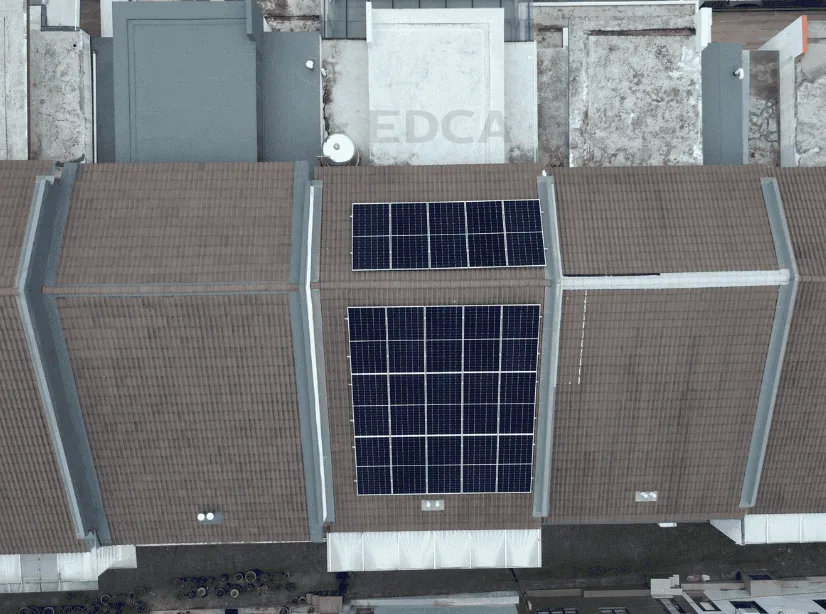
1. Why getting the installation right matters
Most homeowners spend weeks choosing panels and comparing quotes, then treat the actual installation as an afterthought. That is backwards. A solar panel for home installation is a 20-year commitment bolted to your roof — how carefully it is planned and fitted decides whether you get two decades of quiet savings or a leaky roof and a system that underperforms.
The good news is that a home install is not complicated once you know the sequence. It is mostly waiting for approvals, then a short burst of physical work, then commissioning. If you understand the flow, you can spot a well-run project from a rushed one and keep your own part moving.
This guide is the practical, on-the-ground version. If you want the wider picture of how rooftop solar works and how to size it first, our companion guide to solar panels for the home in Malaysia covers that ground. Here, we stay focused on the installation itself. When you are ready to book one, EDCA Energy manages the whole process end to end. First, let’s see what actually happens.
Watch: how a rooftop solar system turns sunlight into power
A quick explainer of the photovoltaic effect behind the panels your installer mounts on your roof.
Source: “How do solar panels work?” — Richard Komp, TED-Ed (YouTube)
2. What actually happens during a home solar installation?
Quick Answer: A home solar installation runs in five stages: a bill-and-roof assessment, a firm design and quote, the NEM application to SEDA, the physical install, then testing and commissioning. The paperwork stages take the most time; the panels themselves usually go up in a day or two.
Knowing the sequence helps you keep your project moving and spot when something is being skipped. Here is the path a proper home solar panel installation follows:
- Bill review and sizing. The installer studies your last six to twelve months of TNB bills to fix the right system size before quoting.
- Site assessment and design. An on-site check of your roof, its orientation, shading, and your distribution board turns into a firm layout and quote.
- NEM application and approval. Your installer submits the Net Energy Metering paperwork to SEDA and coordinates with TNB — the stage that takes the longest.
- Physical installation. Mounting rails, panels, inverter, and wiring go up, usually within one to two days for a typical home.
- Testing and commissioning. The system is tested, the meter is configured, and you get a walkthrough of the monitoring app.
Notice that only one stage — step four — involves anyone on your roof. The rest is assessment and administration. That is why choosing a registered installer matters more than chasing the lowest quote; the value is in handling the approvals correctly, not just bolting on panels.
A single site visit settles sizing, layout, and the approval path in one go. See how our home installation works →
3. How long does a home solar installation take?
Quick Answer: From your first site visit to switch-on, a typical Malaysian home solar installation takes about four to eight weeks. The physical work on your roof is only one to two days; the rest is design, the NEM application, and TNB coordination happening behind the scenes.
The single biggest surprise for homeowners is that the roof work is the fast part. The waiting is almost all approvals. The illustrative timeline below shows where the weeks actually go on a standard home project.
| Stage | Typical duration | Who does the work |
|---|---|---|
| Bill review & sizing | 1–3 days | Installer |
| Site assessment & design | 3–7 days | Installer |
| NEM application & approval | 2–5 weeks | SEDA + TNB |
| Physical installation | 1–2 days | Install crew |
| Testing & commissioning | 1–3 days | Installer + TNB meter |
Illustrative timeline — EDCA Energy estimate for a typical Malaysian home. Actual approval times depend on SEDA and TNB processing and can vary by location and season.
The lesson is simple: start early and pick an installer who files clean paperwork. A tidy NEM application that TNB does not bounce back is the difference between a four-week project and an eight-week one. The physical install day, by contrast, is rarely the bottleneck.
4. Which roof types affect your installation?
Quick Answer: Your roof type decides the mounting method and how quick the install is. Metal (Zincalume) roofs are the fastest, concrete and clay tile roofs need more careful hooks and sealing, and flat concrete slabs need ballasted or tilted frames. All are installable — some just take longer.
Malaysian homes come with a handful of common roof types, and each changes how the crew fixes the mounting rails. Understanding yours sets a realistic expectation for the install day.
| Roof type | Mounting method | Install complexity |
|---|---|---|
| Metal / Zincalume | Clamped to standing seam or screwed brackets | Low — fastest |
| Concrete tile | Roof hooks under lifted tiles | Medium |
| Clay tile | Adjustable hooks, careful sealing | Medium–high (brittle) |
| Flat concrete slab | Ballasted or tilted A-frames | Medium |
Illustrative guide — EDCA Energy estimate. Your exact mounting depends on roof age, structure, and condition, confirmed during the site assessment.
None of these rules a home out. A brittle clay tile roof simply calls for more caution and the right hooks, while a metal roof lets the crew work fast. What matters is that a real person inspects your roof before quoting, rather than guessing from a satellite photo. For a fuller picture of how the whole system fits together on different homes, our overview of a residential solar system in Malaysia is a useful companion read.
5. What should you prepare before installation day?
Quick Answer: The smoothest home solar installations are the ones prepared in advance. Roof condition, distribution board capacity, clear documentation, and a shading survey are the four factors that most decide whether install day runs on time or stalls.
A good installer handles most of this, but knowing what carries weight lets you keep things moving. The chart below ranks the preparation factors by how strongly they affect a smooth install.
| Roof condition & age | Very high | |
| Distribution board capacity | High | |
| Complete documentation | High | |
| Shading survey done early | Medium |
Illustrative weighting — EDCA Energy estimate of how much each factor affects a smooth home install. Bars show relative influence, not a score.
Two of these are yours to sort out early. Keep your recent TNB bills and property ownership documents ready, and mention if your roof has had leaks or is over 20 years old. If the roof needs minor repair, doing it before the panels go on saves a costly removal later.
Send us your recent TNB bills and we will assess your home before quoting. Get a Free Quote →
6. Where do installation delays usually come from?
Quick Answer: Most home solar delays are administrative, not physical. Incomplete NEM paperwork and TNB processing are the biggest culprits, followed by roof repairs discovered late and switchboard upgrades. Very few delays come from the actual panel mounting.
When a home install runs late, it is rarely because the crew was slow. The illustrative breakdown below shows the usual sources of delay, so you can head them off.
| Cause of delay | Relative share | How to avoid it |
|---|---|---|
| NEM paperwork & TNB processing | Largest | Use a registered installer who files clean applications |
| Roof repairs found late | Moderate | Inspect and repair the roof before install |
| Switchboard upgrade needed | Moderate | Check DB capacity during the site assessment |
| Equipment stock & scheduling | Smaller | Confirm stock and dates before signing off |
| Weather on install day | Smallest | Build a buffer day into the schedule |
Illustrative breakdown — EDCA Energy estimate of relative delay sources on Malaysian home projects. Shares are indicative, not measured percentages.
The pattern is clear: nearly every avoidable delay is fixed before the crew arrives. Clean paperwork, an inspected roof, and a checked switchboard remove most of the risk. This is one more reason the installer you pick matters — the same discipline you would expect from any reputable solar panel company in Malaysia.
7. Do you need approval to install solar at home?
Quick Answer: Yes. To connect a grid-tied home system and earn export credits, you register under Net Energy Metering with SEDA and connect through TNB. A registered installer files this for you, so you rarely deal with the agencies directly.
This is the part that puts many homeowners off, but it should not. You are not expected to deal with the agencies yourself — a registered installer handles the submissions as part of the job. What you should know is what the approvals are for.
Grid-tied home solar connects to the TNB network, so it needs to be registered and metered properly. Under Net Energy Metering (NEM), administered by SEDA, the surplus energy your panels export during the day is credited against the power you import at night. The application confirms your system is safe, correctly sized, and eligible for those credits.
Because the paperwork must be filed by a registered party, using a SEDA-registered installer is not optional if you want a clean, credited connection. It is the single most important reason to check accreditation before you sign. If you are still weighing installers, our guide to a residential solar system in Malaysia explains what to look for.
8. Planning a smooth home solar installation
Quick Answer: A solar panel for home installation goes smoothly when you start early, prepare your roof and documents, and pick a SEDA-registered installer to handle the NEM paperwork. Do that, and the four-to-eight-week process runs with almost no stress on your side.
Home solar installation is far less daunting once you see the shape of it. Most of the timeline is approvals, the roof work is quick, and nearly every avoidable delay is settled before install day. Your job is to prepare the roof and documents early and choose an installer who files clean paperwork — the rest happens behind the scenes.
When you are ready, the honest next step is a real assessment of your roof and bills, not a generic estimate. EDCA Energy handles the full installation, from the first site visit through NEM approval to switch-on.
Ready to book your home solar installation?
Share your recent TNB bills and our team will assess your roof, design a right-sized system, and manage the approvals end to end — no obligation.
Get a Free Quote9. Frequently asked questions
How long does a home solar panel installation take in Malaysia?
From the first site visit to switch-on, plan for about four to eight weeks. The physical work on your roof is only one to two days — most of the time is the NEM application to SEDA and TNB coordination happening in the background.
Will installing solar panels damage or leak my roof?
Not when it is done properly. A careful installer uses the right mounting for your roof type and seals every penetration. This is why a physical roof inspection before install matters, and why older or leak-prone roofs should be repaired first.
Do I need to be home during the installation?
It helps to be available at the start and end of the install day for access and the final walkthrough, but you do not need to supervise the whole job. The crew works on the roof and at your distribution board with minimal disruption inside the home.
Can I install solar at home myself?
No. A grid-tied home system must be installed and registered by a SEDA-registered party to connect to TNB and earn Net Energy Metering credits safely and legally. Self-installation would forfeit the credits and raise safety and warranty issues.
What happens on the day the system is switched on?
Once the panels, inverter, and wiring are in and tested, the meter is configured and the system is commissioned. You get a short walkthrough of the monitoring app so you can watch your daily generation from your phone.
See your solar savings in under a minute
Estimate your ideal system size, payback period and monthly bill offset with the EDCA calculator.