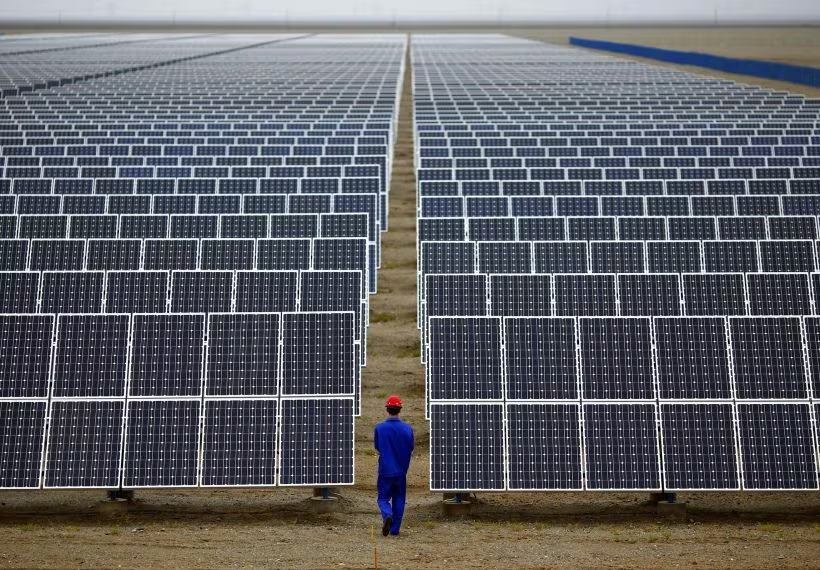
Going solar in Malaysia used to mean paying a big lump sum before the panels even reached your roof. That single hurdle stopped many homeowners who wanted lower electricity bills but did not want to drain their savings. A solar panel loan removes that hurdle. Instead of one large payment, you spread the cost over several years and let the monthly savings on your Tenaga Nasional bill do most of the work.
This guide explains how a solar panel loan works in Malaysia, the financing routes open to homeowners, roughly what the monthly numbers look like, and the government schemes that make green borrowing cheaper. Every figure here is illustrative market context — your real numbers depend on your roof, usage, and installer quote. First, here is a short video on whether financing solar panels is a smart move.
Watch: should you finance solar panels?
Source video: The Ramsey Show on YouTube — Should I Finance Solar Panels?
1. What is a solar panel loan, and how does it work?
Quick Answer: A solar panel loan is financing that covers the cost of buying and installing a solar system, which you then repay in fixed monthly instalments. You own the system from day one, keep every bit of the electricity it generates, and use the resulting bill savings to help offset the repayment.
With a solar panel loan, the lender pays your installer and you repay over an agreed term — often up to ten years. Because you own the panels outright, all the energy they produce is yours, and any excess you export can earn bill credits. This differs from a lease or power-purchase deal, where a third party owns the panels and you pay for the power they make.
The appeal is simple. A home solar system is a long-life asset that keeps cutting your bill for 20 to 25 years, but its cost lands all at once. A loan matches the payment to the benefit: you pay a manageable monthly amount, and the savings start immediately. If you want the full picture of what installing a home system involves, our guide to home solar panel installation walks through the process from site survey to switch-on.
Not sure which system size fits your bill?
Start with the basics of sizing and installation before you compare loan quotes. See how home solar installation works →
2. What solar financing options do Malaysian homeowners have?
Quick Answer: Malaysian homeowners typically choose from five routes: paying cash, a green home loan, a standard personal loan, a 0% credit-card instalment plan, or adding solar to a home loan or refinancing. Each trades off upfront cash, monthly cost, and total interest paid differently.
There is no single “best” way to pay for solar — the right route depends on how much cash you want to keep, how fast you want to clear the debt, and whether your bank offers a dedicated green product. Green financing usually carries a lower rate than an ordinary personal loan because banks price sustainable purchases more favourably. The table below sets out the common options and who each one suits.
| Route | Typical rate | Tenure | Upfront cash | Best suited for |
|---|---|---|---|---|
| Pay cash | None | — | Full cost | Savers wanting the best lifetime return |
| Green home financing | ~3.5–4.5% p.a. | Up to 10 yrs | Low / none | Most homeowners wanting a low monthly cost |
| Personal loan | ~6.5–8% p.a. | 3–7 yrs | None | Fast approval without a green product |
| 0% instalment plan | 0% (12–36 mo) | 1–3 yrs | None | Smaller systems with a short payback |
| Mortgage add-on / refinance | Home-loan rate | Remaining tenure | None | Owners already refinancing their home |
Illustrative market context, Malaysia, 2026. Rates vary by bank and profile — get a free quote.
Whichever route you pick, one rule holds: banks will only release green financing for systems installed by a contractor recognised by SEDA and the Energy Commission (ST). Choosing an accredited installer is not just about quality — it is often a condition of the loan itself. Our guide to the best solar panel company in Malaysia explains what accreditation to look for.
3. What government schemes support solar financing?
Quick Answer: Malaysia backs green borrowing through the Green Technology Financing Scheme (GTFS), which gives a profit-rate rebate on approved green loans, plus MyHijau product listing and the national net energy metering programme that lets you earn bill credits for exported solar. Together these lower both the cost of the loan and the payback period.
The Green Technology Financing Scheme run by MGTC offers a 2% per year rebate on the interest or profit rate for the first seven years, with a 60% government guarantee on the financing. It is aimed mainly at larger and commercial green projects with a minimum financing size, and it requires MyHijau-listed products, so it fits ambitious home or small-business installs better than a modest rooftop. Still, it shows how policy is nudging rates down for verified green technology.
Two other supports matter for homeowners:
- MyHijau listing. Panels and inverters on the national MyHijau register are recognised as genuine green products, which many green-loan products require.
- Net energy metering. The national programme lets your system export surplus daytime energy to the grid for bill credits, shrinking your net bill and shortening the loan payback.
Scheme rules and credit rates change, so confirm the current terms with SEDA, ST, or your installer before you sign. The direction of travel is clear, though: verified solar keeps getting cheaper to finance.
4. How much does a solar panel loan cost each month?
Quick Answer: On illustrative market figures, a green loan on a mid-size home system costs roughly RM 165 to RM 455 a month over ten years, depending on system size. For many homes the estimated electricity bill offset is close to, or above, that repayment — meaning solar can be broadly cash-flow neutral.
The repayment scales with system size and cost; the bill offset scales with how much daytime energy you use and export. The chart below pairs the two for common home sizes, using illustrative pricing and a green-loan rate over ten years. It is a planning guide, not a quote.
| System size | Est. monthly repayment | Repayment (RM/mo) | Est. bill offset (RM/mo) |
|---|---|---|---|
| 4 kWp | 165 | 150–250 | |
| 6 kWp | 225 | 220–360 | |
| 8 kWp | 290 | 300–480 | |
| 10 kWp | 350 | 380–600 | |
| 13 kWp | 455 | 500–780 |
Illustrative: green loan ~4.2% over 10 years, market pricing, Malaysia 2026. Not a quote — ask for yours.
Notice how, at most sizes, the estimated bill offset sits near or above the repayment. That is the heart of the case for a solar panel loan: the savings help carry the debt. For a deeper breakdown of what systems cost before financing, see our solar panel cost in Malaysia guide.
5. Cash or loan: which really costs less?
Quick Answer: Paying cash always costs the least in total because you pay no interest. A 0% instalment plan matches cash on cost while spreading it out. A green loan adds modest financing cost, and a personal loan adds the most. The trade-off is upfront cash versus total paid over the term.
Borrowing is never free unless it is a genuine 0% plan. But “cheapest total” is not the only goal — keeping your savings intact, or getting the system working now instead of in three years, has real value too. The comparison below uses the same 8 kWp example so you can see how the routes stack up.
| Payment method | Relative total | Total paid (RM) | Financing cost (RM) |
|---|---|---|---|
| Pay cash | 28,000 | 0 | |
| 0% instalment (24 mo) | 28,000 | 0 | |
| Green loan (4.2%, 10 yr) | 34,800 | 6,800 | |
| Personal loan (7%, 7 yr) | 35,600 | 7,600 |
Illustrative for an RM 28,000 example system, Malaysia 2026. Actual totals depend on rate and tenure.
The financing cost of a green loan — a few thousand ringgit over a decade — is often smaller than the extra bill savings you capture by installing sooner rather than saving up for years. To pressure-test your own numbers, our guide on how much it costs to install solar panels in Malaysia is a useful companion.
Want the numbers for your actual roof and bill?
We size the system, model the savings, and lay out the financing side by side. Get a free quote →
6. How long before a financed system pays for itself?
Quick Answer: On an illustrative ten-year green loan, cumulative bill savings can stay close to cumulative repayments throughout the term, and often edge ahead. Once the loan clears, the savings keep coming for the remaining 15-plus years of panel life — that is where the real return sits.
The timeline below models cumulative savings against cumulative repayment for a financed system, with the loan spread over ten years. Rising electricity tariffs push the savings line up over time, so the gap widens as the years pass. Treat the projection as a shape, not a promise — it shows why solar behaves like an asset that eventually pays you.
| Measure (RM) | Year 1 | Year 3 | Year 5 | Year 7 | Year 10 |
|---|---|---|---|---|---|
| Cumulative savings | 3,840 | 11,900 | 20,400 | 29,300 | 44,000 |
| Cumulative repayment | 3,480 | 10,440 | 17,400 | 24,360 | 34,800 |
| Net position | +360 | +1,460 | +3,000 | +4,940 | +9,200 |
Illustrative projection; assumes modest annual tariff rises, Malaysia 2026. Your results will differ.
The takeaway is that a well-sized financed system can stay net-positive from early on, then pull clearly ahead once the loan ends. That is a very different picture from a debt that simply drains cash — here the asset is helping to fund itself.
7. How to qualify for a solar panel loan in Malaysia
Quick Answer: To qualify, you generally need to be a Malaysian homeowner with steady income, choose a SEDA-recognised installer, get a system quote, and apply through a bank’s green or personal financing product. Approval hinges on your credit standing and the installer’s accreditation.
The path from interest to approved financing is short if you prepare the right documents. Follow these steps in order.
- Confirm you are eligible. Most green financing needs a Malaysian applicant with stable income and an acceptable credit record; the property is usually one you own.
- Choose a SEDA-recognised installer. Banks release green loans only for systems fitted by an accredited contractor, so lock this in before applying.
- Get a written quote and system design. The quote sets the financing amount and confirms MyHijau-listed equipment where required.
- Compare financing products. Weigh green loans, personal loans, and 0% instalment plans on rate, tenure, and total cost.
- Submit your application. Provide identity, income, and the installer quote; on approval the bank pays the installer and your repayments begin.
Keeping your documents ready — identity card, latest payslips or income proof, and the installer quote — is the single biggest thing that speeds up approval.
8. Mistakes to avoid when financing solar
Quick Answer: The common traps are choosing an unaccredited installer, oversizing the system to inflate the loan, focusing only on monthly repayment instead of total cost, and skipping the fine print on green-loan conditions. Each one quietly erodes the savings that justify the loan.
A solar panel loan only works in your favour if the system and the financing are both sound. Watch for these pitfalls:
- Picking on price alone. The cheapest installer can cost more later through weak workmanship or a voided green loan — accreditation matters more than a small discount.
- Oversizing the system. A bigger array means a bigger loan; size to your actual daytime usage, not to the roof’s maximum.
- Chasing the lowest monthly figure. A longer tenure lowers the instalment but raises total interest; balance both.
- Ignoring the conditions. Green products can require MyHijau equipment and specific installers — confirm you meet them before signing.
Getting the sizing and installer right at the start protects the whole business case. When you are ready to compare, EDCA Energy can design a system to your usage and lay out the financing options clearly.
9. Conclusion
Quick Answer: A solar panel loan makes home solar reachable without a large upfront payment, and for many Malaysian homes the bill savings broadly offset the repayment. Choose green financing where you can, install with an accredited contractor, and the system can pay for itself well within its lifespan.
Financing changes the question from “can I afford solar this year?” to “which route fits my cash flow?” Green loans keep the rate low, 0% plans suit smaller systems, and cash still wins on total cost if you have it. Whichever you choose, the maths only works when the system is well sized and professionally installed. Get those right, and a solar panel loan turns a big one-off cost into a steady, self-funding upgrade to your home.
Ready to finance your home solar system?
We’ll size your system to your bill, model the savings, and lay the financing options side by side — green loan, instalment, or cash — so you can choose with clear numbers.
Get a Free Quote →10. Frequently Asked Questions
1. Can I get a solar panel loan with no upfront payment in Malaysia?
Yes. Many green financing products and 0% instalment plans cover the full system cost with little or no cash upfront. The bank pays your installer and you repay in monthly instalments. Approval depends on your income and credit standing, and the installer must be SEDA-recognised for green-loan products.
2. Is a green loan cheaper than a personal loan for solar?
Usually, yes. Banks tend to price green or sustainable financing at a lower rate than a standard personal loan because the purchase is a verified green asset. Over a ten-year term, that lower rate can save you a few thousand ringgit in interest, so it is worth asking specifically for a green product.
3. Do I still own the solar panels if I finance them?
Yes. A solar panel loan means you buy the system outright, so you own it from day one and keep all the energy it generates. This differs from a lease or power-purchase arrangement, where a third party owns the panels and you pay for the electricity they produce.
4. How long is a typical solar panel loan tenure?
Green home financing commonly runs up to ten years, personal loans usually three to seven years, and 0% instalment plans one to three years. A longer tenure lowers the monthly repayment but increases the total interest paid, so balance the monthly figure against the overall cost.
5. Will the savings really cover my loan repayment?
For many well-sized home systems, the estimated monthly bill savings sit close to or above the loan repayment, so solar can be broadly cash-flow neutral. The exact outcome depends on your usage, system size, tariff, and rate, which is why a proper quote and savings estimate matter.
See your solar savings in under a minute
Estimate your ideal system size, payback period and monthly bill offset with the EDCA calculator.