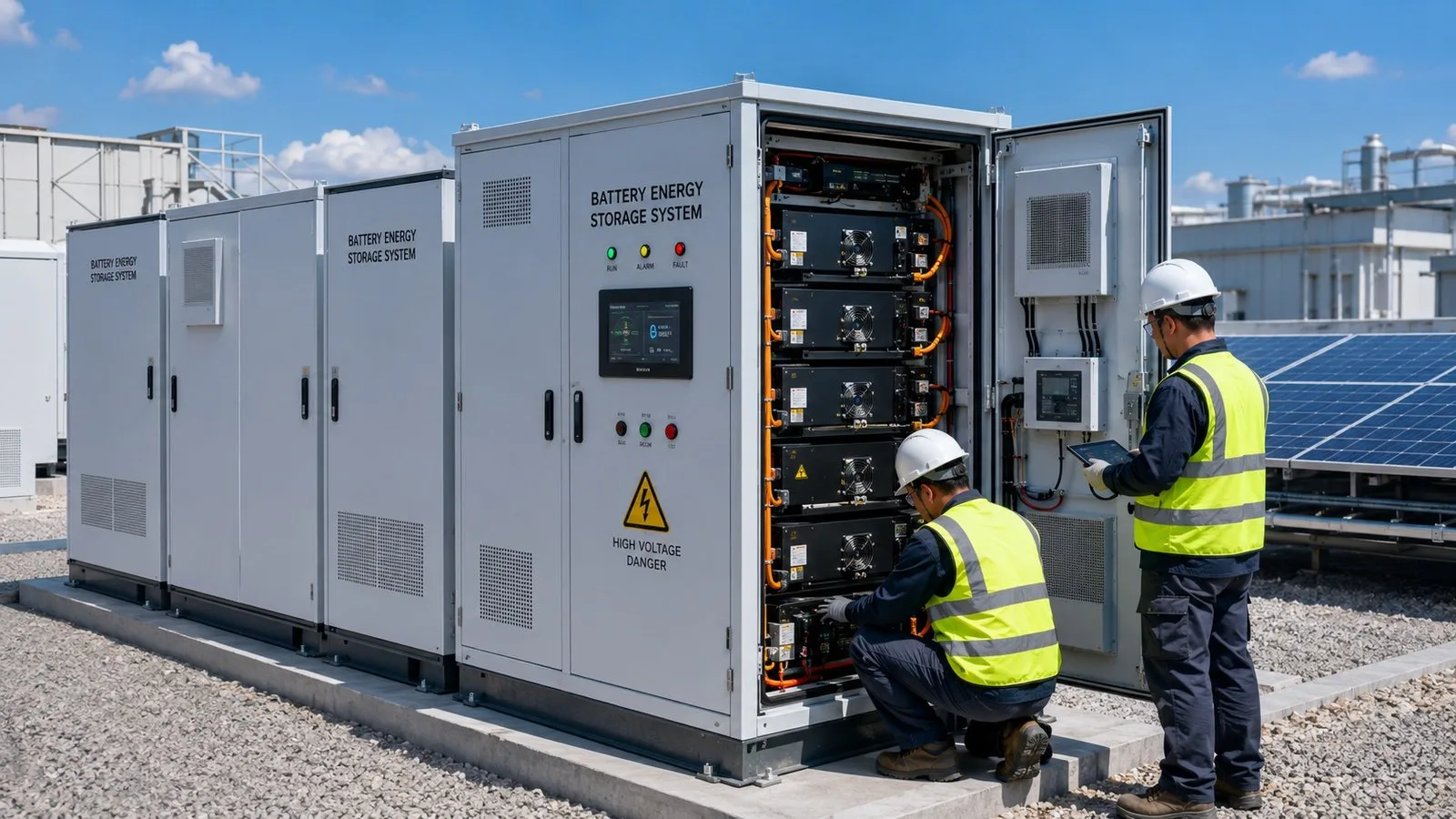
“How much does a solar battery cost in Malaysia?” is the first question most homeowners ask — and the hardest to answer with one number. Price swings with how much power you want to store, the chemistry inside, whether it bolts onto an existing system or ships as a hybrid unit, and who installs it. A 5 kWh unit and a 20 kWh bank sit worlds apart on the invoice.
This guide breaks the solar battery storage price down the way an installer actually builds a quote: by capacity, by cost component, by battery type, and by where prices are heading. Treat every ringgit figure as illustrative market context, not a fixed EDCA price — your true cost comes from a proper site assessment. First, a short video framing whether battery storage pays for itself.
Watch: is battery storage actually worth it?
Source video: Artisan Electrics on YouTube — Is Battery Storage Actually Worth It?
1. How much does solar battery storage cost in Malaysia?
Quick Answer: A home solar battery in Malaysia is priced by usable capacity. As illustrative market context, a small 5 kWh unit sits in the high-teens of thousands of ringgit, while a large 20 kWh bank can reach the high-fifties — installed. The right size, not the biggest, gives the best value, so the headline price only means something once it is matched to your evening load.
Storage is sold by the kilowatt-hour of usable capacity, and that single number drives most of the invoice. The more energy you want to hold for night-time use, the more cells, casing, and inverter capacity the system needs. The table below shows illustrative installed prices across common home sizes — useful for framing a budget, not for signing a contract.
| Usable capacity | Relative installed price | Illustrative price (RM) |
|---|---|---|
| 5 kWh | ~18,000 | |
| 10 kWh | ~32,000 | |
| 15 kWh | ~45,000 | |
| 20 kWh | ~58,000 |
Illustrative market context, Malaysia 2026 — installed price including inverter and basic works. Not an EDCA price. Your quote depends on load, roof, and site. Get a free quote for real figures.
Notice the price does not double when capacity does — a 10 kWh unit is not simply two 5 kWh units, because the inverter and install work are partly fixed. That is why buying the size that fits your evening use, rather than the largest available, usually gives the best value. Our explainer on the battery storage system for solar panels covers how capacity translates into real overnight power.
Want a price matched to your actual usage?
A site assessment turns these ranges into a real number for your home. See how solar battery storage is designed →
2. What makes up the price of a solar battery?
Quick Answer: The battery modules are the biggest slice of the price — typically over half. The hybrid inverter, installation labour, and balance-of-system parts such as wiring, enclosure, and protection make up the rest. Understanding this split shows why two quotes for the “same” kWh can differ: they may weight these components very differently.
A battery quote is not one price — it is four costs bundled together. Knowing the split helps you read a quote critically and spot where a cheaper offer may have cut a corner. The breakdown below is illustrative, but the ranking of components holds for most home installs.
| Cost component | Share of installed price | Share |
|---|---|---|
| Battery modules | ~55% | |
| Hybrid inverter | ~20% | |
| Installation & labour | ~13% | |
| Balance of system | ~12% |
Illustrative market context, Malaysia 2026. Shares shift with system size and whether the battery is a retrofit or a hybrid build.
Because the modules dominate, a quote that looks cheap has usually saved money on the cells — often a lower-grade chemistry or a shorter warranty. The balance-of-system slice is small but not optional: skimping on protection and enclosure is where safety corners get cut. If backup during outages matters, a home solar battery storage company should price the wiring for it clearly rather than hiding it.
3. How does battery type affect the price?
Quick Answer: Chemistry sets the price band. Lead-acid looks cheapest per kWh upfront but has shallow usable depth and a short life; entry lithium sits in the middle; premium LFP costs the most per kWh at purchase but lasts longest. For a Malaysian home in a hot climate, LFP’s higher sticker price often buys the lowest cost over the battery’s life.
Two batteries of the same kWh can carry very different prices because of what is inside them. The figures below compare illustrative upfront installed cost per usable kWh by chemistry — the day-one price, before lifespan is factored in.
| Battery type | Relative upfront price per kWh | Illustrative RM / usable kWh |
|---|---|---|
| Lead-acid | ~2,500 | |
| Entry lithium (NMC) | ~3,200 | |
| Premium LFP | ~3,800 |
Illustrative market context, Malaysia 2026 — upfront price only. Lifespan and cycle life change the lifetime picture sharply.
The catch is that upfront price per kWh is only half the story. Lead-acid is cheapest to buy but delivers the fewest cycles and shallow usable depth, so its lifetime cost is often the highest. Premium LFP reverses that. If you want the full lifetime comparison, our guide to the best solar battery storage in Malaysia ranks chemistries on cost per usable kWh over their whole life.
Comparing quotes with different chemistries?
We can translate each one into cost per usable kWh so you compare like with like. Get a free quote →
4. Are solar battery prices falling in Malaysia?
Quick Answer: Yes — the general direction of solar battery prices has been downward as lithium cell manufacturing has scaled up globally. As illustrative context, an index of home battery prices has eased year on year since 2022. That said, waiting for a lower price means paying full grid tariffs in the meantime, so the “best” time to buy depends on your bills, not just the trend.
Battery prices have followed the same long slide as solar panels, driven by global manufacturing scale. The illustrative index below tracks that direction for Malaysian home systems — it shows the trend, not a guaranteed future price.
| Year | Relative price index (2022 = 100) | Index |
|---|---|---|
| 2022 | 100 | |
| 2023 | 92 | |
| 2024 | 85 | |
| 2025 | 79 | |
| 2026 | 74 |
Illustrative market context, Malaysia 2026. Directional only — actual prices vary by brand, size, and supply. Not a forecast.
The slide is real but gentle, and it comes with a cost of waiting. Every year you delay to chase a lower battery price is a year of paying full tariffs on the grid power you could have stored. For most homes with a rising bill, the payback clock matters more than shaving a few percent off the hardware. Under Malaysia’s NEM 3.0 scheme, exported solar is credited but a battery’s value comes mainly from self-consumption — storing your own cheap solar for the evening rather than buying it back.
5. What else changes your battery quote?
Quick Answer: Beyond capacity and chemistry, four things move the price of a solar battery in Malaysia: whether it is a retrofit or a hybrid build, whether you want true backup wiring for outages, your electrical panel’s condition, and the warranty term. Each can shift a quote by thousands of ringgit, which is why two homes with the same kWh get different prices.
The kWh number sets the base, but the details around it decide the final figure. When you compare quotes, check how each installer has handled these price movers:
- Retrofit vs hybrid build. Adding a battery to an existing solar system may need an extra or replacement inverter, which adds cost. A hybrid system built from scratch bundles this in more cheaply.
- True backup wiring. If you want circuits to stay live during a blackout, the installer must wire a backup gateway and choose which circuits to protect — real work that a savings-only setup skips.
- Electrical panel and site condition. An older distribution board, a long cable run, or an awkward mounting spot all add labour and parts.
- Warranty term and support. A longer warranty and local after-sales usually cost a little more upfront but protect you for the decade the battery must last.
None of these show up in a headline “RM per kWh” figure, yet together they explain most of the gap between a cheap quote and a complete one. A quote that is far below the rest has usually dropped one of them — ask which.
6. Is a solar battery worth the price?
Quick Answer: A battery is worth the price when a large share of your power use falls in the evening, when your bill is high, or when backup during outages matters to you. Under NEM 3.0, exported solar earns a credit, so a battery pays off mainly by raising self-consumption — using more of your own cheap solar instead of buying grid power at night.
The value question is personal. A home that uses most of its power while the sun shines gets less from a battery than one that runs air-conditioning, cooking, and charging after dark. Weigh the price against these:
- Evening-heavy load. The more of your usage that sits after sunset, the more a battery displaces and the faster it pays back.
- Bill size. A higher tariff bracket means each stored kWh saves more, shortening payback.
- Backup value. If outages disrupt work or comfort, backup power has a worth beyond pure ringgit savings.
Because NEM 3.0 rewards self-consumption over export, the battery’s job is to keep your own solar at home for the evening. When you are ready to weigh the numbers against your bill, EDCA Energy models payback around your actual usage rather than a generic estimate.
7. How to get an accurate price
Quick Answer: The only accurate solar battery price comes from a site assessment based on your bill and evening load, quoted by a SEDA-registered installer. Ranges online are useful for framing a budget, but your real number depends on your usage, roof, panel condition, and the backup you want — none of which a generic figure can capture.
A trustworthy quote starts with your data, not a price list. When you approach an installer, expect them to ask for your electricity bill and your daily usage pattern before quoting. A good process looks like this:
- Share your bill and usage. A recent TNB bill and a sense of when you use power let the installer size the battery to your evening load.
- Get a right-sized recommendation. The installer should propose a capacity matched to your usage, not the largest unit they stock.
- Read the full itemised quote. Battery, inverter, install, balance of system, and backup wiring should each be visible, not lumped into one figure.
- Check accreditation. Choose a SEDA-registered contractor so safety and warranty are protected.
An itemised quote from an accredited installer is the only figure worth acting on. Everything else — including the ranges in this guide — is context to help you read that quote with a sharper eye.
8. Conclusion
Quick Answer: Solar battery storage price in Malaysia is set by usable capacity, chemistry, and install detail — not the brand. Use online ranges to frame a budget, judge value on cost per usable kWh over the battery’s life, and get an itemised quote from a SEDA-registered installer for the real number.
There is no single price for a solar battery in Malaysia, and that is the honest answer. What you pay depends on how much power you store, the chemistry inside, and the work around it. The illustrative ranges here are for framing a budget — the figure that matters is an itemised quote built around your own bill and evening load. Judge that quote on lifetime cost per usable kWh, not the sticker, and the right battery for your home — and your budget — becomes clear.
Ready for a real price on solar battery storage?
We’ll read your bill, size the battery to your evening load, and quote the full installed cost — itemised, so you compare on real numbers, not ranges.
Get a Free Quote →9. Frequently Asked Questions
1. How much does a solar battery cost in Malaysia in 2026?
There is no single price — it scales with usable capacity. As illustrative market context, a small 5 kWh home battery sits in the high-teens of thousands of ringgit installed, while a large 20 kWh bank can reach the high-fifties. These are budget-framing ranges, not fixed prices; your real figure depends on your load, chemistry choice, and site, so an itemised quote is the only accurate number.
2. Why do two solar battery quotes for the same kWh differ so much?
Because the kWh number hides the details that drive price. One quote may use a cheaper chemistry with a shorter warranty, skip true backup wiring, or assume an easy install. The battery modules alone are over half the cost, so a low quote has usually saved money there. Always compare itemised quotes — battery, inverter, install, and backup wiring line by line — not just the headline total.
3. Is it cheaper to add a battery later or install it with solar panels?
Installing a battery together with panels as a hybrid system is usually cheaper than retrofitting later, because a hybrid inverter handles both in one unit. Adding a battery to an existing solar setup may need an extra or replacement inverter, which adds cost. If you are fairly sure you will want storage, building it in from the start often saves money overall.
4. Does NEM 3.0 make a battery worth the price in Malaysia?
Under NEM 3.0, exported solar earns a credit, so a battery’s value comes mainly from self-consumption — storing your own cheap solar for evening use instead of buying grid power. It is most worth the price for homes with evening-heavy loads, higher bills, or a need for backup during outages. For daytime-heavy homes with modest bills, the payback is slower.
5. Are solar battery prices in Malaysia expected to keep falling?
The general trend has been downward as global lithium manufacturing has scaled, and prices have eased year on year. But the decline is gradual, and waiting means paying full grid tariffs in the meantime. For most homes with a rising bill, the savings from installing now outweigh the few percent you might save by delaying, so the payback maths usually matters more than the price trend.
See your solar savings in under a minute
Estimate your ideal system size, payback period and monthly bill offset with the EDCA calculator.