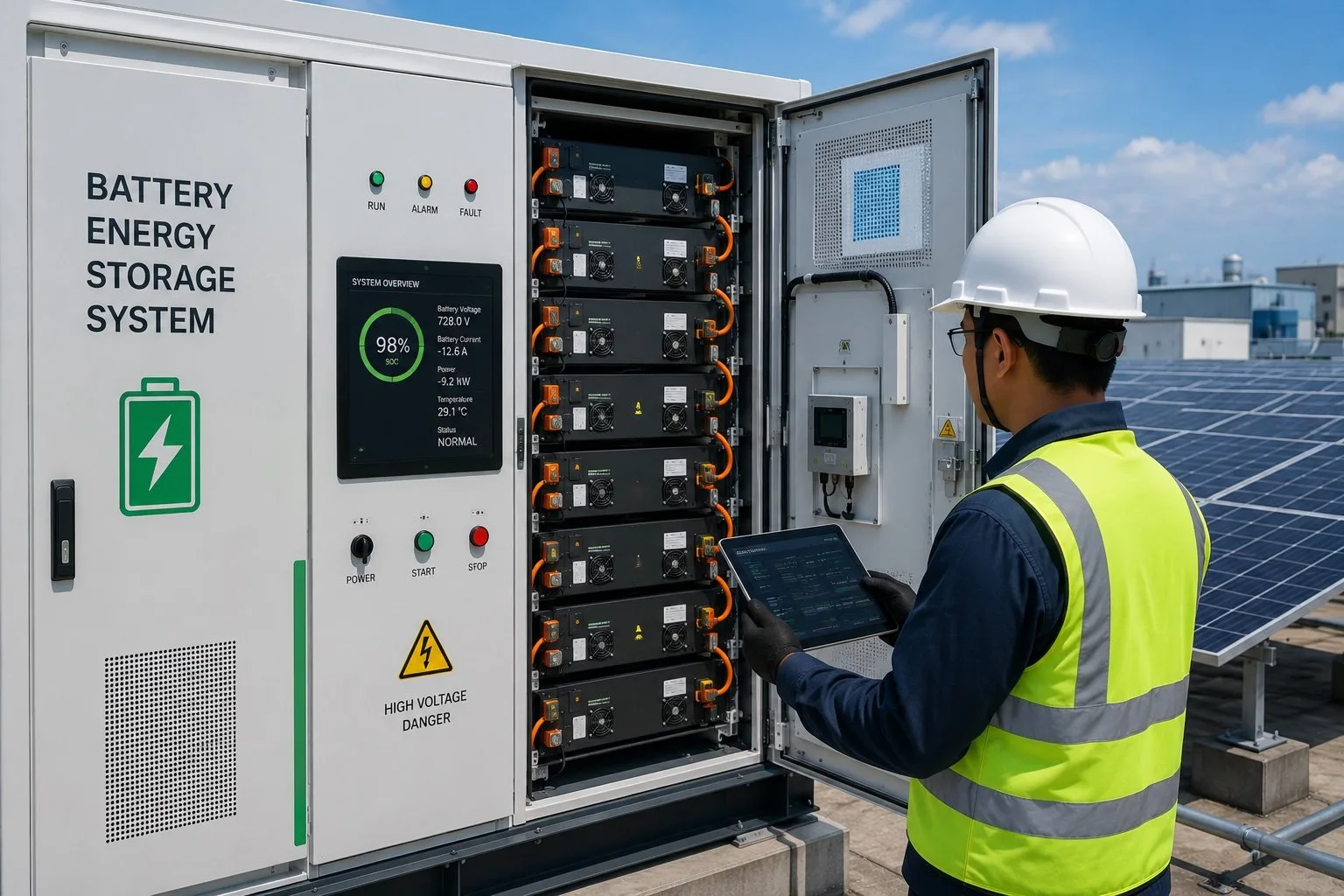
TL;DR: A residential solar battery storage installer designs, sizes, installs and commissions a home battery so you can store daytime solar and use it at night or during a blackout. In Malaysia, where NEM credits are netted rather than paid out, a well-sized battery lifts your self-consumption and keeps essentials running when the grid drops. The right installer handles the load study, hybrid inverter, safety enclosure, approvals and monitoring — not just the hardware. This guide covers scope, sizing, cost drivers, backup runtime, and how to pick one.
1. Batteries are the new question for Malaysian solar homes
Solar panels answer the daytime bill. The evening — when the aircon, kettle and TV all run at once — is where a battery earns its keep. Malaysia’s net metering rules have shifted away from carrying credits forward indefinitely. So more homeowners now ask a simple question: should I store my own solar instead of sending it back to the grid for little in return?
That is exactly the problem a good residential solar battery storage installer solves. Their job is to match a system to how your household actually uses power. That means wiring it safely into your existing solar and making sure it turns on when TNB turns off — not selling you the biggest battery on the shelf. If you are still deciding whether storage is worth it, our home solar battery storage service page is the companion to this guide. First, watch the one-minute explainer below, then we will get into the detail.
Solar and battery storage, explained
A beginner-friendly overview of how home solar and battery storage work together before you commit.
2. What does a residential solar battery storage installer actually do?
Quick Answer: A residential solar battery storage installer runs a home load study, sizes the battery to your evening usage, supplies a matched hybrid or battery inverter, installs the battery in a safe, ventilated spot, wires in backup protection, arranges any grid approvals, and sets up monitoring. You get a working, standards-compliant system — not a box on the wall.
The hardware is the easy part. The value sits in the engineering decisions around it. A battery that is too small never covers the evening; one that is too big sits half-empty and wastes money. Getting that balance right is the installer’s core skill, and it is why a battery job is different from a straight panel job.
A proper residential job usually covers:
- Load and usage study. Reading your TNB bills and, ideally, half-hourly usage to see when you actually draw power.
- System design. Choosing usable capacity, inverter type, and whether the battery backs up the whole home or just essential circuits.
- Safe installation. Mounting, ventilation, cabling, isolation and surge protection to Suruhanjaya Tenaga (ST) wiring standards.
- Integration. Tying the battery into existing panels — the retrofit case many Malaysian homes now face.
- Commissioning and monitoring. Testing backup changeover and handing over an app so you can see charge, discharge and savings.
As an EPCC provider, EDCA Energy handles all of that under one roof, which matters when the battery, inverter and existing solar all have to talk to each other. If you want the fundamentals of the equipment first, our explainer on the battery storage system for solar panels breaks down the parts before you shortlist an installer.
3. Why Malaysian homes are adding batteries now
Quick Answer: Under Net Energy Metering, exported solar is netted against what you import rather than paid at a premium, so power you send to the grid is worth less than power you use yourself. A battery lets a home use more of its own solar after dark, which is the main reason residential storage demand has picked up in Malaysia.
Malaysia’s rooftop scheme has evolved through several versions. NEM 3.0 opened in February 2021 with a residential quota, the NEM Rakyat programme, offering domestic users a net metering arrangement over a ten-year period, per SEDA Malaysia. The scheme has since moved toward Solar ATAP, and the direction of travel is clear: self-consumption is where the value now sits.
Rooftop solar itself is firmly mainstream — the government confirmed it would maintain the credit scheme for over 96,000 rooftop solar users. For those homes, a battery is the logical next upgrade: it stores midday surplus and spends it in the evening peak, plus it keeps the fridge and lights on during an outage. If you are comparing providers rather than picking a battery, our note on choosing a home solar battery storage company pairs well with this section.
Not sure a battery fits your bill and roof?
Send us your last two TNB bills and we will model the payback for your home. Get a Free Quote →
4. Installation stages and typical timeline
Quick Answer: A home battery install is mostly planning. The physical work — mounting the battery, wiring the inverter, and commissioning — usually takes one to two days. Site study, design and any grid documentation add the calendar time, so most residential projects run from a couple of weeks to about a month end to end.
Knowing the stages helps you spot an installer who is cutting corners. Below is the typical path EDCA follows on a residential retrofit or new install; durations are illustrative and vary with roof access, approvals and stock.
| Stage | What happens | Typical duration |
|---|---|---|
| Site & load study | Bill review, usage profile, roof and switchboard check | 1–2 days |
| Design, sizing & quote | Battery capacity, inverter choice, backup scope, pricing | 2–5 days |
| Approvals & documentation | Grid/utility paperwork where the battery affects the connection | 1–4 weeks |
| Installation | Mount battery, wire hybrid inverter, backup circuits, isolation | 1–2 days |
| Testing & commissioning | Charge/discharge test, blackout changeover, settings | Half–1 day |
| Handover & monitoring | App setup, warranty pack, usage walkthrough | Same day |
Source: EDCA Energy operational process, illustrative durations for Malaysian residential installs (2024–2026).
5. How installers size a home battery
Quick Answer: Sizing starts from your evening and overnight usage, not your total daily use. A small home may only need 5–10 kWh of usable storage; a large air-conditioned bungalow, or a home charging an EV, can justify 20–40 kWh. The goal is to cover the hours the sun is down without paying for capacity you never cycle.
Batteries are quoted in kilowatt-hours (kWh) of usable capacity. A residential solar battery storage installer works backward from how much energy your home uses after sunset and how much backup you want. Use the table below as a starting reference for Malaysian homes.
| Home profile | Daily use (kWh) | Suggested usable battery | Main goal |
|---|---|---|---|
| Apartment / small home | 8–12 | 5–10 kWh | Shift evening usage |
| Mid-size terrace | 15–25 | 10–15 kWh | Self-consumption + backup |
| Large / air-con bungalow | 30–45 | 15–30 kWh | Whole-evening + backup |
| Home + EV charging | 40–60 | 20–40 kWh | Overnight EV + backup |
Source: EDCA Energy sizing guidance, illustrative ranges based on typical Malaysian household load patterns.
6. What drives the cost of a home battery system
Quick Answer: The battery modules are the single biggest line item, followed by the hybrid inverter and the installation labour and electricals. Enclosure, safety systems, design and monitoring make up the rest. Because pricing depends on capacity, brand and your switchboard, EDCA quotes per home rather than from a fixed price list.
There is no honest single price for a home battery — it scales with usable kWh and how much rewiring your board needs. What is consistent is the shape of the cost. The illustrative breakdown below shows where the money typically goes in a residential battery system.
| Component | Share of cost | |
|---|---|---|
| Battery modules | ~45% | |
| Hybrid / battery inverter | ~20% | |
| Installation & electricals | ~15% | |
| Enclosure, BMS & safety | ~10% | |
| Design, approvals & monitoring | ~10% |
Source: EDCA Energy, illustrative cost-share model for Malaysian residential battery systems. Actual pricing is quote-based.
Because the battery dominates the bill, capacity discipline is the biggest cost lever you control — another reason correct sizing matters more than shopping on sticker price alone.
7. Backup runtime and self-consumption: what battery size buys you
Quick Answer: A 5 kWh battery can run essentials — fridge, lights, fans, wifi — for roughly ten hours, but only a few hours if you add an aircon. Larger batteries stretch both backup time and the share of your evening use covered by stored solar. The table shows how usable capacity maps to real-world runtime.
Runtime depends on what you switch on, not just battery size. A modest essentials load draws around half a kilowatt; add one aircon and a TV and you are closer to 1.5 kW. The model below is illustrative but reflects how Malaysian homes actually use a battery.
| Usable battery | Essentials only (~0.5 kW) | Comfort load (~1.5 kW) | Evening use covered |
|---|---|---|---|
| 5 kWh | ~10 hours | ~3 hours | ~30% |
| 10 kWh | ~20 hours | ~6 hours | ~50% |
| 15 kWh | ~30 hours | ~10 hours | ~65% |
| 20 kWh+ | ~40 hours | ~13 hours | ~75% |
Source: EDCA Energy, illustrative runtime model. Real results vary with appliances, depth of discharge and solar recharge.
8. How to choose a residential solar battery storage installer
Quick Answer: Pick a residential solar battery storage installer on credentials, engineering process and after-sales support — not the lowest number. Look for SEDA registration, a proper load study, a matched inverter-and-battery design, clear warranty terms, and real monitoring. A cheap install that trips during your first blackout is the expensive option.
Once you understand scope and sizing, choosing well comes down to a short checklist. A trustworthy residential solar battery storage installer should tick all of these:
- Accreditation. SEDA-registered RPVSP status, plus recognised ST, CIDB and manufacturer credentials.
- Genuine load study. They ask for your bills and usage before quoting a capacity — they do not lead with a battery brand.
- Matched design. Inverter, battery and existing panels engineered to work together, with backup scope agreed in writing.
- Track record. Real completed installs you can verify. EDCA brings 150+ projects and 80+ MWp installed across residential, commercial and industrial work.
- Warranty and support. Clear product and workmanship warranties, plus monitoring and a maintenance path.
It is worth comparing more than one provider on these points. Our guide to the best solar panel company in Malaysia covers how to weigh accreditation and track record, and the same lens applies to battery work. When you are ready to see specifics, the EDCA solar battery storage service lays out exactly what is included.
9. Retrofit or new install — and staying safe
Quick Answer: Most Malaysian battery jobs are retrofits onto existing solar, which may need a hybrid inverter swap. New solar-plus-battery builds are designed together from day one. Either way, insist on lithium iron phosphate (LFP) chemistry, proper ventilation, a battery management system and clear warranties suited to Malaysia’s hot, humid climate.
If you already have panels, a retrofit adds a battery and, often, a hybrid inverter that can charge and discharge storage. If you are starting fresh, the installer designs panels, inverter and battery as one system, which is usually cleaner and slightly cheaper per kWh. Commercial buyers face the same choices at larger scale — our note on picking a commercial solar battery storage company covers that end.
On safety, LFP is the mainstream residential choice in Malaysia because it is thermally stable and tolerant of heat. Whatever the brand, your installer should provide a ventilated, weather-protected location, a certified battery management system, surge and isolation protection, and warranties that hold up in local conditions. These are non-negotiables, not upsells.
10. Conclusion
A home battery is worth it in Malaysia when it is sized to your evenings, integrated safely with your solar, and backed by a provider who stands behind it. That is the whole case for choosing your residential solar battery storage installer on process and credentials rather than on the cheapest quote. Get the load study, sizing and warranty right, and the system quietly pays you back every night while keeping the essentials on when the grid fails.
Ready to store your solar and stop exporting it for less?
EDCA Energy will run a proper load study, size the battery to your home, and quote a safe, standards-compliant system — no fixed-price guesswork.
Get a Free Quote11. Frequently asked questions
What does a residential solar battery storage installer do?
A residential solar battery storage installer studies your home’s power use, sizes the battery, supplies a matched inverter, installs and wires the system safely, arranges any grid approvals, and commissions it with monitoring. The design and safe integration are the real service — the battery is just the hardware.
Do I need a battery if I already have solar under NEM 3.0?
Not strictly, but it usually helps. Because exported solar is netted rather than paid at a premium, a battery lets you use more of your own generation after dark instead of buying it back from the grid. It also gives you backup during outages, which panels alone cannot.
How big a home battery do I need in Malaysia?
It depends on your evening and overnight usage. A small home may need only 5–10 kWh of usable storage, while a large air-conditioned bungalow or a home charging an EV can justify 20–40 kWh. A proper load study sizes it to what you actually use after sunset.
Can an installer retrofit a battery to my existing solar?
Yes. Most residential battery jobs in Malaysia are retrofits. Depending on your current setup, the installer may add or swap in a hybrid inverter so the battery can charge from your panels and discharge in the evening or during a blackout.
How long does a home battery installation take?
The physical installation usually takes one to two days. The full project — site study, design, any grid documentation and commissioning — typically runs from a couple of weeks to about a month, depending on approvals and stock.
Is lithium battery storage safe in Malaysia’s climate?
Lithium iron phosphate (LFP) batteries are the mainstream residential choice because they are thermally stable and handle heat well. Installed with proper ventilation, a battery management system and surge protection, they are a safe fit for Malaysia’s hot, humid conditions.
See your solar savings in under a minute
Estimate your ideal system size, payback period and monthly bill offset with the EDCA calculator.