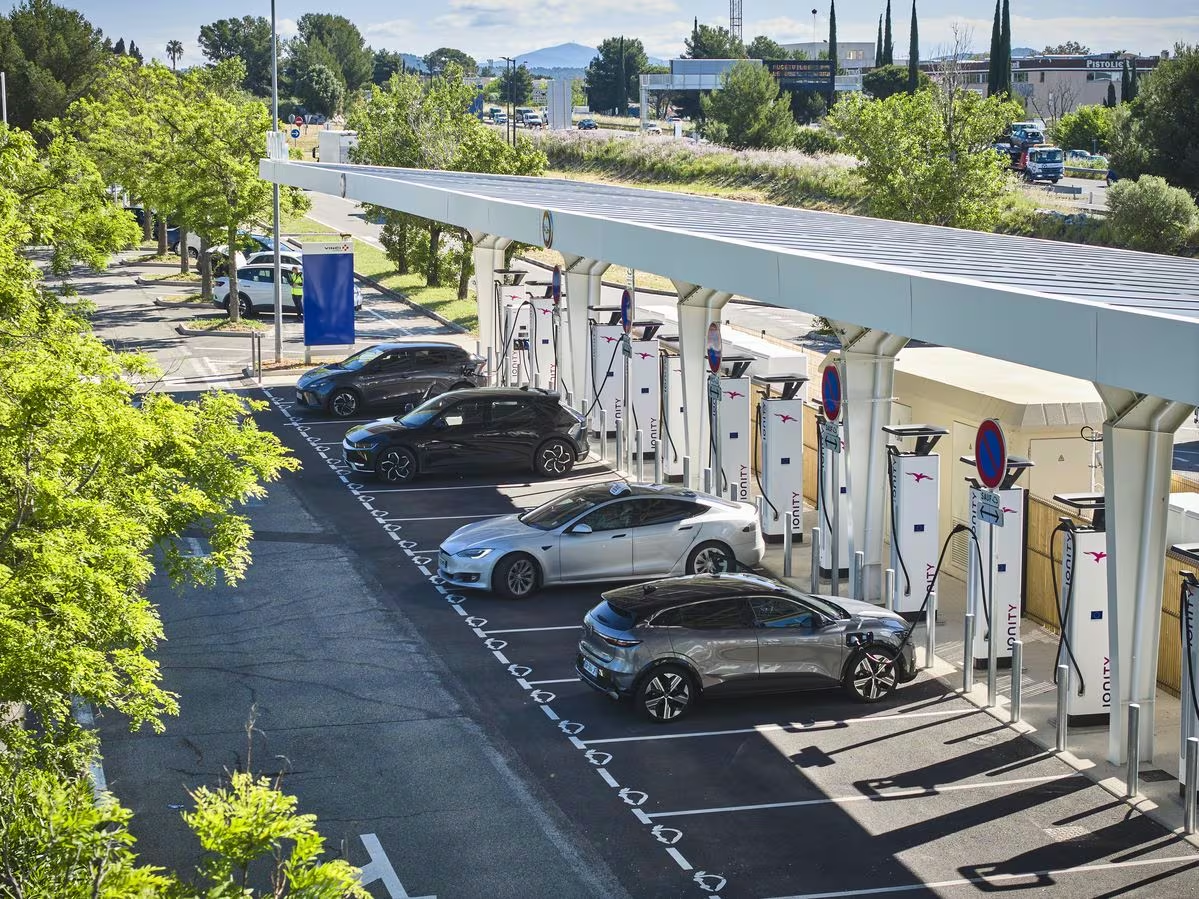
TL;DR: A home car charging station is a dedicated wall-mounted EV charger wired to your own electrical supply, so you top up overnight instead of queuing at public points. Most Malaysian landed homes use a 7 kW single-phase unit that fully charges a typical EV in about 8 hours. Installation needs an ST-registered contractor, proper circuit protection, and a free site assessment to size everything correctly.
If you have just bought an EV, or you are about to, the first real question is not which car. It is where you will charge it. Public chargers are growing fast, but nothing beats plugging in at home and waking up to a full battery. That is what a home car charging station gives you.
This guide explains, in plain terms, how home charging works in Malaysia. We cover the charger types you can choose, how long each one takes, what a proper installation involves, and what shapes the price. The aim is simple: help you make a confident decision before you spend a single ringgit.
Before we get into the how, the short clip below walks through the basics of what a home EV charger installation actually involves.
Watch: what a home EV charger installation involves
From This Old House, a long-running US home improvement programme. Malaysian wiring rules, TNB approval and pricing are covered below.
Source: This Old House on YouTube — How to Install an EV Charger | Ask This Old House
1. What is a home car charging station?
Quick Answer: A home car charging station is a fixed EV charger mounted at your house and connected to a dedicated circuit on your own electricity supply. It lets you charge overnight at home instead of relying on public stations, and it charges far faster and more safely than a normal wall socket.
People use a few names for the same thing: home charger, wallbox, EV charging point, or home car charging station. They all describe a unit fixed to a wall or post near your parking bay, wired directly into your distribution board (DB). Unlike a public charger, it is yours alone, so it is always free when you need it.
A home car charging station does two jobs at once. It delivers power to your car in a controlled, steady way, and it protects your home wiring while doing so. That second job is why a proper unit and a proper installation matter. This is different from a full commercial setup; if you run a business, our guide to commercial EV charger installation in Malaysia covers that side. For homes, the priorities are convenience, safety, and cost. For the full residential service, see our EV charger installation page.
Key takeaway: A home car charging station is a fixed, dedicated EV charger for your house. It is safer and much faster than a plug socket, and it turns overnight parking into free, convenient charging.
2. Which home charger types can you choose?
Quick Answer: Malaysian homes generally pick from three options: a portable Mode 2 charger for backup, a 7 kW single-phase wallbox for most landed homes, or an 11 kW to 22 kW three-phase wallbox for homes with three-phase supply. The 7 kW unit is the everyday standard because it matches the single-phase supply most houses already have.
Your choice comes down to your electrical supply and how much you drive. The table below compares the common home car charging station options and the supply each one needs. If you want a deeper walkthrough of the fixed-wallbox route, our EV home charger installation guide goes into more detail.
| Charger type | Power | Supply needed | Full charge (60 kWh EV) | Best for |
|---|---|---|---|---|
| Portable Mode 2 (socket) | 2.3–3.6 kW | Standard 13A / industrial socket | 17–26 hours | Backup, low daily mileage |
| 7 kW AC wallbox | 7.4 kW | Single-phase 230V | ~8–9 hours | Most Malaysian landed homes |
| 11 kW AC wallbox | 11 kW | Three-phase 400V | ~5–6 hours | Homes with three-phase supply |
| 22 kW AC wallbox | 22 kW | Three-phase 400V | ~3 hours | High mileage, multi-EV homes |
Illustrative comparison based on common charger specifications and a 60 kWh battery. Actual times vary by car, cable, and supply. Figures for guidance only, not a fixed quote.
Key takeaway: For most homes, a 7 kW single-phase wallbox is the right balance of speed, cost, and compatibility. Only go three-phase if you already have that supply or drive very high mileage.
Not sure which charger fits your home supply?
A quick assessment removes the guesswork. See what a professional EV charger installation covers, from load check to commissioning.
3. How long does home charging actually take?
Quick Answer: On a 7 kW home car charging station, a mid-size EV with a 60 kWh battery charges from near empty to full in about 8 to 9 hours. That fits neatly into an overnight charge. Bigger batteries take longer, and smaller ones finish sooner, but overnight home charging covers almost every daily driver.
The maths is simple. Charging time roughly equals battery size divided by charger power, plus a little for AC losses. The chart below shows approximate full-charge times on a 7 kW home wallbox across common battery sizes.
| Battery size | Approx. hours to full |
|---|---|
| 40 kWh (city EV) | ~6.0 h |
| 50 kWh | ~7.5 h |
| 60 kWh (mid-size) | ~9.0 h |
| 82 kWh (large SUV) | ~12.0 h |
Illustrative estimates for a 7 kW single-phase charger, assuming a full charge from a low state. Real-world times depend on the car and cable.
Notice that even a large SUV battery finishes within a typical overnight window. That is the quiet advantage of a home car charging station: you are almost always charging while you sleep, so the actual charge time barely matters. If you ever need faster daytime top-ups, our home page explains how EDCA Energy pairs charging with solar and battery to cut running costs.
Key takeaway: Overnight home charging covers nearly every daily driver. On a 7 kW unit, most EVs are full in 6 to 12 hours, so charge speed rarely limits you.
4. What does a home charging station installation involve?
Quick Answer: A proper home car charging station installation runs through six stages: a site and load assessment, charger and location selection, electrical works with dedicated protection, mounting and wiring, testing and commissioning, then documentation. Only an ST-registered contractor should handle the electrical works, because the charger draws high current for long periods.
Installing a home charger is not plug and play. It is a small electrical project, and doing it properly protects your house and your warranty. Here is the sequence a good installer follows.
- Site and load assessment. An ST-registered contractor inspects your DB, checks spare capacity, and confirms your supply is single-phase or three-phase.
- Charger and location selection. You pick the unit (usually 7 kW) and the mounting spot near your parking bay, keeping cable runs short and tidy.
- Electrical works and protection. The installer runs a dedicated circuit with its own breaker and residual current protection (RCD/RCBO), sized for continuous charging load.
- Mounting and wiring. The wallbox is fixed securely, wired in, and earthed correctly, with the socket set at a safe height off the ground.
- Testing and commissioning. The installer tests insulation, earth, and trip protection, then sets up the charger app and confirms a live charge.
- Documentation and notification. You receive test records, and where the load requires it, the supply upgrade is notified to TNB.
If your supply is tight, a load balancer can let the charger share capacity with the rest of the house safely. A good installer flags this early. For a full picture of the professional route, our EV home charger installation guide breaks each stage down further.
Key takeaway: Treat home charger installation as a proper electrical job. An ST-registered contractor, a dedicated protected circuit, and full testing are the non-negotiables.
5. How much does a home charging station cost in Malaysia?
Quick Answer: A home car charging station in Malaysia is usually a package price covering the charger unit, cabling, protection, and labour. The single biggest variable is the distance from your DB to the parking bay. Because every home is different, pricing is quote-based rather than a fixed sticker.
It helps to see what actually makes up a quote. The table below breaks a typical home charging station install into its main cost components, with illustrative ranges to show where the money goes.
| Component | What it covers | Illustrative range |
|---|---|---|
| 7 kW smart charger unit | The wallbox and charging cable | RM1,800–RM4,500 |
| Cabling, conduit and trunking | Run from DB to the charger | RM400–RM1,500 |
| Protection and DB works | RCBO, RCD, dedicated circuit | RM500–RM1,800 |
| Labour and commissioning | Mounting, wiring, testing, app setup | RM500–RM1,200 |
| Optional load balancer | Shares supply safely on tight loads | RM600–RM2,000 |
Illustrative market ranges to show cost structure, not EDCA pricing. Your figure depends on cable distance, supply, and charger model. Get a free quote for an exact price.
The takeaway from that table is that the charger itself is only part of the story. A long cable run or a DB upgrade can move the total more than the brand of wallbox does. For a fuller cost walkthrough, see our guide to EV charger installation cost in Malaysia.
Key takeaway: Home charging station pricing is quote-based because cable distance and supply drive the cost more than the charger model. Always get a site-specific quote.
Want an exact price for your home?
Share your address and supply type and we will size everything for you. Get a free quote →
6. Is a home charging station worth it in Malaysia?
Quick Answer: For most EV owners with off-street parking, yes. Home charging is cheaper per kWh than public DC charging, always available, and it removes range anxiety. With EV numbers climbing fast in Malaysia, a home car charging station is quickly becoming standard rather than a luxury.
EV adoption in Malaysia has moved from a trickle to a wave. Registrations of battery EVs have roughly doubled every year recently, and the trend is not slowing. The table below shows the trajectory.
| Year | BEV registrations | Direction |
|---|---|---|
| 2021 | ~277 | Baseline |
| 2022 | ~2,631 | ▲ |
| 2023 | ~10,159 | ▲▲ |
| 2024 | ~21,789 | ▲▲▲ |
| 2025 | ~44,813 | ▲▲▲▲ |
Compiled from Malaysian Automotive Association (MAA) and JPJ registration reporting; figures approximate, for market context.
Policy is pushing the same way. Malaysia aims for EVs to make up 15% of total industry volume by 2030 and 80% by 2050, with a national target of 10,000 public charging points, per MGTC. As more homes go electric, a private charger becomes the sensible default. If you are also weighing solar to power that charger, our guide to the best solar panel company in Malaysia is a useful next read.
Key takeaway: With EV numbers rising sharply and strong policy backing, home charging is fast becoming standard. If you have off-street parking, it usually pays for itself in convenience and lower charging costs.
7. Safety, approvals, and choosing an installer
Quick Answer: Always use an ST-registered contractor, insist on a dedicated protected circuit, and get proper test documentation. A home car charging station draws heavy current for hours, so cutting corners on wiring or protection is a real fire and safety risk, not a small saving.
The single most important decision is who installs it. A good installer protects you on three fronts: they are licensed, they size the circuit correctly, and they document the work so your insurer and warranty stay valid. Watch for these signs of a proper job:
- ST registration. The electrical works must be done or supervised by a Suruhanjaya Tenaga registered contractor.
- Dedicated circuit. The charger gets its own breaker and residual current protection, never a shared socket ring.
- Correct earthing and test records. Insulation, earth continuity, and trip tests are done and handed to you in writing.
- Honest load assessment. If your supply is tight, they recommend a load balancer or supply upgrade rather than overloading the DB.
Home and business needs differ, so match the installer to the job. For workplace or fleet setups, our commercial EV charger installation guide is the better starting point. For homes, the residential EV charger installation service handles the assessment, wiring, and commissioning end to end.
Key takeaway: The installer matters more than the brand. ST registration, a dedicated protected circuit, and written test records are the three things you should never skip.
8. Conclusion
A home car charging station turns EV ownership from a chore into a habit you barely think about. Plug in at night, drive out full each morning. For most Malaysian homes, a 7 kW single-phase wallbox is the sweet spot: fast enough for overnight charging, compatible with the supply you already have, and safe when installed properly.
The parts that matter most are a correct load assessment, a dedicated protected circuit, and an ST-registered installer. Get those right and your home charger will serve you quietly for years. When you are ready, the next step is a simple site assessment to size everything to your house.
9. Frequently asked questions
Can I install a home car charging station in a condo or apartment?
Often yes, but you need approval from the building management (JMB or MC) and a check that the parking bay can be wired safely and metered to you. High-rise installs are more complex than landed homes because the supply and billing run through shared infrastructure, so an early assessment is important.
Do I need a special electrical supply for a home charging station?
Not usually. A 7 kW charger runs on the single-phase supply most Malaysian landed homes already have. You only need three-phase supply for an 11 kW or 22 kW unit. A load check confirms whether your current supply can take a charger or needs an upgrade.
How much does a home car charging station cost in Malaysia?
Pricing is quote-based because cable distance, supply type, and protection needs vary by home. The charger unit is only one part; cabling and DB works can shift the total significantly. Our EV charger installation cost guide explains the ranges, and a free quote gives you an exact figure.
Is a portable charger enough, or do I need a wall charger?
A portable Mode 2 charger works as a backup or for very low mileage, but it is slow and not designed for daily long charging on a normal socket. A fixed wall charger is faster, safer for continuous use, and the recommended choice for most owners.
Do I need approval from TNB or ST to install a home EV charger?
The electrical work must be done by an ST-registered contractor. Where the added load needs a supply upgrade, that upgrade is notified to TNB. A qualified installer handles the technical requirements and paperwork as part of the job.
Ready to charge at home?
EDCA Energy sizes, installs, and commissions home car charging stations across Malaysia, with ST-registered electrical works and full testing. Tell us your car and supply, and we will handle the rest.
Get a Free QuoteSee your solar savings in under a minute
Estimate your ideal system size, payback period and monthly bill offset with the EDCA calculator.