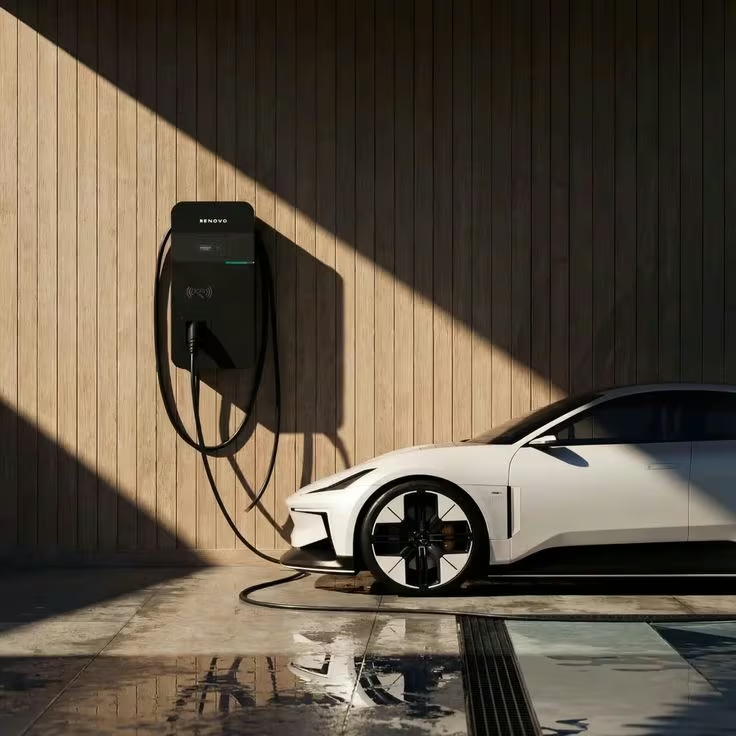
TL;DR: Commercial EV charger installation in Malaysia means putting managed, higher-power charge points at offices, malls, condos, hotels, or fleet depots. It is more involved than a home unit: you need a load study, TNB and Suruhanjaya Tenaga (ST) approvals, a licensed competent person, and billing software. Pick AC for dwell-time parking and DC for fast turnover, size to your incoming supply, and treat it as a property-value and revenue play, not just an amenity.
Electric vehicles are no longer a novelty on Malaysian roads. As more staff, tenants, and customers drive EVs, the question for building owners has shifted from “should we install chargers?” to “how do we do it properly?” A commercial EV charger installation is not a scaled-up home charger. It sits on shared infrastructure, draws serious power, needs regulatory sign-off, and usually has to bill users automatically.
This guide walks through what commercial installation actually involves in Malaysia: the charger types, how to match them to your property, the real installation steps, an honest look at cost and payback, the regulatory rules, and why the timing has rarely been better. If you want the full service scope and site survey, our EV charger installation service covers commercial and industrial projects end to end.
Weighing up chargers for your building? A quick site walkthrough tells you what your supply can handle and where the chargers should go. Get a free quote for your commercial site →
Before we get into the details, here is a short primer on the site conditions that decide whether a commercial charger installation is straightforward or expensive.
Watch: what makes a commercial EV charger installation complicated
A technical briefing from eFIXX, a UK electrical training channel. The standards cited are British; the site constraints are universal.
Source: eFIXX on YouTube — Commercial EV Charger Installation Is Easy, UNLESS…
1. What is commercial EV charger installation?
Quick Answer: Commercial EV charger installation is the design, wiring, approval, and commissioning of managed charge points on business or shared property — car parks, offices, malls, condos, and depots. Unlike a home charger, it involves multiple users, higher loads, load management, automated billing, and formal TNB and ST sign-off, which is why it belongs to a proper EV charger installation scope.
The word “commercial” changes almost everything about the job. A home charger serves one car on one meter. A commercial deployment serves many vehicles, often around the clock, and has to protect the building’s incoming supply while doing it.
The practical differences that matter:
- Shared, managed access. Users authenticate by app, RFID card, or QR code, so the system knows who charged and how much.
- Higher and smarter loads. Multiple chargers can overload a supply, so load management staggers or throttles power to stay within limits.
- Automated billing. Per-kWh or per-hour pricing is expected, with reporting for accounting.
- Formal approvals. Public or semi-public chargers need TNB coordination and ST compliance — not optional.
Key takeaway: Treat a commercial installation as an energy and access-management project, not a bigger plug. The billing, load control, and approvals are what separate it from a home unit.
2. AC vs DC chargers compared
Quick Answer: AC chargers (7kW–22kW) are cheaper and suit places where cars park for hours; DC fast chargers (50kW and up) cost much more but refill a battery in under an hour, so they suit high-turnover sites. Most commercial car parks use AC; the same AC-versus-DC logic that guides a home car charging station applies at scale, just with more units and load control.
The AC/DC decision drives your cost, your civil works, and your electrical supply upgrade. Here is how the common tiers compare for a Malaysian commercial site.
| Charger tier | Power | Typical top-up | Best for | Relative cost |
|---|---|---|---|---|
| Single-phase AC | 7kW | 6–8 hours | Condo bays, small offices | Low |
| Three-phase AC | 11kW–22kW | 2–4 hours | Office towers, workplace fleets | Medium |
| DC fast | 50kW–90kW | 40–60 minutes | Malls, highways, retail | High |
| DC ultra-fast | 120kW+ | 15–30 minutes | Hubs, fleet depots | Very high |
Illustrative market context for Malaysian commercial sites, compiled by EDCA Energy. Actual specs vary by supply and equipment.
The instinct to “just install fast chargers” often backfires. DC units need far more supply capacity and switchgear, and if cars sit parked for hours anyway, that speed is wasted spend.
Key takeaway: Match charger speed to how long cars actually park. AC covers most workplace and residential parking; reserve DC for sites where drivers need to leave quickly.
3. Which charger fits your property type?
Quick Answer: The right charger depends on dwell time and who uses it. Offices and condos suit 7kW–22kW AC; malls and retail benefit from a few DC units; hotels mix both; fleet depots lean on high-power DC. A proper site assessment during your commercial EV charger installation confirms the mix your supply can support.
Rather than one charger for every site, plan around the behaviour of your typical driver.
| Property type | Typical dwell | Suggested chargers | Why |
|---|---|---|---|
| Office tower | 8–9 hours | 11kW–22kW AC | Cars park all day; slow charge is fine |
| Shopping mall | 1–3 hours | DC 50kW + some AC | Shorter visits reward faster charging |
| Condominium | Overnight | 7kW AC, load-managed | Long parking; protect shared supply |
| Hotel / resort | Overnight + guest | AC bays + 1–2 DC | Mix of stayovers and quick stops |
| Fleet depot | Scheduled | DC 60kW–120kW | Fast turnaround keeps vehicles working |
Illustrative planning guidance compiled by EDCA Energy; final mix depends on your site survey.
Key takeaway: There is no universal charger. Start from how long vehicles stay, then size the power — that alone prevents most overspending on commercial projects.
Not sure which mix your building needs? Our engineers assess your parking, supply, and user profile before recommending anything. Request a free commercial charging assessment →
4. What the installation process involves
Quick Answer: A commercial install runs through six stages: site assessment, load study, TNB and ST approvals, cabling and mounting, testing and commissioning, then software and billing setup. Timelines depend on approvals and supply upgrades. Understanding these stages also makes your EV charger installation cost easier to read, because each stage carries its own line items.
A well-run project follows a clear sequence. Skipping steps is where projects blow their budgets or fail inspection.
- Site assessment. An engineer surveys parking layout, cable routes, and your incoming supply capacity.
- Load study. The team calculates spare capacity and whether a supply upgrade or load management is needed.
- TNB and ST approvals. Documentation is submitted for supply coordination and regulatory compliance before work begins.
- Cabling and mounting. Cable trays, protection, and the chargers themselves are installed by a competent person.
- Testing and commissioning. Every unit is tested for safety, earthing, and correct operation.
- Software and billing setup. Chargers connect to a management platform for access control, pricing, and reporting.
Key takeaway: The physical wiring is often the quickest part. Approvals and any supply upgrade drive the timeline, so start those conversations early.
5. Cost and payback: an illustrative model
Quick Answer: Commercial charger cost scales with power and supply works — AC units are the most affordable, DC units many times higher once switchgear and civil works are added. Payback comes from charging revenue, tenant retention, and property value. Because every site differs, EDCA quotes per project; for a general sense of ranges see our guide to EV charger price in Malaysia.
Instead of quoting fixed prices — which depend heavily on your supply and layout — it helps to see how relative upfront cost stacks up across tiers. The chart below is an illustrative comparison, not a quote.
| 7kW AC | Lowest | |
| 22kW AC | Low–medium | |
| 60kW DC | High | |
| 120kW DC | Highest |
Illustrative index (relative, not to scale in Ringgit), compiled by EDCA Energy. Request a quote for figures specific to your site.
The return side is where commercial chargers earn their place. Paid charging generates revenue, EV-driving tenants and shoppers stay longer, and a charging-ready building commands a premium. Pairing chargers with solar can also cut the electricity feeding them.
Key takeaway: Don’t judge chargers on sticker price alone. Weigh upfront cost against charging revenue, tenant retention, and property value over the asset’s life.
6. Malaysia’s charging network is scaling fast
Quick Answer: Malaysia set a national target of 10,000 public EV charge points, and the network has grown quickly toward it. Early movers capture the best sites and driver loyalty now. Many businesses pair charging with rooftop solar to control running costs — worth planning with an experienced installer like the team behind our work as a solar panel company in Malaysia.
National policy is firmly behind EV infrastructure. Under the Low Carbon Mobility Blueprint, Malaysia set a target of 10,000 EV charging points, split into roughly 8,500 AC and 1,500 DC units. The rollout has climbed steeply from a low base.
| Milestone | Approx. charge points | Progress to target |
|---|---|---|
| Mid-2024 | ~2,600 | ~26% |
| Late 2024 | ~3,200 | ~32% |
| End 2025 | ~5,600 | ~56% |
Figures approximate, based on MIDA / MITI progress reporting against the 10,000-point target.
For a building owner, the signal is clear: demand is rising and the best commercial locations are being claimed. Getting chargers in now builds driver habit around your site. You can read more about our approach on the EDCA Energy homepage.
Key takeaway: The network is roughly halfway to a 10,000-point national target and still climbing. Early commercial sites lock in prime locations and driver loyalty.
7. Rules, licensing and safety you must meet
Quick Answer: Commercial chargers in Malaysia must follow Suruhanjaya Tenaga’s EVCS guidelines — installation by a competent person, proper protection like RCDs, and licensing for public charging. Cutting corners risks fines and fire hazards, so compliance belongs in a professional EV charger installation, not a DIY job.
Regulation exists because chargers move a lot of power near people and vehicles. The key requirements to plan for:
- Competent-person installation. Work must be carried out and certified by a registered competent person, not general handymen.
- Protective devices. Residual current devices and correct earthing are mandatory to guard against shock and faults.
- Licensing for public chargers. Publicly accessible charging that sells electricity needs the appropriate approvals.
- Current ST guidance. The Energy Commission’s guidelines set the design, safety, and maintenance standards every installer must meet.
You can review the official framework in the Suruhanjaya Tenaga Guide on Electric Vehicle Charging System (EVCS), which covers installation, licensing, and safety in detail.
Key takeaway: Compliance is not optional. A licensed installer handling ST and TNB requirements protects you from penalties, insurance gaps, and safety incidents.
Want a compliant, revenue-ready installation? EDCA Energy handles the survey, approvals, and commissioning as one package. Get a free quote for your project →
8. Conclusion
Commercial EV charger installation in Malaysia rewards planning. Match charger speed to how long cars park, size everything to your supply, budget for approvals and possible upgrades, and treat the whole thing as an income-and-value asset rather than a cost. With the national network still scaling toward its target, the buildings that install well now are the ones drivers will return to. When you are ready to scope a site, the EDCA Energy team can guide you from survey to switch-on.
9. Frequently asked questions
How long does a commercial EV charger installation take?
The physical wiring can take days, but the full project depends on approvals and any supply upgrade. Simple AC deployments move faster; larger DC projects that need switchgear or a supply increase take longer. A site assessment gives you a realistic timeline.
Do I need TNB approval for commercial chargers?
Yes. Commercial and public chargers require coordination with TNB for supply and must meet Suruhanjaya Tenaga’s EVCS standards. Public charging that sells electricity also needs the relevant licensing, which your installer should handle for you.
Should I choose AC or DC chargers for my business?
It depends on dwell time. If cars park for hours — offices, condos — AC at 7kW–22kW is usually enough and far cheaper. If drivers need quick top-ups — malls, fleet depots — DC fast charging earns its higher cost. Many sites use a mix.
Can I add solar to power my EV chargers?
Yes, and many commercial sites do. Rooftop solar can offset the electricity your chargers draw, improving running costs and sustainability credentials. It is best planned alongside the charging design so the two systems work together.
How much does commercial EV charger installation cost in Malaysia?
There is no single figure — cost depends on charger type, quantity, supply works, and civil requirements. AC units are the most affordable, DC units considerably higher. EDCA provides a tailored quote after assessing your site.
Ready to electrify your commercial site?
EDCA Energy designs, installs, and commissions compliant, revenue-ready EV charging for offices, malls, condos, hotels, and fleets across Malaysia — with solar integration where it makes sense.
Get a Free QuoteSee your solar savings in under a minute
Estimate your ideal system size, payback period and monthly bill offset with the EDCA calculator.