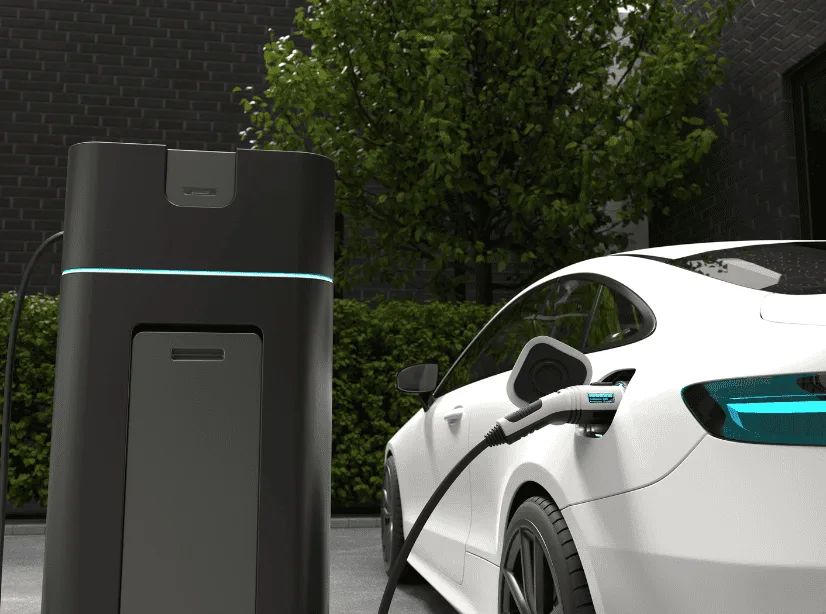
TL;DR: The home EV charger price in Malaysia is set by your house, not by a shelf price. For most homes a single-phase 7.4kW AC wallbox is the right unit, and it charges a typical EV overnight. But the wallbox is only one part of what you pay: the wiring from your consumer unit to the car porch and the electricity you use to charge are the other two. A charger that looks cheap online can cost more once it is on your wall, and a smart unit that shifts charging to off-peak hours can pay for itself over time. Because every home is different, EDCA Energy quotes to your actual setup — and a personal income tax relief of up to RM2,500 for EV charging can lower your net price.
You have bought, or are about to buy, an electric car. The question that follows is simple: what does it cost to put a charger at home in Malaysia? Look online and the numbers swing wildly, because most price lists mix home wallboxes with commercial units, and the wallbox price with the wiring behind it. That spread tells you very little about your own driveway.
This guide is written for the home owner. It focuses on the home EV charger price — what a residential charger really costs to buy, wire in, and run — rather than repeating the technical detail on our EV charger installation service page. We will cover what shapes the price on a home, how much charging power a Malaysian house actually needs, the difference between the upfront price and the running cost, which tier fits which household, and the tax relief that trims your net spend.
Before the price detail, a short plain-English explainer on the charging levels — because whether you pick Level 1, Level 2 (AC) or DC decides both how fast you charge and what your charger costs.
EV charging levels explained: what home charging really means
A quick walkthrough of the three charging levels, and why a Level 2 AC wallbox is the one nearly every Malaysian home ends up choosing.
Video: “Level 1 vs. Level 2 vs. DC Fast Charging Explained For EVs”. Watch on YouTube.
1. What shapes a home EV charger’s price?
Quick Answer: On a home, the price is shaped by your house as much as by the charger. The unit’s power rating and whether it is smart or basic matter, but so does your supply type, how far the car porch sits from your consumer unit, and how much spare capacity your existing wiring has. Two identical wallboxes can land at very different fitted prices on two different homes for exactly these reasons.
A public charger and a home charger are priced by different things. A public unit is about uptime and payment systems. A home unit is about matching a wallbox to one household’s supply, parking spot, and driving habit. Here is what actually moves the number on a home:
| Factor | What it means at home | Effect on price |
|---|---|---|
| Supply type | Single-phase (most homes) or three-phase | Three-phase enables 22kW but costs more |
| Cable run | Distance from consumer unit to the car porch | Long runs and trenching add cost |
| Spare capacity | Whether your board has headroom for the load | A board or supply upgrade adds cost |
| Smart vs basic | App control, scheduling, load balancing | Adds a premium, useful for off-peak charging |
| Warranty & certification | Earth-leakage protection, compliance marks, support | Non-negotiable; never skip to save money |
Source: EDCA Energy home EV charger experience, Malaysia. Weighting varies by home.
Read this way, the home price stops looking random. A neighbour paying more than you often has a longer cable run or an older board, not a worse deal. If you want the wider view across all charger types, our guide to the EV charger price in Malaysia covers commercial units too — this one stays on the home.
Want a price shaped to your actual home?
Supply type, cable run, and board headroom all change the number. Explore EDCA’s home EV charger installation options to see what fits your house.
Key takeaway: A home charger’s price is part unit, part house. Supply type, cable run, and spare capacity move the fitted price as much as the wallbox spec — so the same charger costs differently on two different homes.
2. How much charging power does a home really need?
Quick Answer: Less than most buyers think. If your car sits at home overnight, a 7.4kW single-phase wallbox refills a typical daily drive with hours to spare. Paying for 22kW rarely helps a home, because your overnight window is already long enough at 7.4kW — and 22kW needs a three-phase supply most homes do not have. Matching power to your overnight window is the single biggest way to avoid overpaying at home.
The trap at home is buying power you will never use. Overnight is a long window, and the maths is kind. The table below shows roughly how long each power rating takes to add about 40kWh — a generous daily top-up for most Malaysian drivers — and whether it comfortably fits an overnight charge.
| Power rating | Relative charge time | Overnight fit |
|---|---|---|
| 3.7kW single-phase | ~11 hours; fits, but tight | |
| 7.4kW single-phase | ~5.5 hours; comfortable | |
| 11kW three-phase | ~3.5 hours; needs three-phase | |
| 22kW three-phase | ~2 hours; overkill for most homes |
Source: Illustrative, EDCA Energy, Malaysia. Real times vary by vehicle and battery state; not a price list.
The lesson: for a car that parks at home each night, 7.4kW is the sweet spot on price and speed. Stepping up only earns its cost if you already have three-phase and genuinely need faster top-ups. If you want the residential picture in more detail, our guide to the residential EV charger price in Malaysia weighs the same choice for terraced and landed homes.
Key takeaway: Overnight is a long window, so a 7.4kW single-phase wallbox suits nearly every home. Buying 22kW you cannot fully use is the most common way home owners overpay.
3. Upfront price vs the running cost of charging at home
Quick Answer: A home charger has two price stories: the one-off cost to buy and fit it, and the ongoing cost of the electricity it draws. Over a few years of ownership, the electricity you use to charge usually dwarfs the wallbox price. That is why a smart charger that shifts charging to cheaper off-peak hours can be worth its premium — it lowers the bigger, ongoing half of your cost.
Most buyers fixate on the sticker and forget the running cost. But charging a car at home adds to your monthly bill, and that side compounds. The split below is illustrative, showing how the three parts of home charging move over a typical ownership period.
| Cost part | What it covers | Share over ~5 years |
|---|---|---|
| Charger unit | The wallbox itself | ~15% |
| Installation | Cabling, protection, any board upgrade | ~15% |
| Electricity to charge | The energy your car draws, month after month | ~70% |
Source: Illustrative model, EDCA Energy, Malaysia. Shares vary by mileage and tariff; not absolute figures.
The point is not the exact percentages — it is the shape. The upfront charger price is the small, one-time half; the electricity is the large, recurring half. That reframes what “cheap” means: a smart wallbox that charges off-peak can save more over five years than you paid for the unit. For the wiring side alone, our guide to the EV charger installation cost in Malaysia breaks down exactly what the installation half pays for.
Want the full home cost, upfront and ongoing?
A quick site check prices the unit, wiring, and any upgrade together, and points you to a smart charger if off-peak savings suit you. Get a free quote sized to your home.
Key takeaway: The wallbox is the small half of home charging; the electricity is the big, recurring half. A smart charger that shifts charging to off-peak hours can save more than its own price over time.
4. Which home charger tier fits your household?
Quick Answer: Think in tiers, not a single figure. A basic single-phase wallbox suits a one-car home that charges overnight. A smart single-phase unit adds scheduling for off-peak charging. A three-phase 22kW charger only makes sense for a household with three-phase supply and two EVs or heavy daily mileage. Match the tier to your household, not to the biggest number you can afford.
The right home charger is the one that fits how your household actually drives. The ladder below maps each tier to the home it suits:
| Tier | Typical unit | Key features | Best-fit household |
|---|---|---|---|
| Entry | Basic AC 7.4kW, single-phase | Plug in, charge, safety protection | One-car terrace, overnight charging |
| Mid | Smart AC 7.4kW, single-phase | App control, off-peak scheduling | Owners who want cheaper off-peak charging |
| Premium | Smart AC 22kW, three-phase | Faster top-ups, load balancing, multi-car ready | Three-phase semi-D or bungalow, two EVs |
Source: EDCA Energy, Malaysia. Illustrative tiers; exact spec depends on the vehicle and home.
Most Malaysian households sit happily in the entry or mid tier — enough power to charge overnight, with smart scheduling if they want to shift to cheaper hours. The premium tier earns its price only when three-phase supply and two EVs are genuinely in play. Picking the right tier is the same judgement you would use choosing the best solar panel company in Malaysia — match the spec to the real need, not the brochure.
Key takeaway: Buy the tier your household will use. Entry and mid single-phase wallboxes cover most homes; premium three-phase is for two-EV, three-phase households, not a default upgrade.
5. Cut your net price: tax relief and a firm quote
Quick Answer: Your headline home charger price is not your net price. Malaysia offers a personal income tax relief of up to RM2,500 for EV charging facilities — covering the purchase, installation, rental, or subscription of home charging equipment — available through the 2027 assessment year. Claim it, insist on a site visit so your fitted price is firm, and your real spend can be well below the sticker.
Two things lower what you actually pay for a home charger. The first is the tax relief; the second is a proper quote that does not move after the installer arrives:
- EV charging tax relief. Individuals can claim up to RM2,500 in personal income tax relief for expenses on EV charging facilities — including buying and installing a home charger — available through the 2027 assessment year, per MIDA. Keep your invoices and installation receipts to claim it.
- A firm, site-visited quote. A price given without seeing your board and car porch almost always changes. A short site check turns a rough guess into a fixed home charger price you can rely on.
Because tax rules change, always confirm the current relief and eligibility with LHDN or a tax adviser before you file. What matters for budgeting is that your net home charger price can be lower than the sticker once the relief is applied. EDCA Energy handles the supply and the wiring as one accountable team, the same standard we apply across our solar and clean-energy work at EDCA Energy.
Key takeaway: The price tag is not the price you keep. A personal tax relief of up to RM2,500 plus a site-visited quote turn a rough number into a firm, lower net home charger price.
6. Conclusion
The home EV charger price in Malaysia is a story about your house, not a single figure on a shelf. Your supply type, the run to your car porch, and your board’s spare capacity shape the fitted price as much as the wallbox spec. For nearly every home, a 7.4kW single-phase unit charges overnight with room to spare — so buying more power rarely pays off.
Remember the two halves of the cost: the small, one-time price to buy and fit the charger, and the larger, ongoing cost of the electricity to charge. Match the tier to your household, claim the RM2,500 tax relief, and get a site-visited quote, and you will know exactly what you are paying for — upfront and over the years.
Ready for a real home EV charger price, not a guess?
EDCA Energy is a SEDA-registered clean-energy provider supplying and installing home EV chargers across Malaysia. Get your wallbox, wiring, and any upgrade priced in one clear quotation — sized to your home, with no fixed price list.
Get a Free Quote7. Frequently asked questions
How much does a home EV charger cost in Malaysia?
There is no single fixed price. A basic single-phase 7.4kW wallbox is the most affordable and suits most homes, while a smart or three-phase 22kW unit costs more. The wallbox price also sits separately from the wiring to install it, so the only accurate home charger price comes from a quote based on your supply, car porch, and board.
Do I need a 22kW charger at home?
Usually not. Most Malaysian homes run on single-phase, and a 7.4kW wallbox refills a typical EV overnight with hours to spare. A 22kW charger needs a three-phase supply and only pays off for two-EV households or heavy daily mileage. For most homes, an entry or mid single-phase unit is the better-value buy.
Is the home charger price the same as the installed cost?
No. The charger price is the wallbox alone; the installed cost adds the electrical work — cabling, protection, and any board or supply upgrade. On a simple home the charger can be the bigger share, while a long cable run or an older board shifts the balance to installation. Always compare fitted totals, not just wallbox stickers.
What is the biggest cost of charging at home?
Over a few years, the electricity you use to charge usually costs more than the wallbox and installation combined. That is why a smart charger that shifts charging to cheaper off-peak hours can be worth its premium — it lowers the larger, ongoing half of your home charging cost.
Can I reduce my home EV charger price in Malaysia?
Yes. Choosing the right power tier instead of the highest, and comparing fitted totals across quotes, both help. On top of that, a personal income tax relief of up to RM2,500 for EV charging facilities can lower your net price — keep your receipts and confirm eligibility with LHDN before you file.
See your solar savings in under a minute
Estimate your ideal system size, payback period and monthly bill offset with the EDCA calculator.