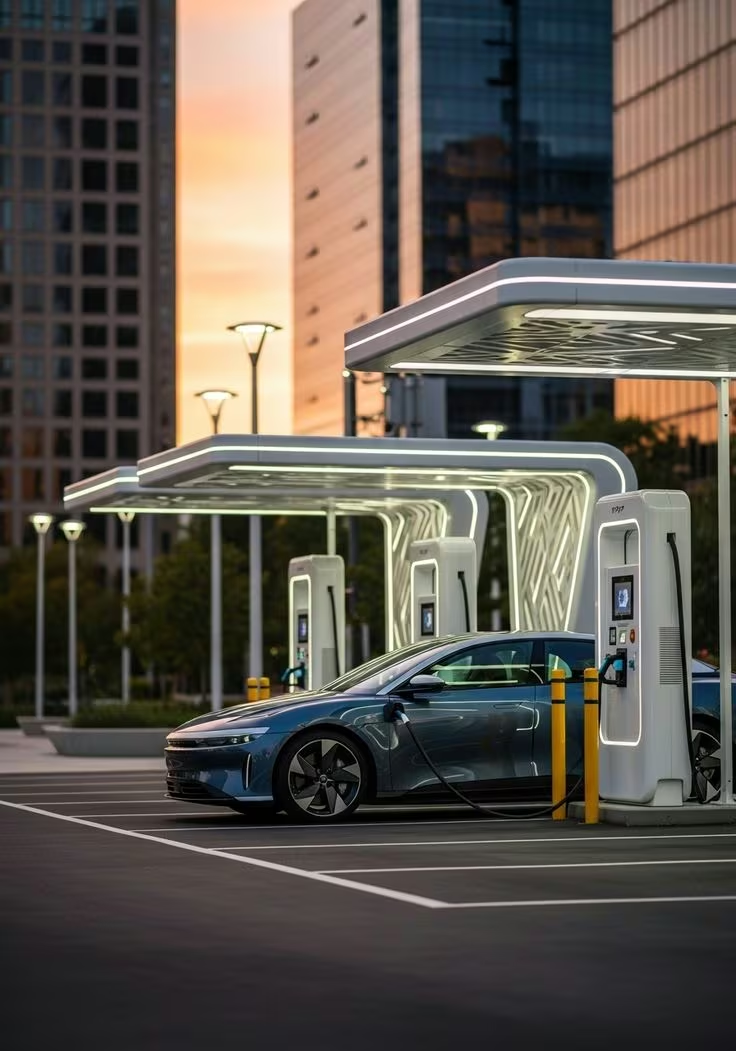
TL;DR: A residential EV charger in Malaysia typically costs RM3,000–RM8,000 fully installed. The 7kW single-phase wallbox suits most landed homes and usually lands around RM3,000–RM5,500 turnkey. Your final price depends on cable run, whether your consumer unit (DB) needs an upgrade, and whether a three-phase TNB supply is required. Charging at home off-peak works out far cheaper than public DC charging or petrol, so a proper install usually pays for itself within the first two years.
1. Introduction
If you have just booked a BYD, a Proton e.MAS, a Tesla, or any other EV, the next question is almost always the same: what will it cost to charge it at home? Public chargers are handy for long trips, but the cheapest and most convenient way to run an EV is a wallbox on your own porch that tops up overnight.
The tricky part is that “residential EV charger price in Malaysia” does not have one clean answer. Two homes on the same street can get very different quotes because one needs a longer cable run, and the other needs its main board upgraded. That is why installers quote after a site check rather than over the phone.
This guide breaks down the real cost drivers, the price ladder by charger power, and how much you save once the charger is live. EDCA Energy installs home EV chargers alongside solar across Malaysia, so these figures reflect what homeowners actually ask. Here is a quick video overview before the numbers.
Watch: charging an EV at home in Malaysia
A quick look at how home charging works day to day, from wallbox setup to using public chargers on longer trips.
Video: “Charging your BYD” — watch on YouTube.
2. How much does a residential EV charger cost in Malaysia?
Quick Answer: A residential EV charger in Malaysia costs roughly RM3,000–RM8,000 fully installed. A 7kW single-phase wallbox — the right choice for most landed homes — usually falls between RM3,000 and RM5,500 turnkey. Larger three-phase 22kW units, or homes needing a supply upgrade, sit at the top of that range.
The installed price bundles two things: the charger unit itself and the electrical work to connect it safely. The hardware is only part of the story. A basic AC wallbox is not expensive; the labour, cabling, and any board upgrade are what move the number up or down.
The table below shows an illustrative price ladder by charger power. Treat these as market ranges for planning, not a fixed EDCA quote — your real figure comes after a site check. For a deeper cost walk-through, see our guide on EV charger installation cost in Malaysia.
| Charger | Supply | Installed range* | Best for |
|---|---|---|---|
| 3.6kW AC | Single-phase | RM2,200–RM3,500 | Plug-in hybrids, low daily mileage |
| 7kW AC | Single-phase | RM3,000–RM5,500 | Most landed homes — the popular choice |
| 11kW AC | Three-phase | RM5,000–RM7,500 | Homes with three-phase supply, two EVs |
| 22kW AC | Three-phase | RM6,000–RM8,000+ | Fast top-ups, EVs that accept 22kW AC |
*Illustrative market ranges for planning only, compiled from typical Malaysian home-install quotes; not an EDCA price. A three-phase supply upgrade, where needed, is charged separately. Get a site-specific figure via a free quote.
Key takeaway: Budget RM3,000–RM5,500 for a standard 7kW home install. Bigger numbers usually mean a bigger charger, a longer cable run, or a supply upgrade — not a padded quote.
Not sure which charger your home can take?
A quick site check settles the supply, cable route, and board question before you commit. Get a free quote for your home EV charger →
3. What affects your home EV charger price?
Quick Answer: The charger unit is often the smaller half of the bill. Cable run length, the dedicated circuit and safety devices, any consumer-unit (DB) upgrade, and — the big one — a single-phase to three-phase TNB supply upgrade are what swing your quote by thousands of ringgit.
When two quotes look far apart, it is almost always the electrical work, not the wallbox. Here is where the money actually goes on a residential install:
- Charger hardware. The wallbox itself, plus any smart features like app control, load balancing, or an RFID card.
- Dedicated circuit and protection. The charger runs on its own circuit from the DB, with a correctly sized MCB and RCD (Type A or Type B). This is a safety requirement, not an upsell.
- Cabling and conduit. Priced by the metre. A charger next to the DB is cheap; one at the far end of the porch needs more cable and trunking.
- Consumer unit (DB) upgrade. Older boards may lack a free way or spare capacity, so an upgrade is needed before the charger can be added.
- Three-phase supply upgrade. If you want 11kW or 22kW and only have single-phase, a TNB upgrade adds significant cost and lead time.
The chart below shows how a typical 7kW turnkey install splits across these line items. The proportions shift from home to home, but the shape holds: hardware plus cabling and the dedicated circuit make up most of a straightforward job.
| Line item | Share of a typical bill |
|---|---|
| Charger unit | ~50% |
| Cabling & conduit | ~22% |
| Dedicated circuit + MCB/RCD | ~16% |
| Labour, mounting & testing | ~12% |
Illustrative split for a job with no board or supply upgrade. A DB upgrade or three-phase supply upgrade sits on top of this and can change the picture entirely. Not an EDCA quote.
The lesson: if a quote looks unusually cheap, check whether it includes a proper dedicated circuit and protection, or just a wallbox screwed to the wall. The difference matters for safety and for your insurance. If your home already lacks capacity, that is genuinely part of the cost, not a way to inflate the bill.
Key takeaway: Compare quotes on what the electrical work includes, not just the headline price. The dedicated circuit, protection devices, and cable run are where safety — and cost — actually live.
4. Which charger power rating is right for your home?
Quick Answer: Most Malaysian landed homes have a single-phase TNB supply, and a 7kW charger is the fastest speed that supply can safely deliver. A 7kW wallbox adds roughly 40–45km of range per hour, so an overnight charge easily covers daily driving. You only need three-phase 11kW or 22kW for very high mileage or two EVs charging together.
Power rating decides charging speed, and your existing supply decides how much power you can use. Going bigger than your supply allows just means paying for an upgrade you may not need. Here is the plain-English version:
- 3.6kW — slow but fine for plug-in hybrids or short daily commutes. Full charge takes a long night.
- 7kW — the sweet spot for single-phase homes. Fully charges most EVs overnight and matches what cars like the BYD Atto 3 accept on AC.
- 11kW / 22kW — needs three-phase supply. Useful for high mileage, larger batteries, or households running two EVs.
For most readers, 7kW single-phase is the practical answer, and it keeps your install cost sensible. If you are weighing a home charger against relying on public stations, our breakdown of home EV charger price in Malaysia compares the day-to-day trade-offs. Living in a condo or apartment changes the picture — the electrical supply and management approval are different, which we cover in the EV charger in a condo strata guide.
Key takeaway: Match the charger to your supply, not to the biggest number on the shelf. For landed single-phase homes, 7kW is faster than you will usually need and avoids a costly three-phase upgrade.
5. How much does it cost to charge an EV at home?
Quick Answer: Charging at home is by far the cheapest option. On an off-peak home tariff you might pay around RM4 per 100km, versus roughly RM15–RM24 per 100km at public chargers and about RM16 per 100km for a petrol car. The exact figure depends on your TNB tariff and how efficient your EV is.
This is where owning a home charger really earns its keep. The comparison below models running cost per 100km, assuming an EV that uses about 15kWh per 100km. Home rates are based on the TNB domestic tariff structure; for context on how those rates and adjustments move, see this breakdown of TNB’s 2026 tariff and AFA.
| Method | Assumed rate | Cost per 100km |
|---|---|---|
| Home (off-peak ToU) | ~27 sen/kWh | ~RM4.05 |
| Home (standard tariff) | ~44 sen/kWh | ~RM6.60 |
| Public AC | ~RM1.00/kWh | ~RM15.00 |
| Public DC (fast) | ~RM1.60/kWh | ~RM24.00 |
| Petrol car (for comparison) | RON95, ~8L/100km | ~RM16.40 |
Modeled scenario for illustration, based on the TNB domestic tariff and typical public-charging rates. Your cost varies with your tariff band, EV efficiency, and charging network. Not an EDCA quote.
The gap is striking. Charging overnight at home off-peak can cost a fraction of a public DC session for the same distance. That daily saving is the real reason a home charger is worth installing properly, rather than relying on public stations for routine top-ups.
Key takeaway: Home off-peak charging is the cheapest way to run an EV in Malaysia — often several times cheaper per 100km than public fast charging. Shifting charging to off-peak hours stretches the saving further.
6. Is a home EV charger worth it? A 5-year view
Quick Answer: Yes, for most owners. At around 15,000km a year, home off-peak charging can cost roughly RM610 a year, versus about RM3,600 for public DC or RM2,460 for petrol. On those numbers the charger’s upfront cost is recovered well within two years, and the savings keep compounding after that.
A home charger is not a running cost — it is an asset that lowers your fuel bill every day. The cumulative view below models five years at 15,000km a year, comparing home off-peak charging against relying on public DC and against a petrol car. EV adoption in Malaysia is climbing too: the government targets electric vehicles reaching 15% of total industry volume by 2030 alongside 10,000 public charging points, per MGTC, so home charging is becoming the norm rather than the exception.
| Year | Home off-peak | Public DC only | Petrol car |
|---|---|---|---|
| Year 1 | RM610 | RM3,600 | RM2,460 |
| Year 2 | RM1,220 | RM7,200 | RM4,920 |
| Year 3 | RM1,830 | RM10,800 | RM7,380 |
| Year 4 | RM2,440 | RM14,400 | RM9,840 |
| Year 5 | RM3,050 | RM18,000 | RM12,300 |
Modeled projection for illustration only, assuming 15,000km/year and the per-100km rates in Section 5. Real savings depend on mileage, tariff, and driving. Not an EDCA quote or savings guarantee.
Over five years, home off-peak charging costs a small fraction of the petrol or public-DC alternatives. Against public DC, the modeled gap is nearly RM15,000 — many times the price of the charger itself. Even against petrol, the charger typically pays for itself in the first couple of years. Pairing the charger with solar can trim the running cost further; many EDCA customers add EV charging when they install rooftop solar.
Want the charger and the savings, not the guesswork?
Tell us your car and home setup and we will scope the right wallbox and quote it properly. Get a free EV charger quote →
Key takeaway: A home charger is one of the fastest-paying upgrades an EV owner can make. The daily fuel saving usually clears the install cost within two years, then keeps paying you back.
7. What a proper installation includes
Quick Answer: A safe home EV charger install means a dedicated circuit straight from the DB, correctly sized protection (MCB plus a Type A or Type B RCD), proper cable and conduit, secure mounting, and full testing before handover. Where a supply upgrade or TNB notification is needed, a qualified installer handles it.
An EV charger draws high current for hours at a time, so it must never share a circuit with sockets or lights. Cutting corners here is a fire and safety risk, not a saving. A professional residential install from EDCA’s EV charger installation service covers the full job, not just bolting a box to the wall:
- Site assessment. Check your supply type, spare capacity at the DB, and the cable route to the parking spot.
- Dedicated circuit and protection. Run a new circuit from the board with an MCB sized to the charger and the correct RCD type.
- Mounting and cabling. Fix the wallbox securely and route cable in proper conduit or trunking.
- Testing and handover. Verify earthing, protection, and charging, then walk you through the app and daily use.
Using a registered electrical contractor also keeps you compliant and protects your home insurance. It is worth confirming the installer’s credentials before work starts.
Key takeaway: Pay for the electrical work, not just the wallbox. A dedicated circuit, correct protection, and proper testing are what make home charging safe over years of daily use.
8. How to choose a residential EV charger installer
Quick Answer: Pick an installer who quotes only after a site check, uses a registered electrical contractor, sizes the circuit and protection correctly, and gives you a clear warranty on both the charger and the workmanship. A quote that skips the site visit is a red flag.
The cheapest quote is rarely the best value once you factor in safety and after-sales support. Before you commit, check that the installer:
- Does a real site assessment before quoting, rather than a flat phone price.
- Uses registered, qualified electricians and follows proper wiring standards.
- Explains the full scope — circuit, protection, cabling, and any upgrade — in the quote.
- Backs the work with a warranty on the unit and the installation, plus responsive support.
A company that installs both solar and EV chargers can plan them together, which is handy if you want to charge on your own clean power. If you are also weighing rooftop solar, our guide to the best solar panel company in Malaysia covers the same “check credentials first” logic. You can learn more about EDCA’s clean-energy work on our home page.
Key takeaway: Choose on scope, credentials, and warranty — not just price. A proper site check and a registered contractor are non-negotiable for a home charger.
9. Conclusion
A residential EV charger in Malaysia usually costs RM3,000–RM8,000 fully installed, with a 7kW single-phase wallbox — the right fit for most landed homes — landing around RM3,000–RM5,500. Your final number comes down to cable run, whether your board needs an upgrade, and whether you need three-phase supply. The wallbox is often the smaller part of the bill; the electrical work is where safety and cost really sit.
The payback story is the clincher. Charging overnight at home off-peak costs a fraction of public fast charging or petrol, so a well-installed charger typically pays for itself within two years and keeps saving after that. Get a proper site check, insist on a dedicated circuit and correct protection, and you will have cheap, convenient charging for years.
10. Frequently asked questions
How much does a residential EV charger cost in Malaysia?
Expect roughly RM3,000–RM8,000 fully installed. A 7kW single-phase wallbox, which suits most landed homes, usually costs RM3,000–RM5,500 turnkey. Homes needing a consumer-unit or three-phase supply upgrade sit at the higher end. A site check gives you the accurate figure.
Is a 7kW or 22kW charger better for a home?
For most single-phase landed homes, 7kW is the practical choice — it charges most EVs fully overnight and avoids an expensive supply upgrade. You only need 11kW or 22kW, which require three-phase supply, for very high mileage or two EVs charging at once.
How much does it cost to charge an EV at home?
On an off-peak home tariff, charging can work out to around RM4 per 100km, compared with roughly RM15–RM24 per 100km at public chargers. The exact cost depends on your TNB tariff band and how efficient your EV is.
Do I need TNB approval to install a home EV charger?
A standard single-phase 7kW charger on an existing supply generally does not need a major upgrade, but any supply change or three-phase upgrade must go through the proper TNB process. A registered installer handles the notification and paperwork for you.
Can I install an EV charger in a condo or apartment?
Yes, but it works differently from a landed home because you share the building’s supply and need management or JMB approval. The available power and cabling route are the main constraints. Our EV charger condo strata guide walks through the steps.
Ready to charge at home for a fraction of petrol?
EDCA Energy installs safe, properly wired residential EV chargers across Malaysia — and can pair yours with solar so you charge on your own power. Get a site-specific price with no obligation.
Get a Free QuoteSee your solar savings in under a minute
Estimate your ideal system size, payback period and monthly bill offset with the EDCA calculator.