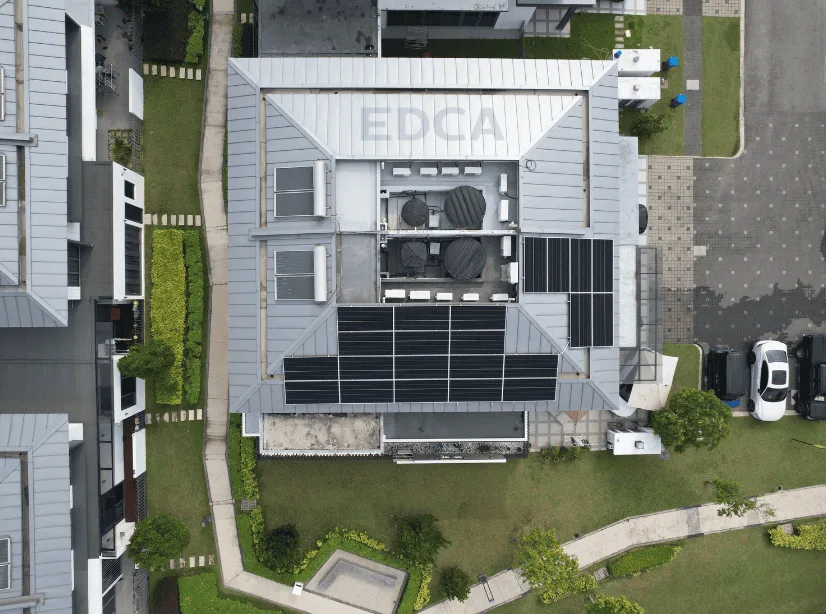
Going solar at home is not one decision — it is a short series of them, made in order. Skip a step or rush the early ones, and you end up with a system that is too small, too costly, or stuck waiting on paperwork.
This is a practical, step-by-step guide to a home solar installation from your point of view as the homeowner. It sits alongside our home solar panel installation service — read this to understand the journey and the choices, then ask us for a quote. First, a short video on how a solar panel actually makes electricity.
Watch: how solar panels turn sunlight into electricity
A quick, beginner-friendly explainer of the science behind the panels going on your roof.
Source: History of Simple Things — “From Sunlight to Power: How Solar Panels Work”
1. What are the key steps to install home solar in Malaysia?
Quick Answer: A home solar installation in Malaysia moves through five key steps: confirm your roof and supply suit solar, size the system to your electricity bill, choose a SEDA-registered installer, arrange the NEM approval and any incentive, then install, test and switch on. The first three are decisions you make; the last two are managed for you by the installer.
It helps to see the whole path before you start. Each step feeds the next, so an early mistake — a bad sizing, a weak installer — is expensive to unwind later. The table below lays out the five key steps, what you decide at each, and the one thing to watch.
| Step | What you decide | What to watch |
|---|---|---|
| 1. Check suitability | Whether your roof and supply can take solar | Shading, roof age, single- or three-phase supply |
| 2. Size the system | System size, based on your TNB bill | Sizing to daytime use, not just total usage |
| 3. Choose an installer | Who designs and builds the system | SEDA registration, track record, warranty |
| 4. Approvals & incentives | Which scheme you join (handled with you) | NEM quota and incentive deadlines |
| 5. Install & switch on | Install date and handover | Testing, neat wiring, meter change-over |
Illustrative overview for planning; your installer confirms the detail after a site survey.
A free site check confirms your roof, layout and TNB supply before you commit to anything. See our home solar panel installation service →
2. Step 1: Is your home right for solar?
Quick Answer: Most Malaysian landed homes suit solar. The things that matter are a sound roof with usable space, little shading through the middle of the day, and a TNB account in your name. If your roof is old or heavily shaded, that does not always rule solar out — it just needs to be flagged before you size or order anything.
The first key step costs you nothing but a good look at your own roof. Before you talk system sizes or prices, four simple checks tell you whether solar makes sense for your home.
- Roof space and pitch. A typical home system needs a clear stretch of roof. South- or east-west-facing pitches work well; even a flat concrete roof can be used with tilted mounts.
- Shading. Tall trees, a neighbour’s upper floor, or a water tank that shades the roof between 10am and 4pm will cut output. Some shading is workable; heavy all-day shade is the real blocker.
- Roof condition. Panels last 25 years, so the roof under them should be sound. An old or leaking roof is better repaired first.
- Your TNB account. Net metering is tied to the account holder’s name, so the bill should be in your name or easily transferable.
If you are still deciding whether solar is worth it at all, start with our beginner overview of solar panels for your home, then come back to these steps once you have decided to go ahead. A proper answer on suitability comes from a site survey, but these four checks tell you quickly whether it is worth booking one.
3. Step 2: How do you size a home solar system to your bill?
Quick Answer: Size your home solar system from your actual TNB bill, not a round number. As a rough guide, a home spending RM 250–400 a month usually fits a 4–6 kWp system, while a RM 400–700 bill points to 6–9 kWp. The best size balances the roof you have against how much of your power you use during daylight, when the panels are producing.
This is the step of a home solar installation most homeowners get wrong by guessing. Too small and you leave savings on the table; too large and part of the system rarely pays back. The sizing starts from your monthly usage. The table below gives a planning range — your installer refines it after reading a year of bills.
| Monthly TNB bill | Rough monthly usage | Suggested system size |
|---|---|---|
| RM 150–250 | ~350–600 kWh | 3–4 kWp |
| RM 250–400 | ~600–950 kWh | 4–6 kWp |
| RM 400–700 | ~950–1,600 kWh | 6–9 kWp |
| RM 700+ | 1,600+ kWh | 10 kWp+ |
Illustrative planning ranges only; final sizing depends on daytime usage, roof space and your goals. Bars show relative system size.
The subtle point is daytime use. A home where everyone is out until evening uses less power while the sun shines, so an oversized system just exports cheaply. If you work from home or run daytime cooling, a larger system earns its keep. Matching the array to real usage is where sizing pays off — our guide to the residential solar panel installation process shows how the survey and design lock this in.
4. Step 3: How do you choose a home solar installer?
Quick Answer: Choose a home solar installer that is SEDA-registered, has a real track record of completed home installations, and offers clear workmanship and equipment warranties. The installer you pick is the single biggest factor in whether your system performs for 25 years — it matters more than the exact brand of panel.
Your installer designs the system, files the paperwork, and stands behind the warranty. A cheap quote from an unregistered outfit can cost far more later in poor output or a leaking roof. Weigh installers on a few concrete things.
- SEDA registration. Grid-tied home solar must be installed by a SEDA-registered photovoltaic service provider. This is non-negotiable for net metering.
- Track record. Ask how many home systems they have completed and to see recent local examples, not just commercial projects.
- Warranties. Look for a workmanship warranty on the installation plus the manufacturer warranties on panels and inverter.
- Clear scope. A good installer handles the SEDA and TNB applications for you and puts the full scope in writing.
Our guide to the best solar panel company in Malaysia breaks down how to compare installers properly. A registered EPCC provider such as EDCA Energy, a SEDA-registered RPVSP, manages the design, approvals and build as one job — so you deal with one accountable party from survey to switch-on.
5. Step 4: What approvals and incentives apply to home solar?
Quick Answer: Grid-tied home solar in Malaysia runs on Net Energy Metering (NEM 3.0), where your household joins the NEM Rakyat programme and gets a one-to-one credit for excess power sent to the grid. Incentives such as the SolaRIS rebate have added a cash sweetener at times, but quotas and rebates open and close — so the practical move is to apply while a scheme is live.
You do not manage this step alone — the installer files the applications — but you should understand what you are joining. There are three levers that turn solar into bill savings, and they stack.
| Mechanism | What it gives you | Who it is for |
|---|---|---|
| Self-consumption | Direct bill cut from power used as it is produced | Every solar home; the biggest lever |
| NEM Rakyat (NEM 3.0) | One-to-one credit for excess exported to the grid, over a 10-year period | Residential TNB (Tariff A) customers |
| SolaRIS rebate | One-off cash rebate (RM 1,000/kWac, up to RM 4,000) when live | Eligible first-time NEM Rakyat applicants |
Scheme details per SEDA Malaysia — NEM 3.0 and the SEDA SolaRIS announcement. Quotas and rebate windows change — confirm what is open before you apply.
The important nuance is that under NEM Rakyat there is no cash payment for exports — excess energy becomes a credit that offsets your bill, not a cheque. That is why sizing to your own daytime use matters more than building the biggest possible array. Because quotas fill and rebates expire, the timing of this step is real: applying while a scheme is open can be worth thousands.
We check the current NEM quota and any live incentive for your address, then handle the SEDA and TNB paperwork. Get a free quote and eligibility check →
6. Step 5: What happens during installation and switch-on?
Quick Answer: Once approvals are in, the physical home solar installation is quick — usually one to two days on the roof for mounting, panels, inverter and wiring, followed by testing. The system then waits on the TNB meter change-over before it starts exporting under net metering. From signing to switch-on, most homes take six to ten weeks overall.
The last key step is the one most people picture first, and it is the shortest. With the design set and approvals granted, the crew mounts the rails, fixes the panels, wires the inverter and tests the system, usually inside a single day for an average home. The longer wait is the meter change-over that formally starts your net metering.
Because this step is mostly in the installer’s hands, your role is simply to give roof access and take the handover walk-through. For the full day-by-day and week-by-week picture, see our residential solar panel installation guide, and for a hands-on look at the build itself, our walkthrough on how to install solar panels at home.
7. What can a home solar installation save you?
Quick Answer: Savings scale with system size and how much power you use in daylight. As a modeled illustration, a well-matched home system can offset a large share of a daytime-heavy bill, with payback commonly landing in the six-to-eight-year range and the panels warrantied for around 25 years. Your real figure depends on your bill and roof, so it is quote-based.
Solar is a long game: a bigger upfront cost that pays back through years of lower bills. The illustration below shows how estimated annual savings scale with system size for a home that uses a good share of its power during the day. Treat these as modeled planning figures, not a quote.
| System size | Illustrative annual saving | Relative saving |
|---|---|---|
| 4 kWp | ~RM 2,400 | ~RM 2,400 |
| 6 kWp | ~RM 3,600 | ~RM 3,600 |
| 8 kWp | ~RM 4,800 | ~RM 4,800 |
| 10 kWp | ~RM 6,000 | ~RM 6,000 |
Modeled illustration for planning only, assuming strong daytime self-consumption; actual savings vary with your tariff, usage pattern and system performance. Not a quote or a guaranteed figure.
Two things move these numbers most: how much you self-consume, and future electricity tariffs. The more of your own solar you use in daylight, the faster the payback. Because every home differs, EDCA prices are quote-based rather than fixed — the honest way to get your real payback is a bill analysis and site survey.
8. Conclusion
A home solar installation in Malaysia comes down to five key steps in the right order: check your roof, size the system to your bill, choose a registered installer, sort the approvals and incentives, then install and switch on. The early steps — suitability, sizing and installer choice — carry the most weight, because they set your savings for the next two decades. The later steps are mostly managed for you.
What a guide cannot do is match these steps to your actual roof, bill and TNB supply — that needs a survey and a proper design. When you are ready, EDCA Energy runs the whole job as one accountable project, including every SEDA and TNB submission.
Ready to take the first step on home solar?
Get a free, no-obligation quote with a system sized to your TNB bill and a clear timeline.
Get a Free Quote9. Frequently asked questions
What are the steps to install solar panels at home in Malaysia?
There are five key steps: check whether your roof and supply suit solar, size the system to your TNB bill, choose a SEDA-registered installer, arrange the NEM approval and any incentive, then install, test and switch on. The first three are your decisions; the last two are managed by the installer.
Do I need approval for a home solar installation?
Yes. A grid-tied home system runs on Net Energy Metering, so your installer files an application to SEDA and a connection request to TNB. Your system only starts exporting excess power for a credit after approval and the meter change-over.
How do I know what size system my home needs?
Sizing starts from a year of TNB bills and how much power you use during daylight. As a rough guide, a RM 250–400 monthly bill often suits a 4–6 kWp system, but the installer confirms the size after reading your usage and surveying the roof.
How long does a home solar installation take?
The roof work is usually one to two days for an average home, but the whole project runs about six to ten weeks from signing to switch-on. Most of that time is the SEDA and TNB approvals and the meter change-over, which you wait on rather than watch.
How much does a home solar installation cost in Malaysia?
Cost depends on system size, roof type and your electrical supply, so pricing is quote-based rather than fixed. The clearest way to get your figure is a bill analysis and site survey — request a free quote for an exact number for your home.
See your solar savings in under a minute
Estimate your ideal system size, payback period and monthly bill offset with the EDCA calculator.